


Sep . 23, 2025 11:45 Back to list
Choose the Right Power Cord Types: Ultimate Compatibility Guide
Understanding Advanced Power Cord Solutions for Industrial Applications
In the realm of industrial and commercial infrastructure, the reliability and performance of power transmission components are paramount. Among these, the selection of appropriate power cord types is a critical decision that impacts operational efficiency, safety, and long-term cost-effectiveness. From high-voltage distribution networks to specialized machinery, the diversity in power cord requirements necessitates a deep understanding of their technical specifications, application environments, and manufacturing quality.
This comprehensive overview delves into the intricate world of industrial power cords, specifically focusing on robust solutions like 0.6/1kV PVC Insulated Power Cables. We will explore key industry trends, elaborate on manufacturing processes, detail technical parameters, discuss crucial application scenarios, and highlight the advantages that ensure peak performance and compliance with global standards. Our goal is to equip B2B decision-makers and engineers with the insights needed to make informed choices for their critical infrastructure projects.
Industry Trends in Power Cord Technology
The landscape of electrical infrastructure is continually evolving, driven by advancements in smart grid technologies, renewable energy integration, and the increasing demand for high-efficiency, durable power solutions. Key trends influencing the development of power cord types and related power supply cable types include:
- Enhanced Material Science: Development of advanced insulation and sheathing materials (e.g., XLPE, low-smoke zero-halogen compounds) offering superior thermal, mechanical, and fire-retardant properties compared to traditional PVC, though PVC remains a cost-effective and reliable option for many applications.
- Sustainability and Environmental Compliance: Growing emphasis on eco-friendly manufacturing processes and materials that comply with regulations like RoHS and REACH, minimizing hazardous substances.
- Digitization and Smart Grids: Integration of power cables into smart grid ecosystems, often requiring cables with embedded sensors or capabilities for data transmission alongside power.
- Increased Power Density: Demand for cables capable of transmitting higher power within smaller diameters, optimizing space and reducing material costs.
- Modularity and Customization: A shift towards modular power solutions and highly customizable cable assemblies to meet diverse application-specific requirements.
- Global Standardization: Harmonization of international standards (IEC, UL, CE) to facilitate global trade and ensure interoperability and safety across different markets.
These trends underscore the importance of selecting not just any power cable, but a solution that is future-proof, compliant, and optimized for the demanding environments of modern industrial operations.
Manufacturing Process Flow for 0.6/1kV PVC Insulated Power Cable
The production of high-quality power cord types, particularly industrial-grade cables like the 0.6/1kV PVC Insulated Power Cable, involves a meticulously controlled manufacturing process. Adherence to international standards such as ISO 9001 and specific product standards like IEC 60502-1 is crucial at every stage to ensure reliability and performance.
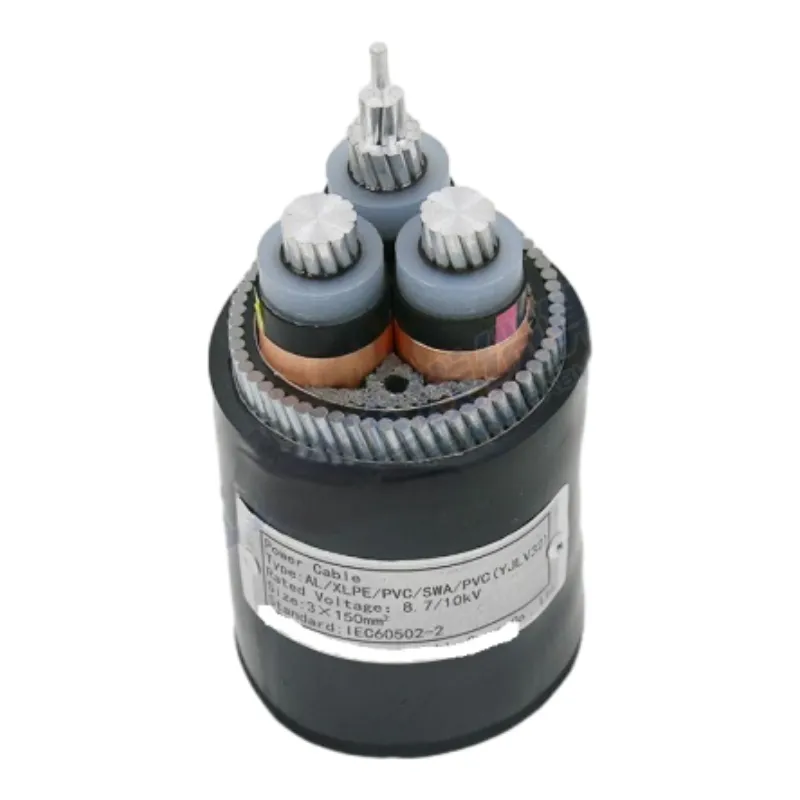
Detailed Process Steps:
- Conductor Drawing and Stranding: High-purity electrolytic copper or aluminum rods are drawn into fine wires, typically through a series of dies. These wires are then stranded together in concentric layers (compacted circular, sector-shaped) to form the conductor, optimizing flexibility and current carrying capacity.
- Insulation Extrusion: The stranded conductor passes through an extruder where a precisely controlled layer of Polyvinyl Chloride (PVC) insulation material is applied. The PVC compound is heated and forced around the conductor, ensuring uniform thickness and concentricity. This insulation is critical for electrical isolation and preventing short circuits.
- Cabling/Laying Up: For multi-core cables, the individually insulated conductors are twisted together (laid up) to form the cable core. This step ensures mechanical stability and helps maintain the cable's circular cross-section. Fillers (non-hygroscopic materials) are often used to fill interstices and maintain the roundness.
- Inner Sheathing/Bedding (Optional): A non-metallic inner sheath or bedding layer, often made of PVC or a similar compound, is extruded over the laid-up cores. This layer provides a protective cushion and a smooth base for subsequent layers, especially for armored cables.
- Armoring (for armored cables): For applications requiring enhanced mechanical protection, a layer of steel wire or steel tape armor is applied over the inner sheath. This armor protects against crushing and impact damage, common in direct burial or harsh industrial environments.
- Outer Sheathing: The final protective layer, typically a robust PVC compound, is extruded over the entire cable assembly. This outer sheath provides resistance against abrasion, moisture, chemicals, UV radiation, and other environmental factors. The sheathing material is chosen based on the intended application environment.
- Spark Testing and Electrical Quality Control: Throughout the process, and especially after insulation and outer sheathing, rigorous electrical tests are performed. Spark testing (high voltage applied to detect pinholes or defects in insulation), capacitance, insulation resistance, and conductor resistance tests ensure that the cable meets specified electrical parameters and safety standards (e.g., IEC 60502-1, BS 6346, VDE 0276).
- Dimensional Inspection and Packaging: Final quality checks include verifying outer diameter, wall thickness, and print legibility. The finished cable is then spooled onto drums, ready for dispatch.
Each stage is monitored with precision, employing advanced machinery and quality control protocols to guarantee that every meter of cable adheres to stringent industry standards and delivers exceptional performance.
Technical Specifications: 0.6/1kV PVC Insulated Power Cable
Our 0.6/1kV PVC Insulated Power Cable is engineered for reliable power distribution in a wide range of industrial and utility applications. Understanding the precise technical parameters is essential for specifying the correct cable for a given project. These parameters dictate the cable's capacity, durability, and suitability for various environments, often involving specific power supply connector types.
General Specifications:
| Parameter | Specification |
|---|---|
| Rated Voltage (Uo/U) | 0.6/1kV |
| Standard Compliance | IEC 60502-1, BS 6346, VDE 0276, AS/NZS 5000.1, GB/T 12706.1 |
| Conductor Material | Plain Annealed Copper (Class 1 solid or Class 2 stranded per IEC 60228) or Aluminum |
| Insulation Material | PVC (Polyvinyl Chloride), Type A or Type C (e.g., PVC/A, PVC/C) |
| Number of Cores | 1, 2, 3, 4, 5, 3+1, 4+1, 3+2 |
| Cross-sectional Area | 1.5 mm² to 630 mm² |
| Sheath Material | PVC (ST1 / ST2), UV Resistant, Flame Retardant (optional) |
| Operating Temperature | -15°C to +70°C (for PVC insulation), Max 160°C for short circuit |
| Installation Temperature | ≥ 0°C (below which pre-heating may be required) |
| Min. Bending Radius | Single Core: 15 x Overall Diameter; Multi Core: 12 x Overall Diameter |
| Armoring (Optional) | Steel Wire Armored (SWA) or Steel Tape Armored (STA) |
Understanding Key Terminology:
- Rated Voltage (Uo/U): Uo is the nominal power frequency voltage between a conductor and earth/metal sheath, while U is the nominal power frequency voltage between conductors. 0.6/1kV indicates suitability for systems where Uo is 0.6kV and U is 1kV.
- PVC Insulation (Polyvinyl Chloride): A widely used thermoplastic polymer known for its good electrical insulation properties, mechanical strength, and chemical resistance. Type A and Type C PVC compounds offer different thermal characteristics.
- Conductor Class: Class 1 refers to solid conductors, typically used for fixed installations where flexibility is not a primary concern. Class 2 refers to stranded conductors, offering better flexibility for installation.
- Armoring: A layer of metallic protection (steel wires or tapes) applied over the cable core to resist mechanical stress, such as crushing, impact, and rodent attacks, especially in direct burial or exposed installations.
These specifications ensure that our power cord types provide a reliable and safe conduit for electrical power, meeting the stringent demands of industrial environments.
Application Scenarios for Industrial Power Cables
The versatility of high-quality power supply cord types, such as the 0.6/1kV PVC Insulated Power Cable, makes them indispensable across a broad spectrum of industries. Their robust construction and specific electrical characteristics allow for reliable operation in challenging environments. Target industries include:
- Petrochemical Industry: Used in refineries, chemical plants, and oil & gas facilities for power distribution to motors, pumps, control systems, and lighting. The cables' resistance to chemicals and harsh weather is crucial here.
- Metallurgy and Mining: Essential for powering heavy machinery, furnaces, conveyor belts, and other equipment in foundries, steel mills, and mining operations. Armored versions are particularly vital for protection against physical damage.
- Water Supply & Drainage Systems: Employed in pumping stations, water treatment plants, and sewage facilities for reliable power supply to submersible pumps, control panels, and auxiliary equipment. Resistance to moisture and corrosion is a key advantage.
- Manufacturing and Automation: General industrial applications for power and control in automated production lines, robotics, and machinery within factories and assembly plants.
- Building and Construction: For main power feeders, distribution circuits, and general wiring in commercial buildings, industrial complexes, and infrastructure projects.
- Power Generation and Distribution: Within power plants and substations for internal power distribution, auxiliary systems, and connection to switchgear.
Demonstrated Advantages in Typical Scenarios:
- Energy Saving: High-conductivity copper or aluminum conductors minimize resistance losses, contributing to overall energy efficiency in long-distance power transmission within industrial complexes.
- Corrosion Resistance: The robust PVC outer sheath provides excellent protection against moisture, chemicals, oils, and various corrosive agents commonly found in industrial environments, ensuring a longer service life and reduced maintenance.
- Mechanical Durability: Optional steel wire or tape armoring offers superior mechanical protection against impact, crushing, and tension, making these cables ideal for direct burial, outdoor installations, and areas prone to physical stress.
- Flame Retardancy: Specific PVC compounds can be formulated to be flame-retardant, preventing the spread of fire in case of an electrical fault, enhancing safety in enclosed spaces and critical infrastructure.
- Reliable Performance: Designed and tested to stringent international standards, these cables ensure stable and continuous power supply, minimizing downtime and maximizing operational continuity for critical industrial processes.
Our cables are trusted by leading companies in these sectors, offering consistent performance even under the most demanding conditions, demonstrating their high experience profile.
Vendor Comparison and Authoritativeness
Choosing the right supplier for industrial power cord types goes beyond merely matching specifications; it involves assessing a vendor's commitment to quality, adherence to global standards, and ability to provide tailored solutions. We differentiate ourselves through:
Key Differentiators:
- Certifications and Compliance: Our products are manufactured under strict ISO 9001 quality management systems and hold certifications from leading global bodies such as CE, TUV, and SGS, ensuring compliance with international electrical safety and performance standards. This underlines our authoritativeness in the field.
- Extensive Experience: With over two decades in the cable manufacturing industry, we have accumulated profound expertise in material science, engineering design, and production processes. Our long-standing relationships with major industrial clients globally serve as a testament to our reliability and service quality.
- Rigorous Testing: Every batch of cables undergoes comprehensive testing in our state-of-the-art laboratory, including dielectric strength, insulation resistance, tensile strength, and flame propagation tests. Data from these tests is available for client review, providing transparent proof of product quality.
- Customization Capabilities: Unlike vendors offering only off-the-shelf products, we specialize in providing customized cable solutions, adapting designs for specific voltage ratings, core configurations, sheathing materials (e.g., LSZH, oil-resistant PVC), and armoring types to precisely match project requirements. This also extends to specialized types of laptop charger pins applications where unique power supply interfaces are needed, though our primary focus remains on robust industrial solutions.
- Global Supply Chain: Our established logistics network ensures efficient and timely delivery of products to various international destinations, supported by dedicated after-sales service and technical assistance.
Comparative Advantages:
| Feature | Our Offering | Typical Competitor |
|---|---|---|
| Quality Certifications | ISO 9001, CE, TUV, SGS, IEC, BS | Basic ISO, sometimes region-specific |
| Customization Options | Extensive (materials, construction, armoring) | Limited standard variants |
| Testing & Validation | In-house lab, comprehensive data reports | Third-party spot checks, basic reports |
| Lead Time Consistency | High, proactive communication | Variable, often extended for custom orders |
| After-Sales Support | Dedicated technical support, warranty | Limited to basic issue resolution |
Our commitment to these areas ensures that clients receive not just products, but reliable, certified solutions backed by significant industry authority and experience.
Customized Solutions and Application Case Studies
Recognizing that no two industrial projects are identical, we offer extensive customization capabilities for our power cord types. Our engineering team works closely with clients to design and manufacture cables that precisely meet their unique technical and environmental requirements.
Customization Options Include:
- Conductor Material & Configuration: Customization of copper or aluminum type, stranding, and compaction for specific current ratings and flexibility needs.
- Insulation & Sheath Compounds: Beyond standard PVC, options include heat-resistant PVC, oil-resistant PVC, low-smoke zero-halogen (LSZH), and fire-retardant (FR) compounds for enhanced safety and environmental compliance.
- Core Identification: Custom color coding or numbering for multi-core cables to simplify installation and maintenance.
- Armoring Type: Choice between various steel wire (SWA) or steel tape (STA) armoring configurations based on mechanical protection requirements.
- Shielding: Addition of metallic screens (braid, tape) for electromagnetic interference (EMI) reduction in sensitive applications.
- Specialized Jackets: Custom outer jackets for specific environmental challenges, such as UV resistance for prolonged outdoor exposure, anti-rodent properties, or anti-termite additives for tropical regions.
Application Case Study: Large-Scale Petrochemical Complex
Challenge: A major petrochemical client required a significant volume of 0.6/1kV power cables for primary power distribution to critical pumps and control systems within a new processing unit. The environment presented extreme challenges, including high temperatures, exposure to corrosive chemicals, and potential for mechanical damage from heavy equipment operation.
Solution: We engineered a customized 0.6/1kV PVC Insulated Power Cable with a specialized oil-resistant and chemical-resistant PVC outer sheath (ST2 compound) and robust Steel Wire Armoring (SWA) for enhanced mechanical protection. The copper conductors were Class 2 stranded for optimized flexibility during installation in complex conduit systems. All cables were manufactured to IEC 60502-1 and tested rigorously for chemical resistance, flame retardancy, and dielectric strength.
Result: The custom-designed cables demonstrated exceptional performance, withstanding the harsh operating conditions over the past five years without a single instance of failure due to cable degradation. The client reported significant savings in maintenance costs and increased operational uptime due to the reliability of our power solutions. This case exemplifies our capability to deliver high-performance, tailored power cable solutions for the most demanding industrial applications.
Trustworthiness: FAQ, Lead Time, Warranty, and Support
Frequently Asked Questions (FAQ):
Q1: What is the typical service life of your 0.6/1kV PVC Insulated Power Cable?
A1: Under normal operating conditions and proper installation, our 0.6/1kV PVC Insulated Power Cables are designed for a service life exceeding 30 years. This longevity is supported by our use of high-grade materials and adherence to strict manufacturing and testing standards like IEC 60502-1.
Q2: Can these cables be used for direct burial applications?
A2: Yes, our armored versions (SWA or STA) of the 0.6/1kV PVC Insulated Power Cable are specifically designed and recommended for direct burial applications where mechanical protection against crushing and impact is required. The robust outer sheath provides additional resistance against moisture and environmental factors.
Q3: How do I ensure compatibility with my existing power supply connector types?
A3: Our technical team can assist in selecting the appropriate cable cross-sectional area and conductor type to ensure seamless compatibility with standard industrial connectors and termination kits. Providing us with your existing connector specifications will help us recommend the best fit.
Lead Time and Fulfillment:
We understand the critical nature of project timelines. Our typical lead time for standard 0.6/1kV PVC Insulated Power Cable orders ranges from 2 to 4 weeks, depending on quantity and specific configurations. For highly customized solutions, lead times will be provided upon detailed project assessment. We maintain strong relationships with raw material suppliers and optimize our production schedules to ensure timely delivery without compromising quality. Expedited options may be available for urgent requirements.
Warranty Commitments:
We stand behind the quality and durability of our products. All 0.6/1kV PVC Insulated Power Cables come with a standard 12-month warranty from the date of commissioning or 18 months from the date of shipment, whichever comes first. This warranty covers manufacturing defects and material failures under normal operating conditions. Extended warranty options are available upon request for specific project needs.
Customer Support and After-Sales Service:
Our commitment to our clients extends far beyond product delivery. We offer comprehensive customer support, including:
- Technical Consultation: Expert advice from our engineers on cable selection, installation guidelines, and application best practices.
- Installation Assistance: Guidance on proper handling, laying, and termination procedures to ensure optimal performance and longevity.
- Troubleshooting: Prompt support for any issues encountered during or after installation.
- Documentation: Provision of comprehensive test reports, certifications, and product manuals.
Our dedicated support team is available via phone and email to provide timely and effective assistance, reinforcing our trustworthiness and commitment to client satisfaction.
Conclusion
The choice of industrial power cord types is a decision of significant consequence, directly impacting the safety, efficiency, and longevity of critical infrastructure. Our 0.6/1kV PVC Insulated Power Cables represent a fusion of advanced material science, stringent manufacturing processes, and comprehensive quality control, ensuring they meet and exceed the demanding expectations of modern industrial applications. By focusing on customization, adherence to global standards, and unparalleled customer support, we empower businesses to achieve optimal performance and maximum return on investment in their power distribution networks.
References
- International Electrotechnical Commission (IEC). IEC 60502-1: Power cables with extruded insulation and their accessories for rated voltages from 1 kV (Um = 1,2 kV) up to 30 kV (Um = 36 kV) – Part 1: Cables for rated voltages of 1 kV (Um = 1,2 kV) and 3 kV (Um = 3,6 kV).
- British Standards Institution (BSI). BS 6346: Electric cables. PVC insulated, armoured cables for voltages from 600/1000 V to 1900/3300 V.
- Deutsches Institut für Normung (DIN). VDE 0276-603: Power cables with extruded insulation and their accessories for rated voltages from 1 kV (Um = 1,2 kV) up to 30 kV (Um = 36 kV); Part 603: Cables for rated voltages of 1 kV (Um = 1,2 kV) and 3 kV (Um = 3,6 kV).
- International Organization for Standardization (ISO). ISO 9001: Quality management systems – Requirements.
Share
Prev:
Latest news
-
Understanding the 6 butterfly valve price Industrial Buying GuideNewsApr.16,2026
-
Analyzing the 50mm Butterfly Valve Price and Buyer GuideNewsApr.09,2026
-
Comprehensive Guide to 40mm Butterfly Valve Price Factors and Quality ConsiderationsNewsApr.07,2026
-
Comprehensive Guide to 4 Inch Sluice Valve Price and Key Selection FactorsNewsApr.04,2026
-
Comprehensive Guide to 4 Butterfly Valve Price Factors and Ranges in 2024NewsMar.31,2026
-
Comprehensive Guide to 300mm Butterfly Valve Price and Industrial ApplicationsNewsMar.28,2026
 English
  Afrikaans
  Albanian
  Amharic
  Arabic
  Armenian
  Azerbaijani
  Basque
  Belarusian
  Bengali
  Bosnian
  Bulgarian
  Catalan
  Cebuano
  China
China  China (Taiwan)
  Corsican
  Croatian
  Czech
Czech  Danish
  Dutch
Dutch  Esperanto
  Estonian
  Finnish
  French
  Frisian
  Galician
  Georgian
  German
  Greek
Greek  Gujarati
  Haitian Creole
  Hausa
Hausa  Hawaiian
  Hebrew
  Hindi
Hindi  Miao
Miao  Hungarian
  Icelandic
  Igbo
Igbo  Indonesian
  Irish
Irish  Italian
  Japanese
  Javanese
  Kannada
  Kazakh
  Khmer
Khmer  Rwandese
  Korean
  Kurdish
  Kyrgyz
  Lao
Lao  Latin
Latin  Latvian
  Lithuanian
  Luxembourgish
  Macedonian
  Malgashi
  Malay
Malay  Malayalam
  Maltese
  Maori
Maori  Marathi
  Mongolian
  Myanmar
  Nepali
  Norwegian
  Norwegian
  Occitan
  Pashto
  Persian
  Polish
  Portuguese
  Punjabi
  Romanian
  Russian
  Samoan
  Scottish Gaelic
  Serbian
  Sesotho
  Shona
Shona  Sindhi
  Sinhala
  Slovak
  Slovenian
  Somali
  Spanish
  Sundanese
  Swahili
  Swedish
  Tajik
Tajik  Tamil
Tamil  Tatar
Tatar  Telugu
  Thai
Thai  Turkish
  Turkmen
  Ukrainian
  Urdu
Urdu  Uighur
  Uzbek
Uzbek  Vietnamese
  Welsh
Welsh  Bantu
Bantu  Yiddish
  Yoruba
  Zulu
Zulu