Oct . 19, 2025 12:45 Back to list
Strainer for Sale | Heavy-Duty Iron, Sink & Piping Types
Basket Strainer: the quiet workhorse that keeps lines clean and plants on schedule
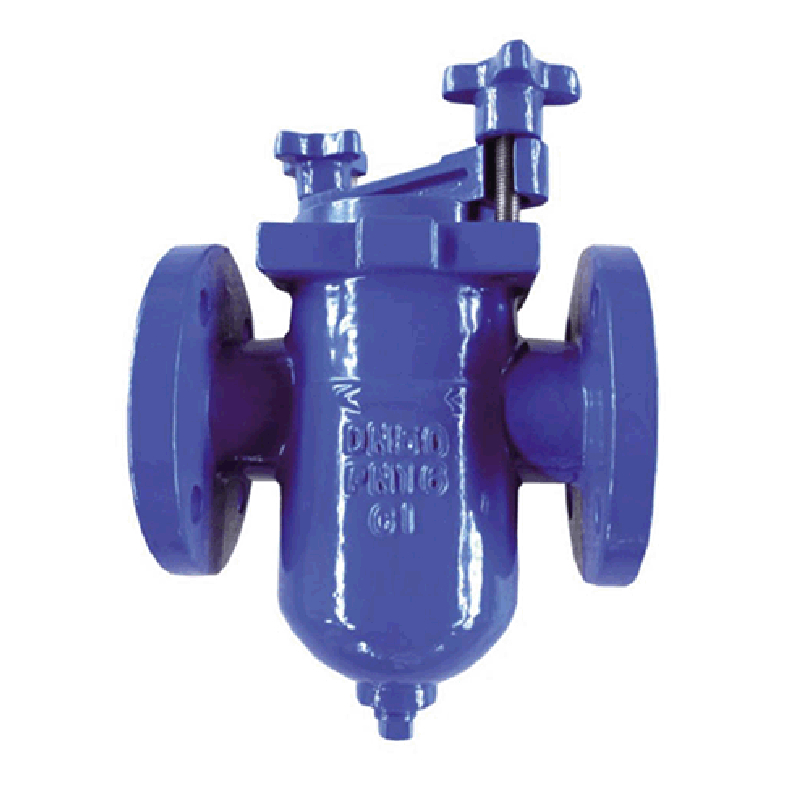
If you’ve been hunting for a strainer for sale that won’t let you down in real-world conditions, you’re in the right place. I’ve toured more than a few fabrication shops, and the good ones sweat the details: flange drilling, basket depth, mesh geometry, and—crucially—testing. This Basket Strainer, manufactured in Hebei, China (No.88 Zhengxi Road, Yanbai Development, Ningjin), reads like a checklist from seasoned maintenance engineers.
What’s changing in the strainer market?
Two trends: buyers want standard-compliant geometry for easy swaps, and they want smarter maintenance (think differential pressure taps, blow-down options). Also, lead times matter. Actually, they matter more than anyone admits—downtime is expensive.
Key specifications (real-world friendly)
| Size Range | DN50–DN500 (2"–20") |
| Flange Dimensions | ASME B16.1 / DIN 2533 / BS 4504 |
| Face-to-Face | ASME B16.10 / DIN 3201 F1 / BS 2080 |
| Testing & Inspection | API 598 / EN 12266 (shell and seat) |
| Body Materials | Carbon steel (coated), Stainless steel 304/316 |
| Basket/Mesh | SS304/316 perforated or mesh insert (≈20–300 mesh) |
| Pressure Class | ASME Class 125/150; PN10/16 (real-world may vary by size) |
| Temperature | Up to ≈300°C with SS; lower with CS + coating |
How it’s built (short version)
- Materials: CS or SS body; SS304/316 baskets for corrosion resistance.
- Methods: CNC machining of flanges, precision basket perforation, TIG/MIG welds, pickling-passivation for SS; epoxy or FBE coating for CS.
- Testing: Hydrostatic shell test 1.5× rated pressure; seat test 1.1×; visual/dimensional to drawings; dye-penetrant on critical welds (when specified).
- Service life: ≈5–10 years in neutral media with routine basket cleaning; aggressive media reduces life—inspect more often.
- Standards: API 598, EN 12266, ASME/DIN/BS dimensional conformance.
Where it’s used (and why)
Water treatment, HVAC chilled water, oil & gas upstream filtration, chemical transfer lines, power plant condensate, and (with correct material) food & beverage utilities. Advantages? Low pressure drop for coarse solids, easy top access, and fast basket swaps. Many customers say the basket depth and handle design make night-shift maintenance a bit less… painful.
Customization options
- Mesh grade and perforation patterns, magnet inserts for ferrous fines.
- Drain plugs, blow-down valves, DP gauge ports, venting.
- NACE-related materials for sour service (on request), paint systems for coastal sites.
- Nameplate and MTR traceability; third-party inspection (BV, SGS) if required.
Vendor comparison (quick reality check)
| Vendor | Certifications | Customization | Lead Time | Typical Price |
| Hebei Manufacturer (Basket Strainer) | ISO 9001; API 598/EN 12266 test reports | High (mesh, taps, coatings) | 2–5 weeks | Mid-range |
| Generic Importer | Basic CoC only | Low | Stock-dependent | Low |
| Local Distributor | Varies by brand | Medium | Immediate–2 weeks | High |
Field notes and mini case studies
Municipal water loop: A PN16, DN300 carbon-steel unit with SS316 basket cut debris carryover by ≈70% and extended pump seal life. After six months, maintenance logged a 40-minute average basket clean—manageable, to be honest.
Chemical transfer (mild corrosives): DN100 all-316 body with 100-mesh insert. No significant pitting at 12 months; DP taps helped operators clean only when needed, not on a timer. That’s the kind of “small win” ops teams love.
Why this matters if you’re browsing a strainer for sale
- Standards-matched dimensions simplify swap-outs.
- Documented testing beats guesswork; ask for the API 598/EN 12266 report.
- Service-friendly lids and baskets save labor, which is rarely budgeted properly.
Certifications, tests, and typical data
- Quality system: ISO 9001 (factory-level).
- Hydro test: shell 1.5×, seat 1.1× rated pressure; zero visible leakage criteria per standard.
- Material traceability: MTRs for pressure parts on request.
If you need a compliant, configurable unit that ships on time, this Basket Strainer is a sensible pick for anyone comparing a strainer for sale against lookalikes.
Authoritative citations
- ASME B16.1, B16.10 – American Society of Mechanical Engineers dimensional standards.
- DIN 2533, DIN 3201 F1 – Deutsches Institut für Normung flange and face-to-face standards.
- BS 4504, BS 2080 – British Standards for flanges and valve dimensions.
- API 598 – American Petroleum Institute: Valve inspection and testing.
- EN 12266 – European standard for industrial valve testing.
Share
Latest news
-
Understanding the 6 butterfly valve price Industrial Buying GuideNewsApr.16,2026
-
Analyzing the 50mm Butterfly Valve Price and Buyer GuideNewsApr.09,2026
-
Comprehensive Guide to 40mm Butterfly Valve Price Factors and Quality ConsiderationsNewsApr.07,2026
-
Comprehensive Guide to 4 Inch Sluice Valve Price and Key Selection FactorsNewsApr.04,2026
-
Comprehensive Guide to 4 Butterfly Valve Price Factors and Ranges in 2024NewsMar.31,2026
-
Comprehensive Guide to 300mm Butterfly Valve Price and Industrial ApplicationsNewsMar.28,2026
 English
  Afrikaans
  Albanian
  Amharic
  Arabic
  Armenian
  Azerbaijani
  Basque
  Belarusian
  Bengali
  Bosnian
  Bulgarian
  Catalan
  Cebuano
  China
China  China (Taiwan)
  Corsican
  Croatian
  Czech
Czech  Danish
  Dutch
Dutch  Esperanto
  Estonian
  Finnish
  French
  Frisian
  Galician
  Georgian
  German
  Greek
Greek  Gujarati
  Haitian Creole
  Hausa
Hausa  Hawaiian
  Hebrew
  Hindi
Hindi  Miao
Miao  Hungarian
  Icelandic
  Igbo
Igbo  Indonesian
  Irish
Irish  Italian
  Japanese
  Javanese
  Kannada
  Kazakh
  Khmer
Khmer  Rwandese
  Korean
  Kurdish
  Kyrgyz
  Lao
Lao  Latin
Latin  Latvian
  Lithuanian
  Luxembourgish
  Macedonian
  Malgashi
  Malay
Malay  Malayalam
  Maltese
  Maori
Maori  Marathi
  Mongolian
  Myanmar
  Nepali
  Norwegian
  Norwegian
  Occitan
  Pashto
  Persian
  Polish
  Portuguese
  Punjabi
  Romanian
  Russian
  Samoan
  Scottish Gaelic
  Serbian
  Sesotho
  Shona
Shona  Sindhi
  Sinhala
  Slovak
  Slovenian
  Somali
  Spanish
  Sundanese
  Swahili
  Swedish
  Tajik
Tajik  Tamil
Tamil  Tatar
Tatar  Telugu
  Thai
Thai  Turkish
  Turkmen
  Ukrainian
  Urdu
Urdu  Uighur
  Uzbek
Uzbek  Vietnamese
  Welsh
Welsh  Bantu
Bantu  Yiddish
  Yoruba
  Zulu
Zulu