Sep . 12, 2025 08:40 Back to list
Different Types of Power Cords: Secure & Reliable Connections
Understanding the Critical Role of different types of power cords in Industrial Applications
In demanding industrial environments, the reliability and safety of power transmission are paramount. The selection of appropriate power cabling is not merely a logistical choice but a critical engineering decision that impacts operational efficiency, system longevity, and personnel safety. Understanding the nuances of different types of power cords is essential for B2B decision-makers and engineers responsible for specifying and deploying robust electrical infrastructure.
From high-voltage distribution to specialized equipment connections, power cable types are engineered to meet specific operational demands, including resistance to harsh chemicals, extreme temperatures, mechanical stress, and electromagnetic interference. This comprehensive overview delves into the technical specifications, manufacturing processes, application scenarios, and key considerations for selecting optimal power cord solutions for various industrial sectors.
Key Industry Trends Shaping Power Cord Development
The landscape of industrial power transmission is continually evolving, driven by technological advancements and shifting market demands. Several key trends are influencing the design and deployment of power cable types:
- Enhanced Energy Efficiency: With rising energy costs and environmental regulations, there's a strong push for power cords that minimize transmission losses. This involves superior conductor materials and optimized insulation designs to reduce resistance and capacitance.
- Miniaturization and Flexibility: As industrial equipment becomes more compact and automated, there's a growing need for smaller diameter, highly flexible power cords that can navigate tight spaces and withstand continuous motion without compromising electrical integrity.
- Extreme Environment Resilience: Industries like petrochemicals and metallurgy require power cords capable of withstanding corrosive chemicals, extreme temperatures (both high and low), UV radiation, and mechanical abrasion. Advanced jacketing materials such as fluoropolymers and specialized cross-linked polyethylenes (XLPE) are gaining prominence.
- Smart Grid Integration and IoT: The advent of Industry 4.0 necessitates power cables that can coexist with or even integrate data transmission capabilities, often requiring enhanced shielding against electromagnetic interference (EMI) to protect sensitive data lines.
- Sustainability and Recyclability: Growing environmental consciousness drives demand for power cords made from recyclable materials, free from hazardous substances like heavy metals, in line with directives such as RoHS and REACH.
These trends underscore the importance of selecting not just any power cord, but specifically engineered solutions tailored to modern industrial challenges, ensuring both performance and compliance.
Technical Specifications and Structure of Industrial Power Cords
The performance of any power cord hinges on its fundamental structure and material composition. Industrial power cords are meticulously engineered with several layers, each serving a critical function. Key components include:
- Conductor: Typically made of high-purity copper due to its excellent electrical conductivity, or aluminum for lighter-weight, lower-cost applications. Conductors can be solid or stranded. Stranded conductors offer greater flexibility and fatigue resistance, crucial for applications involving movement. The size is often specified in American Wire Gauge (AWG) or in square millimeters (mm²).
- Insulation: Surrounds each individual conductor to prevent short circuits and provide dielectric strength. Common materials include Polyvinyl Chloride (PVC), Cross-Linked Polyethylene (XLPE), Ethylene Propylene Rubber (EPR), and Thermoplastic Elastomers (TPE). XLPE, for example, offers superior thermal, electrical, and moisture resistance, making it ideal for high-temperature and outdoor applications like MC (Type XHHW-2) cables.
- Shielding (Optional): Applied to protect against electromagnetic interference (EMI) and radio frequency interference (RFI), and sometimes for grounding purposes. Types include braided shields (copper or aluminum), foil shields (aluminum-polyester tape), or spiral shields. Essential for power cables running near sensitive electronic equipment.
- Jacket/Sheath: The outermost protective layer, providing mechanical protection against abrasion, impact, moisture, chemicals, and UV radiation. Materials like PVC, Neoprene, TPE, and Polyurethane (PUR) are selected based on the operating environment. For instance, PUR offers excellent abrasion and oil resistance.
Here’s an illustrative specification table for an industrial power cord, demonstrating typical parameters:
| Parameter | Description/Value |
|---|---|
| Conductor Material | Annealed Copper (Stranded) |
| Conductor Size Range | 18 AWG to 500 MCM (0.82 mm² to 253 mm²) |
| Insulation Material | XLPE (Cross-Linked Polyethylene) |
| Voltage Rating | 600V - 1000V |
| Temperature Rating | -40°C to +90°C (Dry/Wet) |
| Jacket Material | Thermoplastic Elastomer (TPE) or PVC |
| Flame Retardancy | VW-1, FT1, IEC 60332-1 |
| Oil Resistance | Oil Res I / II (UL 758) |
| Compliance Standards | UL, CSA, RoHS, CE |
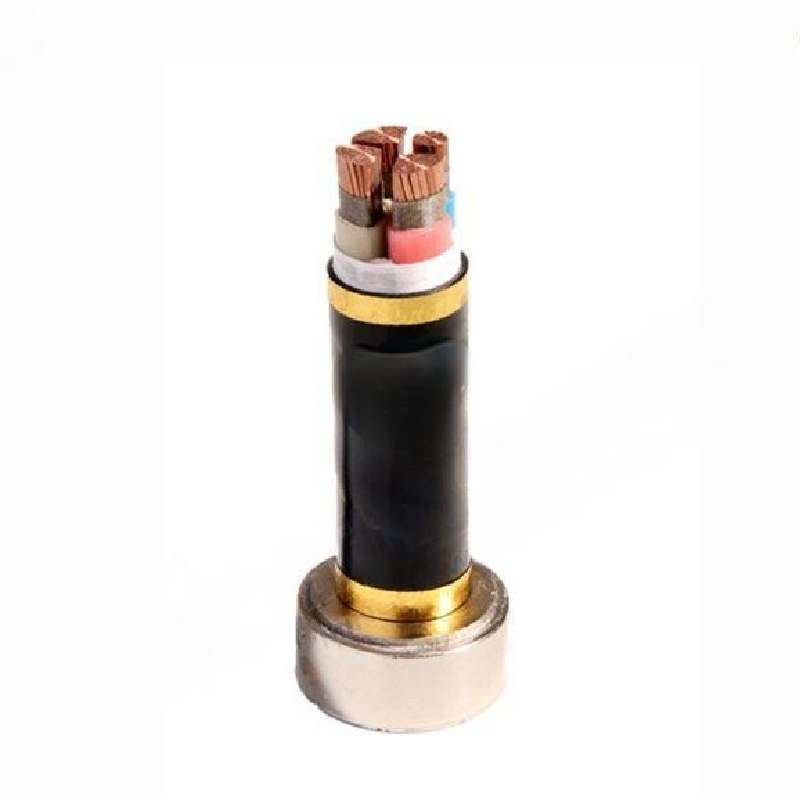
The specification for MC (Type XHHW-2) cable, for instance, denotes a Metal Clad cable with XLPE (Cross-linked Polyethylene) insulation, rated for high-temperature wet or dry locations. Its robust design makes it suitable for power, lighting, and control circuits in diverse applications, offering excellent moisture and heat resistance, aligning with the stringent demands of modern industrial facilities.
Manufacturing Process of Industrial Power Cords
The production of different types of power cords involves a highly controlled, multi-stage manufacturing process to ensure consistent quality and performance. This process adheres to stringent international standards like ISO 9001 for quality management and specific product standards like UL and ANSI.
- Conductor Drawing and Stranding:
High-purity copper or aluminum rods are drawn through a series of dies to achieve the desired wire gauge. For stranded conductors, multiple individual wires are twisted together in a precise configuration (e.g., concentric lay, bunched lay) to achieve flexibility and specific electrical properties. This step is critical for determining the current carrying capacity and mechanical resilience. Quality control at this stage includes measuring wire diameter and conductivity.
- Insulation Extrusion:
The prepared conductors are fed into an extrusion line where a molten polymer (e.g., XLPE, PVC, TPE) is applied evenly around each wire. The thickness of the insulation is meticulously controlled to ensure adequate dielectric strength and compliance with voltage ratings. Curing or cross-linking processes for materials like XLPE are performed at this stage to enhance thermal and mechanical properties. Testing standards (e.g., ASTM D1248) are applied for material properties.
- Cabling/Twisting:
Individual insulated conductors are then twisted together to form the cable core. This step is crucial for maintaining cable geometry, reducing electromagnetic interference, and providing mechanical stability. Fillers (e.g., non-hygroscopic polypropylene) may be added to maintain a circular shape.
- Shielding (if required):
For shielded cables, a metallic layer (braid, foil, or spiral) is applied over the cable core. This provides protection against external electrical noise and can serve as an earth return path. Application methods vary from wrapping to braiding using specialized machinery.
- Jacket Extrusion:
Finally, the outer jacket material (e.g., PVC, Neoprene, PUR) is extruded over the entire cable assembly, providing the primary mechanical and environmental protection. This layer is engineered for properties like abrasion resistance, chemical resistance, flame retardancy, and UV stability. Surface printing for identification (e.g., product name, voltage, certifications) is often done immediately after jacketing.
- Final Testing and Quality Control:
Every finished cable undergoes rigorous testing. This includes electrical tests (e.g., high voltage withstand, insulation resistance, conductor resistance), mechanical tests (e.g., tensile strength, flexibility, abrasion resistance), and environmental tests (e.g., oil resistance, flame propagation, temperature cycling). Compliance with standards like UL 83, IEC 60502, and specific industry standards (e.g., ANSI C2 for National Electrical Safety Code) ensures the product meets or exceeds specifications. The typical service life of well-manufactured industrial power cords, particularly those designed for static applications and installed correctly, can exceed 20-30 years, while those in dynamic or harsh environments might have a service life of 5-10 years, depending on the specific cable type and conditions.
Application Scenarios and Target Industries
The versatility of different types of power cords makes them indispensable across a broad spectrum of heavy industries. Each sector presents unique challenges that demand tailored power solutions:
- Petrochemical Industry: Requires cables with exceptional resistance to hydrocarbons, solvents, and corrosive chemicals, often in hazardous (explosion-proof) environments. Flame retardant and low-smoke zero-halogen (LSZH) properties are critical for safety. For example, cables like MC (Type XHHW-2) excel in these environments due to their robust insulation and jacket materials, resisting degradation from exposure to oils and chemicals prevalent in refineries and chemical plants.
- Metallurgy and Heavy Manufacturing: Demands cables capable of withstanding extreme temperatures, mechanical abrasion, and heavy impact. High-temperature insulation (e.g., mica-based or silicone) and robust, often armored, jackets are essential for steel mills, foundries, and heavy machinery.
- Water Supply & Drainage: Cables must be submersible or highly moisture-resistant, often with excellent UV resistance for outdoor installations. Drinking water approved (DWA) cables are specified for potable water applications, ensuring no leaching of harmful substances.
- Renewable Energy (Solar/Wind): Requires durable, weather-resistant cables that can withstand prolonged UV exposure, wide temperature fluctuations, and ozone. Specialized PV (photovoltaic) cables and wind turbine tower cables are designed for extreme longevity and efficiency.
- Data Centers and IT Infrastructure: While primarily focused on data, power cords for data centers need high reliability, low smoke emissions, and often compact designs to manage dense cable trays. Power Distribution Units (PDUs) and server racks rely on robust, often color-coded, power cords.
- Building Automation & Smart Factories: Flexible and often shielded cables are needed for power and control of automated machinery, robotics, and integrated building management systems. Emphasis is on flexibility for continuous motion and EMI suppression.
In these scenarios, the advantages of high-quality power cords are evident. For instance, cables designed for optimal conductivity and insulation help achieve significant energy saving by minimizing resistive losses over long runs. Furthermore, those engineered with advanced polymers provide superior corrosion resistance, extending operational life in chemical processing plants and reducing costly downtime for replacements.
Technical Advantages of Premium Industrial Power Cords
Investing in high-grade industrial power cords yields significant technical advantages that translate directly into operational benefits and reduced total cost of ownership (TCO). Key advantages include:
- Superior Durability and Longevity: Robust jackets (e.g., TPE, PUR, Neoprene) and strong insulation materials (e.g., XLPE) provide exceptional resistance to mechanical wear, impact, crushing, and abrasion, significantly extending service life even in harsh industrial conditions.
- Enhanced Safety Features: Many industrial power cords incorporate features like flame retardancy (meeting standards like UL 1685, IEC 60332), low smoke production, and zero-halogen materials to mitigate fire risks and protect personnel in enclosed spaces. Specialized cables offer increased protection against electrical shock and overcurrents.
- Optimized Electrical Performance: High-quality conductors (e.g., Class B stranded copper) and precise insulation ensure minimal voltage drop and power loss, contributing to energy efficiency. Excellent dielectric properties prevent insulation breakdown and ensure stable power delivery.
- Environmental Resilience: Cables designed for specific environments offer resistance to oils, chemicals, acids, alkalis, UV radiation, and ozone. This prevents degradation, maintaining electrical integrity and mechanical strength over time.
- EMI/RFI Suppression: Shielded power cable connector types and overall cable designs prevent electromagnetic interference from affecting nearby data or control signals, crucial in complex automation systems.
Vendor Comparison and Selection Criteria
Choosing the right supplier for your industrial power connector types and cables is as crucial as selecting the product itself. A robust vendor partnership ensures consistent quality, compliance, and support. When evaluating potential vendors, consider the following criteria:
- Certifications and Compliance: Verify the vendor’s adherence to international standards (e.g., ISO 9001 for quality, ISO 14001 for environmental management) and product-specific certifications (e.g., UL, CSA, VDE, CE, RoHS, REACH). These signify authoritative validation of their manufacturing processes and product safety.
- Technical Expertise and R&D: A reputable vendor will have a strong engineering team capable of providing in-depth technical support and innovative solutions. Inquire about their R&D investments and ability to adapt to evolving industry requirements.
- Customization Capabilities: For specialized applications, the ability to provide customized lengths, jacket colors, conductor configurations, or specific power cord connector types is invaluable.
- Track Record and Client Portfolio: Look for vendors with decades of experience and a strong portfolio of successful projects and long-term partnerships with leading industrial clients. Testimonials and case studies offer valuable insights into their performance and customer satisfaction.
- Quality Control and Testing: Understand their internal quality control protocols, including their raw material inspection, in-process monitoring, and final product testing procedures. Request access to test data and certifications.
Illustrative Power Cord Comparison Table: Jacket Materials
Different jacket materials offer varying degrees of performance, making the choice dependent on the application environment:
| Jacket Material | Key Properties | Typical Applications | Considerations |
|---|---|---|---|
| PVC (Polyvinyl Chloride) | Good flexibility, moisture resistance, cost-effective. | General purpose, indoor, light industrial. | Poor oil/chemical/abrasion resistance at high levels, limited temp range. |
| TPE (Thermoplastic Elastomer) | Excellent flexibility, wide temp range, good chemical/abrasion resistance. | Robotics, automation, dynamic applications, outdoor. | Higher cost than PVC, specific formulations vary in resistance. |
| PUR (Polyurethane) | Superior abrasion, tear, oil, chemical resistance, excellent flexibility. | Machine tools, heavy industrial, harsh environments, offshore. | Highest cost among common options, specific formulations for hydrolysis resistance. |
| Neoprene (Chloroprene Rubber) | Good oil, chemical, weather, abrasion resistance. Flame retardant. | Mining, marine, general industrial, outdoor. | Less flexible than TPE/PUR, can be heavier. |
Customized Solutions for Unique Industrial Demands
Off-the-shelf power cords often fall short for highly specialized or challenging industrial applications. Many B2B clients benefit immensely from customized power cord solutions tailored to their exact operational parameters. Customization can involve:
- Specific Lengths and Configurations: Pre-cut and terminated lengths reduce waste and installation time. Custom cable assemblies can include specific branching or breakouts for complex machinery.
- Unique Connector Types: Integration of specialized power cable connector types, industrial plugs, or proprietary interfaces directly into the cable assembly.
- Specialized Jacket Materials: Developing jackets with enhanced resistance to specific chemicals, extreme temperatures, or unique mechanical stresses (e.g., highly abrasive environments, continuous flex applications).
- Custom Shielding Solutions: Designing multi-layer shielding or specific braid densities to meet stringent EMI/RFI requirements for sensitive electronic equipment or classified environments.
- Hybrid Cables: Combining power, data, and even fiber optic elements into a single cable jacket to streamline installation and reduce cable clutter in complex systems.
- Color Coding and Marking: Custom jacket colors, stripes, or specialized printing for easier identification, safety, and inventory management in large installations.
A provider's ability to offer bespoke engineering and manufacturing services for different types of power cords demonstrates true expertise and a commitment to solving complex client challenges.
Application Case Studies: Real-World Impact
The practical benefits of selecting the right industrial power cords are best illustrated through real-world applications:
Case Study 1: Enhanced Energy Efficiency in a Modern Data Center
A leading hyperscale data center operator sought to improve power delivery efficiency and reduce cooling loads within its facilities. Their existing power cords, while compliant, exhibited measurable power loss over short to medium runs. By transitioning to custom-designed, low-resistance power cords with optimized stranded copper conductors and advanced XLPE insulation, the data center achieved a 2% reduction in energy consumption for power distribution infrastructure. This seemingly small percentage translated into significant annual savings in electricity costs (millions of dollars) and a tangible decrease in carbon footprint. Customer feedback highlighted not only the energy savings but also the improved thermal stability within racks, extending the life of critical IT equipment.
Case Study 2: Corrosion Resistance in a Marine Offshore Platform
An offshore oil and gas platform faced recurring issues with power cable degradation due to constant exposure to saltwater, UV radiation, and harsh marine chemicals. Standard industrial cables were requiring replacement every 3-5 years, leading to costly downtime and safety concerns. A custom solution involving power cords with heavy-duty, UV-stabilized, and hydrolysis-resistant PUR jackets, coupled with tin-plated copper conductors for superior corrosion resistance, was implemented. The new cables, including specialized power cord connector types designed for marine environments, demonstrated exceptional resilience, exceeding a projected lifespan of 15 years with minimal maintenance. This resulted in a substantial reduction in operational expenditure and a significant boost in platform safety and reliability.
Frequently Asked Questions (FAQ)
- Q: What is the primary difference between PVC and XLPE insulation?
- A: PVC (Polyvinyl Chloride) is a thermoplastic with good electrical properties and cost-effectiveness, suitable for general-purpose applications. XLPE (Cross-Linked Polyethylene) is a thermoset material that, through a chemical cross-linking process, offers superior thermal, electrical, and moisture resistance, making it ideal for higher temperatures, higher voltage, and more demanding industrial environments. MC (Type XHHW-2) cable uses XLPE, indicating its suitability for such applications.
- Q: How do I choose the correct conductor size (AWG/mm²) for my application?
- A: Conductor size is determined by the maximum current the cable needs to carry (ampacity), the voltage drop acceptable over its length, and the ambient temperature. Consulting national electrical codes (e.g., NEC in the US, IEC 60364 internationally) and product data sheets is crucial. Our technical support team can assist with precise calculations.
- Q: What does "Oil Res I / II" mean for a cable jacket?
- A: These ratings typically refer to UL (Underwriters Laboratories) standards for oil resistance. "Oil Res I" indicates resistance to oil at 60°C, while "Oil Res II" signifies resistance at a higher temperature, typically 75°C, providing better performance in environments with significant oil exposure. This is a critical factor for industrial machinery and processing plants.
Lead Time, Warranty, and Customer Support
We understand that timely delivery and reliable support are critical for industrial operations. Our commitment to trustworthiness includes:
- Lead Time & Fulfillment: Standard products typically have a lead time of 2-4 weeks, depending on order volume and specific requirements. For customized solutions, lead times are quoted on a project-specific basis, considering material sourcing and manufacturing complexity. We maintain robust supply chain management to ensure prompt and efficient fulfillment.
- Warranty Commitments: All our industrial power cords are backed by a comprehensive 2-year warranty against manufacturing defects and material failures under normal operating conditions. Extended warranty options are available for specific products and applications, reflecting our confidence in product durability.
- Customer Support & After-Sales Service: Our dedicated technical support team is available from 8 AM to 5 PM (GMT+8) Monday to Friday, providing expert assistance with product selection, installation guidance, and troubleshooting. We offer responsive after-sales support to address any inquiries or issues, ensuring long-term satisfaction and operational continuity for our clients.
Conclusion
The intricate world of industrial power cords demands a meticulous approach to selection, deployment, and maintenance. By understanding the technical specifications, manufacturing processes, and diverse application requirements of different types of power cords, B2B decision-makers can ensure robust, efficient, and safe power transmission within their critical operations. Partnering with a knowledgeable and authoritative vendor who prioritizes quality, customization, and comprehensive support is key to achieving long-term success and maximizing return on investment in industrial infrastructure.
Authoritative References
- National Electrical Code (NEC), NFPA 70. National Fire Protection Association.
- IEC 60502: Power cables with extruded insulation and their accessories for rated voltages from 1 kV (Um = 1,2 kV) up to 30 kV (Um = 36 kV). International Electrotechnical Commission.
- UL 83: Thermoplastic-Insulated Wires and Cables. Underwriters Laboratories.
- IEEE Standard 1584: Guide for Performing Arc-Flash Hazard Calculations. Institute of Electrical and Electronics Engineers.
- Handbook of Electrical Power Calculations. H. Wayne Beaty, Donald G. Fink. McGraw-Hill Education.
Share
Latest news
-
Understanding the 6 butterfly valve price Industrial Buying GuideNewsApr.16,2026
-
Analyzing the 50mm Butterfly Valve Price and Buyer GuideNewsApr.09,2026
-
Comprehensive Guide to 40mm Butterfly Valve Price Factors and Quality ConsiderationsNewsApr.07,2026
-
Comprehensive Guide to 4 Inch Sluice Valve Price and Key Selection FactorsNewsApr.04,2026
-
Comprehensive Guide to 4 Butterfly Valve Price Factors and Ranges in 2024NewsMar.31,2026
-
Comprehensive Guide to 300mm Butterfly Valve Price and Industrial ApplicationsNewsMar.28,2026
 English
  Afrikaans
  Albanian
  Amharic
  Arabic
  Armenian
  Azerbaijani
  Basque
  Belarusian
  Bengali
  Bosnian
  Bulgarian
  Catalan
  Cebuano
  China
China  China (Taiwan)
  Corsican
  Croatian
  Czech
Czech  Danish
  Dutch
Dutch  Esperanto
  Estonian
  Finnish
  French
  Frisian
  Galician
  Georgian
  German
  Greek
Greek  Gujarati
  Haitian Creole
  Hausa
Hausa  Hawaiian
  Hebrew
  Hindi
Hindi  Miao
Miao  Hungarian
  Icelandic
  Igbo
Igbo  Indonesian
  Irish
Irish  Italian
  Japanese
  Javanese
  Kannada
  Kazakh
  Khmer
Khmer  Rwandese
  Korean
  Kurdish
  Kyrgyz
  Lao
Lao  Latin
Latin  Latvian
  Lithuanian
  Luxembourgish
  Macedonian
  Malgashi
  Malay
Malay  Malayalam
  Maltese
  Maori
Maori  Marathi
  Mongolian
  Myanmar
  Nepali
  Norwegian
  Norwegian
  Occitan
  Pashto
  Persian
  Polish
  Portuguese
  Punjabi
  Romanian
  Russian
  Samoan
  Scottish Gaelic
  Serbian
  Sesotho
  Shona
Shona  Sindhi
  Sinhala
  Slovak
  Slovenian
  Somali
  Spanish
  Sundanese
  Swahili
  Swedish
  Tajik
Tajik  Tamil
Tamil  Tatar
Tatar  Telugu
  Thai
Thai  Turkish
  Turkmen
  Ukrainian
  Urdu
Urdu  Uighur
  Uzbek
Uzbek  Vietnamese
  Welsh
Welsh  Bantu
Bantu  Yiddish
  Yoruba
  Zulu
Zulu