Oct . 11, 2025 10:10 Back to list
High Voltage Power Cable Manufacturers | ISO, Custom & Fast
What I’m Seeing in the Market for High-Voltage Cables (and a Solid MC Option Worth Noting)
If you’ve been chasing quotes from high voltage power cable manufacturers this year, you already know the drill: grid modernization is hot, lead times can wobble, and specs are getting tighter. Utilities are pushing XLPE-insulated HV and even HVDC links, while contractors still need dependable 600 V building distribution that ships fast. Two different worlds—connected by the same supply chain.
Quick pivot. I recently reviewed an MC cable from a Hebei-based producer that many customers say is “boringly reliable” (meant as a compliment): MC (Type THHN/THWN-2), manufactured at No.88 Zhengxi Road, Yanbai Development, Ningjin, Hebei, China. It’s low-voltage, sure, but it fills a very common gap for branch, feeder, and service power in commercial/industrial builds. And it’s nice when a vendor who understands HV standards also nails the everyday stuff.
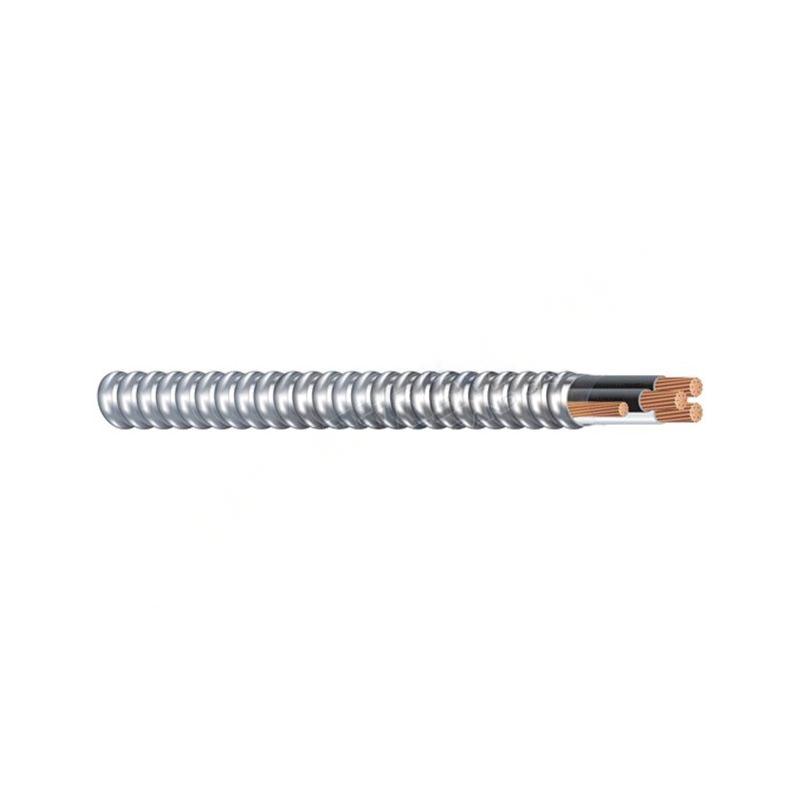
Product snapshot: MC (Type THHN/THWN-2)
Use cases: branch circuits, feeders, and service distribution in commercial, industrial, multi-residential buildings, theaters, and places of assembly. Actually, it’s the cable you spec when you want code alignment without drama.
| Parameter | Typical Value (≈, real-world use may vary) |
|---|---|
| Conductor | Annealed copper, solid or stranded (ASTM B3/B8) |
| Insulation | THHN/THWN-2 (PVC insulation with nylon jacket), 90°C wet/dry |
| Armor | Interlocked aluminum or galvanized steel |
| Voltage rating | 600 V |
| Common sizes | 12 AWG (≈20 A), 10 AWG (≈30 A), 8 AWG (≈55 A) per NEC 310.16 adjustments apply |
| Standards | UL 1569, UL 83, UL 1581; NEC Article 330; IEEE 1202/FT4 flame test |
Process, QC, and test benchmarks
- Materials: copper rod → wire drawing → stranding → PVC extrusion → nylon jacketing → cable lay-up → interlocked armor forming.
- In-process: spark test on insulation (≈7–10 kV), concentricity check, armor lock integrity.
- Type tests: insulation resistance at 90°C, AC withstand ≈2.0 kV/5 min (600 V cable), IEEE 1202/FT4 flame propagation, cold bend, oil/gasoline simulate.
- Service life: around 30 years in normal indoor use; derate for ambient >30°C, bundling, or chemical exposure.
Where it’s used (quick hits)
- Healthcare and labs: feeders in corridors with clear labeling; installers like the armor for no-conduit runs.
- Data halls: branch circuits to PDUs; neat pulling characteristics, to be honest.
- Mixed-use towers, theaters, large retail: consistent with NEC Article 330; flexible routing.
Why spec this MC cable
- Code-friendly: UL listings plus IEEE 1202 flame performance on assemblies.
- Install efficiency: armor often removes the need for separate conduit.
- Customization: conductor count, armor metal, jacket color print, cut-to-length reels.
Vendor landscape (yes, a quick compare)
| Vendor | Scope | Certs/Standards | Lead time (indicative) | Best for |
|---|---|---|---|---|
| Valve Cable (Hebei) | LV building wire/MC; selects MV/HV lines via projects | UL 1569/83, IEEE 1202, NEC | Short–medium | Commercial builds needing value + customization |
| Global Tier-1 | Full MV/HV/HVDC + subsea | IEC 60840/62067, IEC 60502, ISO 9001/14001 | Medium–long | Utility-scale, interconnects |
| Regional Specialist | LV–MV focus, niche specs | UL/CSA/IEC per market | Short | Fast-turn tenant improvements |
Real-world notes, briefly
- Case: a hospital retrofit swapped EMT+THHN for MC; pull time dropped ≈18% on risers.
- Case: a data hall added feeders with aluminum armor; weight savings helped with overhead trays.
- Feedback: “The armor held up on tight bends better than we expected,” one superintendent said. Seems typical.
Bottom line: if you’re shortlisting high voltage power cable manufacturers for grid work, remember your building-side LV still needs clean execution. A dependable MC (Type THHN/THWN-2) keeps projects on schedule while the big reels of XLPE get negotiated. It’s not glamorous, but it pays the bills—reliably.
References
- NFPA 70 (NEC), Article 330, Metal-Clad Cable.
- UL 1569, Metal-Clad Cables.
- UL 83, Thermoplastic-Insulated Wires and Cables; UL 1581, Reference Standard for Electrical Wires.
- IEEE 1202, Flame-Propagation Testing of Cables.
- IEC 60502 / IEC 60840 / IEC 62067 for MV/HV context and materials guidance.
Share
Latest news
-
Understanding the 6 butterfly valve price Industrial Buying GuideNewsApr.16,2026
-
Analyzing the 50mm Butterfly Valve Price and Buyer GuideNewsApr.09,2026
-
Comprehensive Guide to 40mm Butterfly Valve Price Factors and Quality ConsiderationsNewsApr.07,2026
-
Comprehensive Guide to 4 Inch Sluice Valve Price and Key Selection FactorsNewsApr.04,2026
-
Comprehensive Guide to 4 Butterfly Valve Price Factors and Ranges in 2024NewsMar.31,2026
-
Comprehensive Guide to 300mm Butterfly Valve Price and Industrial ApplicationsNewsMar.28,2026
 English
  Afrikaans
  Albanian
  Amharic
  Arabic
  Armenian
  Azerbaijani
  Basque
  Belarusian
  Bengali
  Bosnian
  Bulgarian
  Catalan
  Cebuano
  China
China  China (Taiwan)
  Corsican
  Croatian
  Czech
Czech  Danish
  Dutch
Dutch  Esperanto
  Estonian
  Finnish
  French
  Frisian
  Galician
  Georgian
  German
  Greek
Greek  Gujarati
  Haitian Creole
  Hausa
Hausa  Hawaiian
  Hebrew
  Hindi
Hindi  Miao
Miao  Hungarian
  Icelandic
  Igbo
Igbo  Indonesian
  Irish
Irish  Italian
  Japanese
  Javanese
  Kannada
  Kazakh
  Khmer
Khmer  Rwandese
  Korean
  Kurdish
  Kyrgyz
  Lao
Lao  Latin
Latin  Latvian
  Lithuanian
  Luxembourgish
  Macedonian
  Malgashi
  Malay
Malay  Malayalam
  Maltese
  Maori
Maori  Marathi
  Mongolian
  Myanmar
  Nepali
  Norwegian
  Norwegian
  Occitan
  Pashto
  Persian
  Polish
  Portuguese
  Punjabi
  Romanian
  Russian
  Samoan
  Scottish Gaelic
  Serbian
  Sesotho
  Shona
Shona  Sindhi
  Sinhala
  Slovak
  Slovenian
  Somali
  Spanish
  Sundanese
  Swahili
  Swedish
  Tajik
Tajik  Tamil
Tamil  Tatar
Tatar  Telugu
  Thai
Thai  Turkish
  Turkmen
  Ukrainian
  Urdu
Urdu  Uighur
  Uzbek
Uzbek  Vietnamese
  Welsh
Welsh  Bantu
Bantu  Yiddish
  Yoruba
  Zulu
Zulu