Nov . 07, 2025 13:15 Back to list
AAAC Cable: High Strength, Low Sag, Corrosion Resistant
The Quiet Workhorse of Overhead Lines: Aaac Cable in 2025
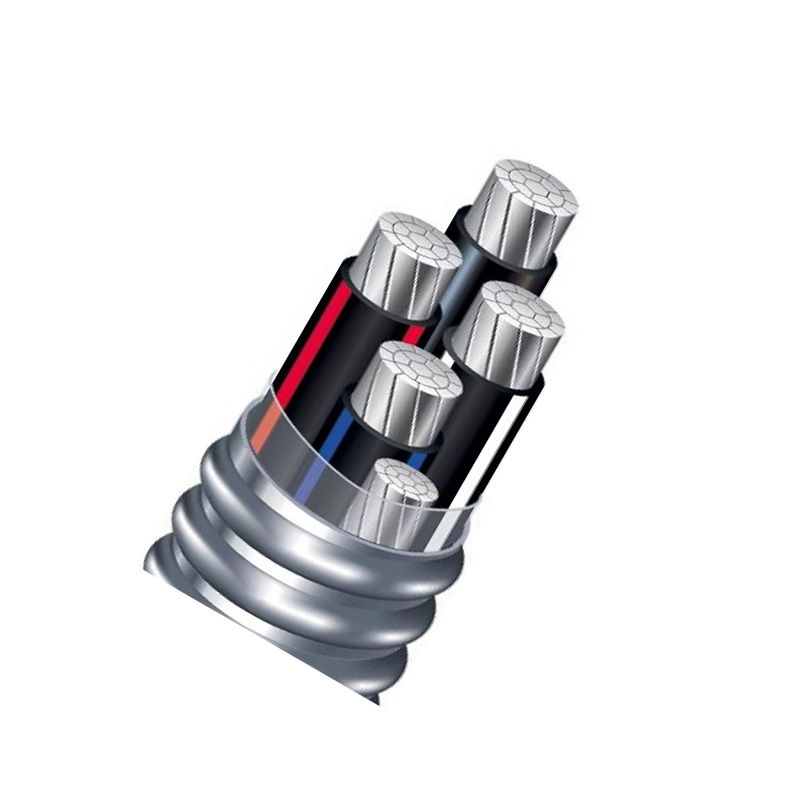
If you spend time around transmission crews or standards committees, you’ll hear the same refrain: reliability with less maintenance. That’s where Aaac Cable (all-aluminum alloy conductor) has quietly earned its stripes. Since the early 1900s, aluminum and aluminum-alloy conductors have carried the grid, but AAAC’s modern chemistry—typically 6201-T81—has sharpened the balance of strength, sag, and corrosion resistance. In fact, many customers say it’s the “set-and-forget” option for coastal and industrial atmospheres.
Industry Trends and Where Aaac Cable Fits
Utilities are doubling down on lines that can handle higher ambient temps, storm cycles, and salt-laden air. We’re also seeing faster build-out near wind and solar plants, where approvals can be quicker if hardware is standard and proven. Aaac Cable often wins these bids thanks to its all-aluminum construction—no steel core, less galvanic risk, lighter pulls, decent ampacity, and respectable mechanical strength.
Typical Applications
- Distribution and sub-transmission (≈ 11–132 kV) in coastal or corrosive zones
- Renewable tie-lines and industrial feeders where lighter stringing helps
- Urban reconductoring projects prioritizing sag control and lower maintenance
How It’s Made (Quick Process Flow)
Materials: Aluminum alloy 6201 wire rod → Wire Drawing: multi-stage drawing with controlled lubrication → Stranding: concentric lay (typically 7–61 wires) → Heat Treatment: solution + artificial aging to T81 (supplier or in-line) → Finishing: surface inspection, coil/ drum winding → Testing: DC resistance, UTS, elongation, stress–strain, lay length, diameter, and creep.
Testing Standards and Certifications
- IEC 61089, EN 50182 for conductor geometry and mechanical tests
- ASTM B399/B399M for AAAC (6201-T81)
- Type tests: UTS, electrical resistance at 20°C, stress–strain, creep, torsion
- Factory QA often under ISO 9001; utilities may request IEC/ASTM witness tests
Product Snapshot: Aluminum Alloy Conductor Cable
| Parameter | Typical Spec (≈, real-world may vary) |
|---|---|
| Alloy | Al 6201-T81 (AAAC) |
| Construction | Concentric lay, 7–61 wires |
| Nominal Area | 50–500 mm² common |
| DC Resistance (20°C) | ≈ 0.579 Ω/km (100 mm² example) |
| Conductivity | ≈ 52.5% IACS |
| Rated Tensile Strength | ≈ 30–160 kN (size-dependent) |
| Operating Temp | Up to 90°C continuous (utility-specific) |
| Standards | IEC 61089, EN 50182, ASTM B399/B399M |
Advantages (Why engineers pick Aaac Cable)
- Corrosion resistance with no steel core; good for coastal corridors
- Lower weight per span, easier stringing, decent ampacity
- Predictable sag behavior and competitive life-cycle cost (≈ 30–40+ years)
Vendor Snapshot and Customization
| Vendor | Certs | Lead Time | Customization |
|---|---|---|---|
| Valve Cable (Origin: No.88 Zhengxi Rd, Ningjin, Hebei, China) | ISO 9001; IEC/ASTM test reports | ≈ 2–5 weeks | Sizes, lay, drum specs, markings |
| Regional Supplier A | ISO 9001 | 3–8 weeks | Standard sizes only |
| Global Brand B | ISO 9001/14001 | 4–10 weeks | Extended type-testing options |
To be honest, the right choice often comes down to delivery risk, reel handling specs, and whether the supplier will match your utility’s sag-tension tables.
Field Notes, Test Data, and Feedback
- Sample 100 mm² AAAC: measured UTS ≈ 62 kN; DC R20 ≈ 0.579 Ω/km; elongation ≥ 3% (type test)
- Many maintenance teams report fewer corrosion-related patrol finds vs. comparable ACSR in salt zones.
- Ampacity should be verified via IEEE 738 with local weather files—don’t guess.
Mini Case Studies
Coastal Distribution, SE Asia: 22 kV rebuild using Aaac Cable cut patrol corrosion findings by ~40% year-on-year. Solar Tie-Line, US Southwest: lighter AAAC enabled single-pull installation over rugged terrain, trimming build schedule by nine days—surprisingly impactful on PPA milestones.
Final Word
If your spec leans toward reliability with pragmatic installation, Aaac Cable remains a safe, standards-backed choice. Just align the alloy, size, and sag-tension with the standards below and insist on witnessed tests when timelines allow.
Authoritative References
- IEC 61089: Overhead electrical conductors — Round wire concentric lay stranding.
- ASTM B399/B399M: Concentric-Lay-Stranded Conductors of 6201-T81 Aluminum Alloy (AAAC).
- EN 50182: Conductors for overhead lines — Round wire concentric lay stranded conductors.
- IEEE Std 738: Standard for Calculating the Current-Temperature of Bare Overhead Conductors.
Share
Latest news
-
Understanding the 6 butterfly valve price Industrial Buying GuideNewsApr.16,2026
-
Analyzing the 50mm Butterfly Valve Price and Buyer GuideNewsApr.09,2026
-
Comprehensive Guide to 40mm Butterfly Valve Price Factors and Quality ConsiderationsNewsApr.07,2026
-
Comprehensive Guide to 4 Inch Sluice Valve Price and Key Selection FactorsNewsApr.04,2026
-
Comprehensive Guide to 4 Butterfly Valve Price Factors and Ranges in 2024NewsMar.31,2026
-
Comprehensive Guide to 300mm Butterfly Valve Price and Industrial ApplicationsNewsMar.28,2026
 English
  Afrikaans
  Albanian
  Amharic
  Arabic
  Armenian
  Azerbaijani
  Basque
  Belarusian
  Bengali
  Bosnian
  Bulgarian
  Catalan
  Cebuano
  China
China  China (Taiwan)
  Corsican
  Croatian
  Czech
Czech  Danish
  Dutch
Dutch  Esperanto
  Estonian
  Finnish
  French
  Frisian
  Galician
  Georgian
  German
  Greek
Greek  Gujarati
  Haitian Creole
  Hausa
Hausa  Hawaiian
  Hebrew
  Hindi
Hindi  Miao
Miao  Hungarian
  Icelandic
  Igbo
Igbo  Indonesian
  Irish
Irish  Italian
  Japanese
  Javanese
  Kannada
  Kazakh
  Khmer
Khmer  Rwandese
  Korean
  Kurdish
  Kyrgyz
  Lao
Lao  Latin
Latin  Latvian
  Lithuanian
  Luxembourgish
  Macedonian
  Malgashi
  Malay
Malay  Malayalam
  Maltese
  Maori
Maori  Marathi
  Mongolian
  Myanmar
  Nepali
  Norwegian
  Norwegian
  Occitan
  Pashto
  Persian
  Polish
  Portuguese
  Punjabi
  Romanian
  Russian
  Samoan
  Scottish Gaelic
  Serbian
  Sesotho
  Shona
Shona  Sindhi
  Sinhala
  Slovak
  Slovenian
  Somali
  Spanish
  Sundanese
  Swahili
  Swedish
  Tajik
Tajik  Tamil
Tamil  Tatar
Tatar  Telugu
  Thai
Thai  Turkish
  Turkmen
  Ukrainian
  Urdu
Urdu  Uighur
  Uzbek
Uzbek  Vietnamese
  Welsh
Welsh  Bantu
Bantu  Yiddish
  Yoruba
  Zulu
Zulu