Oct . 17, 2025 09:45 Back to list
Pipe Expansion Joint Types | Durable, Leakproof, Flexible
A field guide to pipe expansion joint types (and why a dismantling joint saves your schedule)
If you spend enough time around pump rooms and pipe racks, you’ll notice a pattern: alignment is never perfect, anchors shift, and maintenance crews want an escape hatch. That’s where the family of pipe expansion joint types comes in—metal bellows for thermal growth, rubber for vibration, fabric for low-pressure ducts—and the quietly essential Dismantling Joint that makes installation and pull-out practical. To be honest, I’ve seen more downtime saved by a good dismantling joint than a shiny bellows ever did.
Industry trend check
Two things are happening right now: higher pump speeds (hello, VFD retrofits) and tighter outage windows. Plants are mixing solutions—metal bellows to absorb growth, rubber joints near pumps for noise, and a dismantling joint to make flanged equipment removable in minutes. Many customers say this hybrid approach is cheaper than over-sizing a single “do-it-all” expansion joint.
Where the Dismantling Joint fits
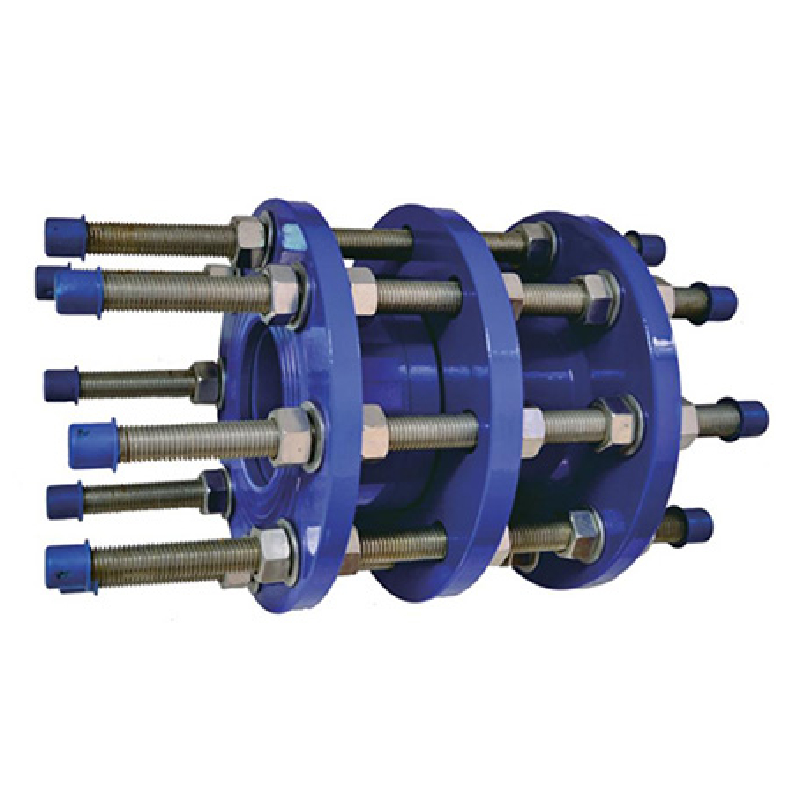
Think of a dismantling joint as the adjustable spacer that lets you compress or extend the pipeline to pull a valve or meter. It doesn’t “absorb” thermal growth like other pipe expansion joint types; it gives you installation tolerance, restraint, and fast maintenance access. In tight galleries, that’s gold.
Dismantling Joint — key specs (product snapshot)
| Body | St37 galvanized steel (Origin: No.88 Zhengxi Road, Yanbai Development, Ningjin, Hebei, China) |
| Seals | EPDM (ASTM D2000) / NBR for oils |
| Bolts/Nuts | ST37 galvanized bolts; zinced carbon steel nuts |
| Size range | DN80–DN2000 (≈ DN range; real-world use may vary) |
| Pressure class | PN10/16 standard; PN25 by request |
| Axial adjustability | ≈ ±25–50 mm depending on DN |
| Temp window | EPDM: −20 to +80°C; NBR: −10 to +100°C |
| Flanges | EN 1092-2 / ASME B16.5 drilling on request |
Materials, methods, and testing
Manufacture typically goes: plate forming → welding → hot-dip galvanizing → machining → seal fitment → assembly torque → hydrotest. We’ve seen hydrostatic tests at 1.5× rated pressure and leak tests at 1.1×, referencing AWWA C219 principles; elastomer checks per ASTM D2000; gasket geometry per ISO 4633. Typical service life? 15–25 years in treated water, shorter in hot oil or brine unless you specify NBR and improved coating.
Application snapshots
-
- Water treatment and desalination: rapid pump swap-outs.
- District heating: alignment compensation near heat exchangers.
- Mining slurry lines: as a removable spool next to knife-gate valves.
- Fire protection: makes backflow preventers service-friendly.
Vendor comparison (field-notes, approximate)
| Vendor | Certs | Customization | Pressure | Lead time |
|---|---|---|---|---|
| Valve-Cable (Dismantling Joint) | ISO 9001; EN 1092 drilling | Flange patterns, coatings, EPDM/NBR | PN10/16 (PN25 optional) | ≈ 2–4 weeks |
| Brand X (generic) | ISO 9001 (varies) | Limited gasket options | PN10 | ≈ 4–6 weeks |
| OEM Y (project-based) | ISO 9001; project ITP | High customization | PN16–25 | ≈ 6–10 weeks |
Case study (quick): municipal pump station
A coastal utility swapped 3 × DN300 pump sets. Using a dismantling joint next to each butterfly valve, crews cut pull time from ~3 hours to ~50 minutes per pump. Hydrotest logged 1.5× PN16 with zero visible leakage over 30 minutes. Feedback was almost boringly positive—“we should’ve done this years ago.”
Standards you’ll hear in the hallway
-
- EJMA for metal bellows (other pipe expansion joint types).
- AWWA C219 for couplings/dismantling principles.
- EN 1092-2 for flange drilling; EN 545 for ductile-iron pipeline context.
- ASTM D2000 for EPDM/NBR; ISO 4633 for gasket dimensions/requirements.
- ASME B31.1/B31.3 for system design and installation practices.
Bottom line: match the job—use metal or rubber joints for movement, and the dismantling joint to make it all buildable and maintainable. It seems simple; surprisingly, it’s what keeps projects on time.
- EJMA Standards, Expansion Joint Manufacturers Association
- AWWA C219, Bolted Sleeve-Type Couplings for Plain-End Pipe
- EN 1092-2, Flanges and their joints
- ASTM D2000, Standard Classification System for Rubber
- ASME B31.3, Process Piping Code
Share
Latest news
-
Understanding the 6 butterfly valve price Industrial Buying GuideNewsApr.16,2026
-
Analyzing the 50mm Butterfly Valve Price and Buyer GuideNewsApr.09,2026
-
Comprehensive Guide to 40mm Butterfly Valve Price Factors and Quality ConsiderationsNewsApr.07,2026
-
Comprehensive Guide to 4 Inch Sluice Valve Price and Key Selection FactorsNewsApr.04,2026
-
Comprehensive Guide to 4 Butterfly Valve Price Factors and Ranges in 2024NewsMar.31,2026
-
Comprehensive Guide to 300mm Butterfly Valve Price and Industrial ApplicationsNewsMar.28,2026
 English
  Afrikaans
  Albanian
  Amharic
  Arabic
  Armenian
  Azerbaijani
  Basque
  Belarusian
  Bengali
  Bosnian
  Bulgarian
  Catalan
  Cebuano
  China
China  China (Taiwan)
  Corsican
  Croatian
  Czech
Czech  Danish
  Dutch
Dutch  Esperanto
  Estonian
  Finnish
  French
  Frisian
  Galician
  Georgian
  German
  Greek
Greek  Gujarati
  Haitian Creole
  Hausa
Hausa  Hawaiian
  Hebrew
  Hindi
Hindi  Miao
Miao  Hungarian
  Icelandic
  Igbo
Igbo  Indonesian
  Irish
Irish  Italian
  Japanese
  Javanese
  Kannada
  Kazakh
  Khmer
Khmer  Rwandese
  Korean
  Kurdish
  Kyrgyz
  Lao
Lao  Latin
Latin  Latvian
  Lithuanian
  Luxembourgish
  Macedonian
  Malgashi
  Malay
Malay  Malayalam
  Maltese
  Maori
Maori  Marathi
  Mongolian
  Myanmar
  Nepali
  Norwegian
  Norwegian
  Occitan
  Pashto
  Persian
  Polish
  Portuguese
  Punjabi
  Romanian
  Russian
  Samoan
  Scottish Gaelic
  Serbian
  Sesotho
  Shona
Shona  Sindhi
  Sinhala
  Slovak
  Slovenian
  Somali
  Spanish
  Sundanese
  Swahili
  Swedish
  Tajik
Tajik  Tamil
Tamil  Tatar
Tatar  Telugu
  Thai
Thai  Turkish
  Turkmen
  Ukrainian
  Urdu
Urdu  Uighur
  Uzbek
Uzbek  Vietnamese
  Welsh
Welsh  Bantu
Bantu  Yiddish
  Yoruba
  Zulu
Zulu