Oct . 28, 2025 13:40 Back to list
Double Eccentric Flange Butterfly Valve | Leak-Tight
Double Eccentric Flange Butterfly Valve: field-notes from an engineer’s notebook
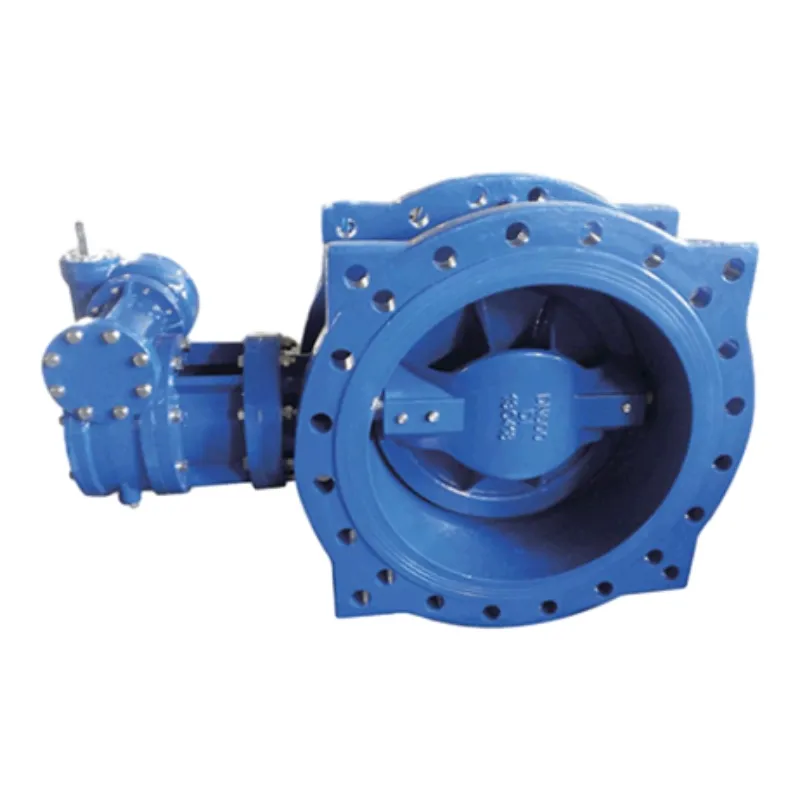
I’ve seen the market swing back to resilient-seated high-performance butterfly valves lately—driven by water reuse projects, district energy retrofits, and yes, the relentless push for lower operating torque. In that context, the Double Eccentric Flange Butterfly Valve has become a quiet workhorse. Origin matters too: this model comes out of No.88 Zhengxi Road, Yanbai Development, Ningjin, Hebei, China—an area that, to be honest, has built a solid machining and coating ecosystem over the last decade.
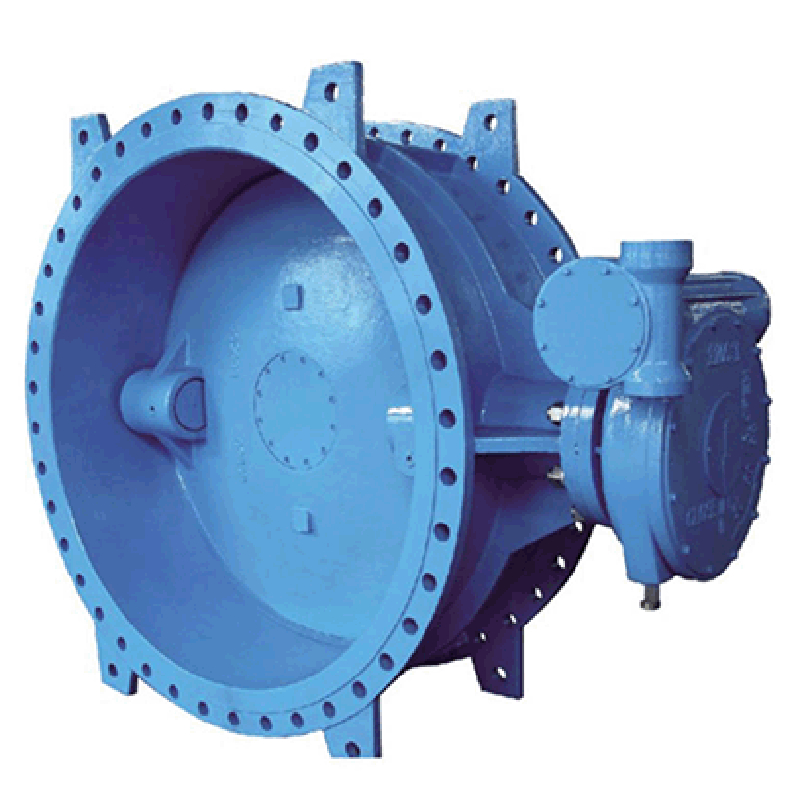
What “double eccentric” really does for you
The double offset between shaft and seat reduces friction during opening/closing. Net effect: lower torque, longer seat life, cleaner shut-off at pressure. Many customers say it’s the sweet spot—simpler than triple-offset but far more robust than concentric. Sizes up to 120" are available, which is, surprisingly, less exotic than it sounds for big water lines and intake structures.
Baseline specs (with the usual caveats)
| Parameter | Detail |
|---|---|
| Design & manufacture | EN 593 / BS 5155 |
| Face-to-face | EN 558 / ISO 5752 / DIN 3202 |
| Flanges | EN 1092-2 or ASME B16.1 |
| Top flange | ISO 5211 actuator interface |
| Test & inspection | API 598 / EN 12266 |
| Materials (typical) | Body: ductile iron or carbon steel; Disc: SS or Ni-coated DI; Seat: EPDM/NBR/Viton |
| Coating | Fusion-bonded epoxy ≈250–300 μm (real-world use may vary) |
| Actuation | Manual gear, pneumatic, electric (ISO 5211) |
Process flow, testing, and service life
- Materials: certified heats; chemical analysis per mill certs.
- Casting & machining: precision boring for concentricity; offset seat geometry verified by CMM.
- Seat molding & assembly: controlled compression set; surface finish Ra ≤ 0.8 μm on sealing edge.
- Coating: shot blast SA2.5, FBE or epoxy to spec; holiday test at 2.5–3.0 kV.
- Testing: shell and seat per API 598 / EN 12266; torque curve recorded for QA.
Typical service life: 50,000–200,000 cycles depending on media, pressure, and actuation. In potable water, I usually see 20–30 years with routine gear re-greasing.
Test data snapshot: DN600, PN16, seat test at 1.1×PN → zero visible leakage (EN 12266 Rate A); breakaway torque ≈ 30–35% lower than a comparable concentric butterfly valve.
Applications where it shines
Water and wastewater treatment, desalination intakes, cooling water in power plants, district energy loops, HVAC mains, shipbuilding, and some light hydrocarbons (with Viton seat). The Double Eccentric Flange Butterfly Valve keeps headloss modest and maintenance simple.
Vendor landscape (real projects rarely pick on price alone)
| Vendor | Size range | Certifications | Coating | Lead time ≈ |
|---|---|---|---|---|
| Valve-Cable (Hebei) | DN80–DN3000 (to 120") | EN 593, API 598, EN 12266 | FBE/Epoxy | 4–10 weeks |
| Suzhou ValveTech | DN100–DN2000 | EN 593, ISO 5211 | Epoxy | 6–12 weeks |
| GlobalBrand Flow | DN150–DN2400 | API 598, EN 12266 | FBE | 8–14 weeks |
Note: indicative information from recent bids; verify against current datasheets.
Customization and options
- Seats: EPDM (potable), NBR (oil), Viton (chemicals).
- Discs: SS316, duplex, or Ni-coated DI for corrosion resistance.
- Actuation: gear, electric with modulating control, pneumatic double-acting or spring-return.
- Witness testing, 3.1 material certs, paint DFT reports on request.
A quick case in point
A coastal desal plant swapped aging gate valves for Double Eccentric Flange Butterfly Valve units on a DN1200 intake loop. Operations reported a 30% torque reduction and faster isolation. Post-install test per EN 12266 achieved Rate A (zero visible leakage). Not flashy, just solid.
Authoritative citations
- EN 593: Industrial valves — Metallic butterfly valves (CEN)
- API 598: Valve Inspection and Testing (American Petroleum Institute)
- EN 12266: Industrial valves — Testing of metallic valves (CEN)
- ISO 5211: Industrial valves — Part-turn actuator attachments (ISO)
- EN 1092-2 and EN 558 / ISO 5752: Flanges and Face-to-Face (CEN/ISO)
Share
Latest news
-
Understanding the 6 butterfly valve price Industrial Buying GuideNewsApr.16,2026
-
Analyzing the 50mm Butterfly Valve Price and Buyer GuideNewsApr.09,2026
-
Comprehensive Guide to 40mm Butterfly Valve Price Factors and Quality ConsiderationsNewsApr.07,2026
-
Comprehensive Guide to 4 Inch Sluice Valve Price and Key Selection FactorsNewsApr.04,2026
-
Comprehensive Guide to 4 Butterfly Valve Price Factors and Ranges in 2024NewsMar.31,2026
-
Comprehensive Guide to 300mm Butterfly Valve Price and Industrial ApplicationsNewsMar.28,2026
 English
  Afrikaans
  Albanian
  Amharic
  Arabic
  Armenian
  Azerbaijani
  Basque
  Belarusian
  Bengali
  Bosnian
  Bulgarian
  Catalan
  Cebuano
  China
China  China (Taiwan)
  Corsican
  Croatian
  Czech
Czech  Danish
  Dutch
Dutch  Esperanto
  Estonian
  Finnish
  French
  Frisian
  Galician
  Georgian
  German
  Greek
Greek  Gujarati
  Haitian Creole
  Hausa
Hausa  Hawaiian
  Hebrew
  Hindi
Hindi  Miao
Miao  Hungarian
  Icelandic
  Igbo
Igbo  Indonesian
  Irish
Irish  Italian
  Japanese
  Javanese
  Kannada
  Kazakh
  Khmer
Khmer  Rwandese
  Korean
  Kurdish
  Kyrgyz
  Lao
Lao  Latin
Latin  Latvian
  Lithuanian
  Luxembourgish
  Macedonian
  Malgashi
  Malay
Malay  Malayalam
  Maltese
  Maori
Maori  Marathi
  Mongolian
  Myanmar
  Nepali
  Norwegian
  Norwegian
  Occitan
  Pashto
  Persian
  Polish
  Portuguese
  Punjabi
  Romanian
  Russian
  Samoan
  Scottish Gaelic
  Serbian
  Sesotho
  Shona
Shona  Sindhi
  Sinhala
  Slovak
  Slovenian
  Somali
  Spanish
  Sundanese
  Swahili
  Swedish
  Tajik
Tajik  Tamil
Tamil  Tatar
Tatar  Telugu
  Thai
Thai  Turkish
  Turkmen
  Ukrainian
  Urdu
Urdu  Uighur
  Uzbek
Uzbek  Vietnamese
  Welsh
Welsh  Bantu
Bantu  Yiddish
  Yoruba
  Zulu
Zulu