Oct . 16, 2025 09:10 Back to list
Elbow Type Fittings – Durable, Corrosion-Resistant
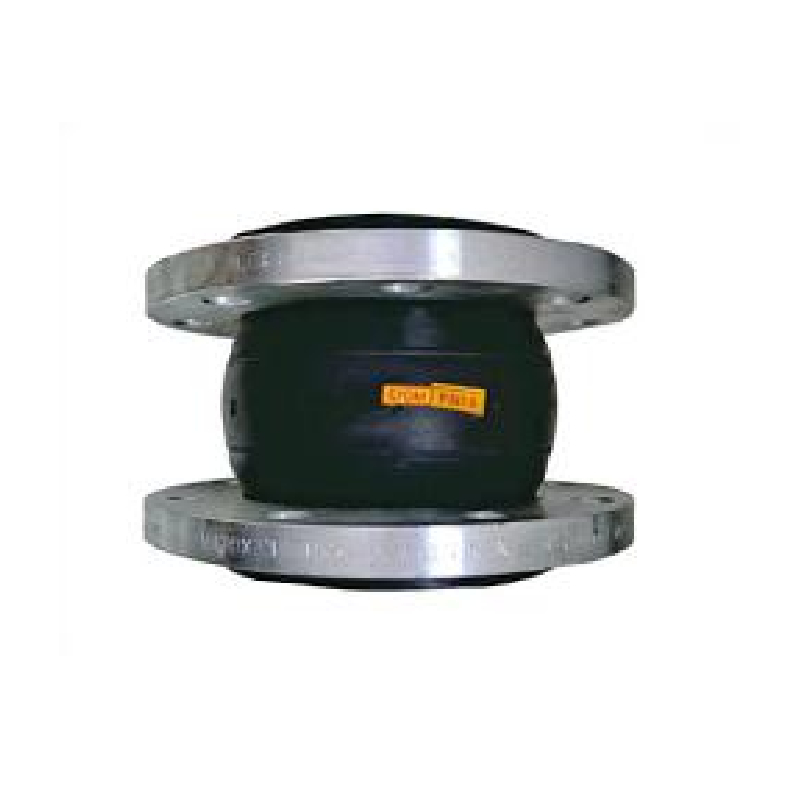
Field notes on the Single Sphere Type Rubber Joint: real-world guide, 2025 edition
I’ve walked more pump rooms than I can count, and—funny as it sounds—the component that saves the day most often isn’t the shiny pump or the smart VFD. It’s the humble Single Sphere Type Rubber Joint. It soaks up vibration, forgives misalignment, and buys time when installation tolerances aren’t perfect. To be honest, once you’ve heard a pump before and after a proper joint is installed, you don’t forget the difference.
What’s trending
Across HVAC, waterworks, and light chemical duty, specifiers are shifting toward EPDM-based Single Sphere Type Rubber Joint designs for broad media compatibility and higher ozone resistance. Noise mandates in commercial buildings are tighter, so vibration/isolation is no longer “nice-to-have.” Also, project managers want shorter lead times and flexible drilling standards (EN 1092-1 or ASME B16.5)—customization wins bids.
At a glance: product specifications
| Body material | EPDM (≈ ASTM D2000 compliant; real-world use may vary by compound) |
| Reinforcement | Nylon cord fabric + hard steel wire frame |
| Flanges | Q235B carbon steel; drilling to EN 1092-1 PN10/16 or ASME B16.5 Class 150 (on request) |
| Size range (typical) | DN25–DN300 (1"–12") |
| Temperature | -20 to +110 °C (media-dependent) |
| Pressure rating | PN10 / PN16 (varies by size) |
| Vacuum capability | Up to ≈ 53 kPa vacuum (with control units recommended) |
| Movement absorption | Axial compression ≈ 10–20 mm; elongation ≈ 6–10 mm; lateral ≈ 10–15 mm; angular ≈ 10° |
| Origin | No.88 Zhengxi Road, Yanbai Development, Ningjin, Hebei, China |
How it’s made (short process flow)
- Compounding: EPDM mixed with curatives and antioxidants; batch traceability kept.
- Reinforcement: Nylon cord fabric calendared and layered with the rubber on a mandrel; steel wire frame inserted.
- Vulcanization: Controlled cure for bond strength and elongation at break.
- Flanges: Q235B prepared, drilled, anti-corrosion coated; holes gauged.
- Testing: Hydrostatic proof at 1.5× PN, burst tests, ozone test (≈ ISO 1431-1), hardness and tensile checks (ASTM D2240/D412).
Service life? In fairly clean water/HVAC duty, I usually see 8–15 years—media, temperature, and installation alignment are the big variables.
Where it fits
- Building HVAC pump sets and AHU connections. - Municipal water and booster stations. - Desalination pre-treatment lines. - Light chemical transfer (EPDM-compatible). - Power plant auxiliary systems. Many customers say vibration drops by 30–50% and airborne noise by 3–7 dB after swapping in a Single Sphere Type Rubber Joint. I’ve seen it too—surprisingly immediate.
Mini case notes
- Hotel chiller room, PN16 line: 5 dB noise reduction; technician reports fewer gasket callouts.
- Wastewater return header: lateral misalignment ≈ 10 mm absorbed; no flange stress cracks after 12 months.
- Commercial tower booster pump: measurable vibration cut ≈ 42%; bearings ran cooler by ~3 °C.
Vendor snapshot (what to choose)
| Attribute | Hebei Maker (this product) | Commodity Import | Premium EU Brand |
|---|---|---|---|
| Price | Low–Mid | Lowest | High |
| Lead time | Fast (stock on common sizes) | Varies | Predictable |
| Customization | Drilling, lining, control units | Limited | Extensive |
| Certs/documentation | Test reports; PED alignment on request | Basic | Full WRAS/ACS options |
Customization and compliance
Options I’d ask for: tie rods/control units for vacuum, stainless fasteners for coastal sites, and EPDM compounds that target potable-water approvals (WRAS/ACS) when needed. For specs, reference ASTM D2000 for rubber classification, EN 681-1 for elastomer performance, and ensure hydro tests follow 1.5× PN. If your insurer mentions PED 2014/68/EU, request conformity notes.
Bottom line
If you want fewer callbacks and quieter rooms, a well-built Single Sphere Type Rubber Joint is a small cost for a big win. I guess that’s why these parts—despite being unsung—keep showing up on punch lists.
Authoritative citations
- ASTM D2000 – Standard Classification System for Rubber Products. https://www.astm.org/d2000
- ISO 1431-1 – Rubber, vulcanized or thermoplastic — Resistance to ozone cracking. https://www.iso.org/standard/70239.html
- EN 681-1 – Elastomeric seals. Material requirements for pipe joint seals (water and drainage). https://standards.iteh.ai
- Fluid Sealing Association – Expansion Joints Technical Handbook. https://www.fluidsealing.com
- EU Pressure Equipment Directive (PED) 2014/68/EU. https://single-market-economy.ec.europa.eu
Share
Latest news
-
Understanding the 6 butterfly valve price Industrial Buying GuideNewsApr.16,2026
-
Analyzing the 50mm Butterfly Valve Price and Buyer GuideNewsApr.09,2026
-
Comprehensive Guide to 40mm Butterfly Valve Price Factors and Quality ConsiderationsNewsApr.07,2026
-
Comprehensive Guide to 4 Inch Sluice Valve Price and Key Selection FactorsNewsApr.04,2026
-
Comprehensive Guide to 4 Butterfly Valve Price Factors and Ranges in 2024NewsMar.31,2026
-
Comprehensive Guide to 300mm Butterfly Valve Price and Industrial ApplicationsNewsMar.28,2026
 English
  Afrikaans
  Albanian
  Amharic
  Arabic
  Armenian
  Azerbaijani
  Basque
  Belarusian
  Bengali
  Bosnian
  Bulgarian
  Catalan
  Cebuano
  China
China  China (Taiwan)
  Corsican
  Croatian
  Czech
Czech  Danish
  Dutch
Dutch  Esperanto
  Estonian
  Finnish
  French
  Frisian
  Galician
  Georgian
  German
  Greek
Greek  Gujarati
  Haitian Creole
  Hausa
Hausa  Hawaiian
  Hebrew
  Hindi
Hindi  Miao
Miao  Hungarian
  Icelandic
  Igbo
Igbo  Indonesian
  Irish
Irish  Italian
  Japanese
  Javanese
  Kannada
  Kazakh
  Khmer
Khmer  Rwandese
  Korean
  Kurdish
  Kyrgyz
  Lao
Lao  Latin
Latin  Latvian
  Lithuanian
  Luxembourgish
  Macedonian
  Malgashi
  Malay
Malay  Malayalam
  Maltese
  Maori
Maori  Marathi
  Mongolian
  Myanmar
  Nepali
  Norwegian
  Norwegian
  Occitan
  Pashto
  Persian
  Polish
  Portuguese
  Punjabi
  Romanian
  Russian
  Samoan
  Scottish Gaelic
  Serbian
  Sesotho
  Shona
Shona  Sindhi
  Sinhala
  Slovak
  Slovenian
  Somali
  Spanish
  Sundanese
  Swahili
  Swedish
  Tajik
Tajik  Tamil
Tamil  Tatar
Tatar  Telugu
  Thai
Thai  Turkish
  Turkmen
  Ukrainian
  Urdu
Urdu  Uighur
  Uzbek
Uzbek  Vietnamese
  Welsh
Welsh  Bantu
Bantu  Yiddish
  Yoruba
  Zulu
Zulu