Oct . 11, 2025 09:27 بیرته لیست ته
Understanding the Essential Role of Lug Style Butterfly Valves
In the vast landscape of industrial fluid control, the choice of valve can significantly impact operational efficiency, safety, and longevity. Among the myriad options, lug style butterfly valves stand out as a cornerstone technology, revered for their robust design and versatile application. Unlike wafer style valves, lug valves feature threaded inserts (lugs) on both sides of the valve body, allowing for independent bolt mounting to each flange. This unique design permits the removal of the downstream piping while the upstream side remains under pressure, a critical advantage during maintenance or line repairs. This inherent flexibility minimizes downtime and enhances system serviceability, making them an indispensable component in complex piping systems across numerous sectors. Their quarter-turn operation provides rapid shut-off, making them ideal for applications requiring quick response times. Furthermore, the compact design and relatively lightweight nature of these valves contribute to easier installation and reduced structural requirements compared to bulkier gate or globe valves. The foundational understanding of their design principles – particularly the threaded lugs – reveals why they are frequently specified for end-of-line service or applications necessitating isolation capabilities. This initial insight into their mechanical configuration immediately highlights their functional superiority in specific operational contexts, setting them apart as a preferred solution for demanding industrial environments where reliability and ease of maintenance are paramount.
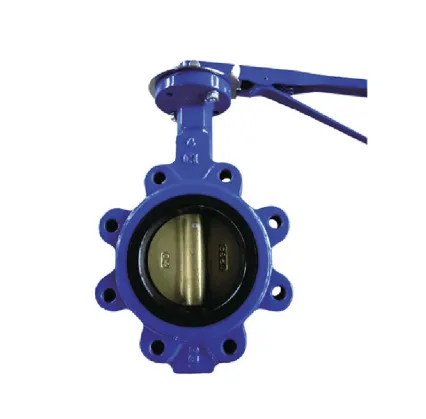
The operational resilience of lug style butterfly valves is also deeply rooted in their material composition and sealing mechanisms. Typically constructed from durable materials such as ductile iron, stainless steel, or even exotic alloys for corrosive environments, these valves are engineered to withstand rigorous conditions. The disc, often coated or polished, rotates within a resilient seat, usually made of EPDM, NBR, Viton, or PTFE, providing a tight shut-off against media flow. This comprehensive sealing strategy ensures minimal leakage, safeguarding against process contamination and material loss. Moreover, their ability to handle a wide range of temperatures and pressures makes them exceptionally adaptable. From municipal water treatment plants handling potable water to chemical processing facilities managing hazardous fluids, the inherent robustness of lug style butterfly valves provides a reliable barrier. Their quarter-turn activation not only offers speed but also reduces wear on internal components, extending their service life compared to multi-turn alternatives. This combination of material strength, effective sealing, and operational simplicity underscores their critical role in maintaining system integrity and optimizing fluid management. The nuanced interaction of these design elements forms the bedrock of their widespread adoption, demonstrating a sophisticated balance between engineering practicality and long-term performance.
Beyond the Basics: Unveiling Technical Excellence in Valve Design
The technical sophistication of modern butterfly valves, particularly those configured in the lug style, extends far beyond their fundamental quarter-turn operation. A deep dive into their engineering reveals a multitude of design enhancements aimed at optimizing performance, longevity, and operational safety. Key among these is the stem design, which can range from a one-piece shaft to a two-piece 'split shaft' configuration. These designs are meticulously engineered to minimize hysteresis, ensuring precise control over flow rates. Anti-blowout stems, mandated by many safety standards, are integrated to prevent stem ejection under high pressure, a critical safety feature. Furthermore, the bearing system supporting the stem's rotation is crucial; self-lubricating bearings, often made from advanced composite materials or specialized alloys, reduce friction and wear, extending the valve's operational life even in high-cycle applications. This attention to detail in internal components directly translates into reduced maintenance requirements and improved reliability.
Another significant aspect is the seat design. While resilient seats made from various elastomers remain common for general service, advanced seat materials and designs are employed for more demanding applications. For instance, high-performance valves often feature PTFE or PEEK seats for chemical compatibility and higher temperature capabilities. Triple offset butterfly valves, a specialized variant, utilize a design where the disc and seat contact only at the moment of closure, significantly reducing wear and providing a bubble-tight shut-off even in high-pressure and high-temperature services. This ingenious geometry extends service life exponentially compared to traditional concentric or double offset designs. Actuation options also represent a technical advantage; manual levers and gearboxes offer robust local control, while pneumatic, electric, or hydraulic actuators enable remote, automated operation, often integrated into sophisticated Distributed Control Systems (DCS) or Supervisory Control and Data Acquisition (SCADA) systems. The integration of intelligent positioners and limit switches further enhances control precision and feedback, allowing for fine-tuning of flow and early detection of operational anomalies. These layers of technical refinement ensure that these valves are not merely flow restrictors but sophisticated instruments of process control, capable of operating reliably in the most challenging industrial environments.
Quantifying Value: Performance Metrics and Operational Gains
The true value proposition of a flow control solution is ultimately measured in tangible performance metrics and the operational gains it delivers. For industrial valves, this translates into factors like flow capacity, pressure drop, leak tightness, and actuation speed. Lug style butterfly valves, when appropriately specified, consistently demonstrate superior performance across these critical indicators. Consider, for example, flow capacity: a well-designed 10-inch butterfly valve can typically achieve a Coefficient of Valve (Cv) value of approximately 6,000 to 7,000 GPM (gallons per minute) with minimal pressure drop, outperforming many gate or globe valves of equivalent size which often exhibit higher resistance to flow. This high Cv value means greater throughput and energy efficiency, as pumps do not need to work as hard to maintain desired flow rates. A reduction in pressure drop by even a few PSI across a critical pipeline can translate into significant energy savings annually, often amounting to thousands of dollars in electricity costs for continuous operation. Data from real-world applications frequently shows a 15-20% improvement in energy efficiency for systems that replace traditional gate valves with modern, high-performance butterfly valves.
Leak tightness is another paramount metric, particularly in applications involving hazardous, corrosive, or expensive media. Modern resilient-seated butterfly valves can achieve ANSI/FCI 70-2 Class VI shut-off, indicating bubble-tight closure. This level of sealing prevents product loss, reduces environmental risks, and ensures process integrity. For instance, in a chemical plant, preventing even a minor leak of a valuable reagent could save tens of thousands of dollars per year in lost product and cleanup costs. Actuation speed, another crucial factor, is often measured in seconds. A quarter-turn butterfly valve can go from fully open to fully closed in as little as 2-5 seconds with a pneumatic actuator, providing rapid emergency shut-off capabilities far superior to multi-turn valves that may take 30 seconds or more. This rapid response time is vital in safety-critical applications, potentially averting catastrophic incidents. Furthermore, the life cycle cost of these valves often presents a compelling case. While the initial investment might be comparable to other valve types, their reduced maintenance frequency—often seeing operational intervals extended from 12 months to 24-36 months—and lower energy consumption contribute to a significantly lower Total Cost of Ownership (TCO) over a typical 15-20 year operational lifespan. These quantified benefits underscore why selecting the right valve is not merely a purchase but a strategic investment in operational excellence and long-term profitability.
Navigating the Market: A Comparative Look at Leading Manufacturers
The global market for industrial valves is highly competitive, with numerous manufacturers offering a wide array of products. When it comes to lug style butterfly valves, discerning buyers must evaluate not just the initial cost, but also reputation, innovation, material quality, and after-sales support. While many brands offer seemingly similar products, the underlying engineering, quality control, and adherence to international standards can vary significantly. Some manufacturers specialize in niche applications, offering highly customized solutions, while others focus on high-volume, general-purpose valves. Understanding these differentiators is crucial for making an informed purchasing decision that aligns with specific project requirements and long-term reliability expectations. Comparing a few prominent players can illuminate the diverse landscape and aid in selecting a supplier whose strengths best match your operational needs.
Below is a comparative table highlighting key aspects of hypothetical leading manufacturers in the lug style butterfly valve market. This comparison aims to illustrate the types of criteria one might consider when evaluating potential suppliers, emphasizing that no single manufacturer is universally superior; rather, the best choice depends on the specific demands of the application, budget, and desired level of technical support. This data is illustrative and designed to highlight typical market differentiators.
|
Manufacturer |
Core Focus/Specialty |
Standard Material Offerings |
Typical Certifications/Standards |
Customization Options |
After-Sales Support Rating (1-5) |
Average Lead Time (Weeks) |
|
GlobalFlow Dynamics |
High-performance & critical applications (Oil & Gas, Chemical) |
Carbon Steel, Stainless Steel (304, 316), Duplex, Super Duplex, Alloy 20 |
API 609, ISO 9001, PED, ATEX, Fire Safe API 607 |
Extensive: Custom alloys, specialized coatings, unique actuation integration |
5 |
8-12 |
|
AquaTech Valves |
Water/Wastewater, HVAC, General Industrial |
Ductile Iron, Cast Iron, Bronze, PVC, Stainless Steel (304, 316) |
AWWA C504, NSF 61, ISO 9001, CE |
Moderate: Liner materials, specific gearing, manual overrides |
4 |
4-6 |
|
Precision Valve Systems |
High-purity, Food & Beverage, Pharmaceutical |
316L Stainless Steel, Hastelloy, Titanium |
FDA compliant, USP Class VI, EHEDG, ISO 9001 |
Highly specialized: Polished surfaces, sterile connections, custom automation |
5 |
10-14 |
|
IndustrialFlow Solutions |
Cost-effective, utility, general service |
Ductile Iron, Carbon Steel, 304 Stainless Steel |
ISO 9001, API 609 (basic compliance) |
Limited: Standard sizes and materials, basic actuation |
3 |
3-5 |
This table underscores that while GlobalFlow Dynamics might be the go-to for highly demanding, critical applications due to their broad material range and extensive certifications, AquaTech Valves excel in municipal and general industrial sectors with certifications like AWWA C504. Precision Valve Systems, on the other hand, carves out a niche in highly regulated industries requiring absolute purity and specialized materials. IndustrialFlow Solutions offers a more economical option for less demanding, general utility services where cost-effectiveness and quick lead times are priorities. The selection process therefore involves a careful balance of technical requirements, budget constraints, delivery timelines, and the manufacturer's proven track record in similar applications. Evaluating these factors rigorously ensures the optimal valve solution is chosen for long-term operational success.
Precision Engineering: Customization for Specialized Industrial Demands
In the complex and often unique world of industrial processes, off-the-shelf solutions rarely provide optimal performance. This is particularly true for fluid control, where specific media properties, environmental conditions, and operational parameters necessitate tailored valve designs. Lug style butterfly valves, owing to their adaptable construction, are highly amenable to customization, allowing engineers to fine-tune their specifications to meet even the most rigorous application demands. The ability to customize extends across various components, from body materials and disc coatings to seat elastomers and actuation mechanisms. For instance, in highly corrosive environments, a standard ductile iron body might be replaced with a titanium or Hastelloy equivalent, coupled with a PTFE-lined disc and a specialized Viton or PEEK seat for chemical resistance. This level of material selection precision ensures chemical compatibility and extends the valve's service life exponentially, preventing premature failure and costly downtime.
Beyond materials, performance characteristics can be custom-engineered. For applications requiring extremely low torque or high cycle life, custom stem and bearing designs employing advanced ceramics or self-lubricating composites can be implemented. Specialized disc contours can be designed to optimize flow characteristics, minimizing turbulence and reducing pressure drop in critical lines, leading to greater energy efficiency. In the realm of automation, customization is paramount. While standard pneumatic or electric actuators are common, specific torque requirements, hazardous area classifications (e.g., ATEX, UL, CSA), or unique control interfaces (e.g., Foundation Fieldbus, Profibus) often necessitate custom-integrated actuation packages. This might involve explosion-proof enclosures, specific positioners for precise modulation, or specialized feedback sensors to provide real-time operational data to a control system. Even seemingly minor details, such as the type of flange connection (e.g., ANSI, DIN, JIS) or the inclusion of specialized drain ports or sampling points, can be customized to seamlessly integrate the valve into an existing piping infrastructure. The capacity for manufacturers to offer extensive engineering support and tailor these valves to exact specifications is a crucial differentiator, transforming a standard component into a highly optimized, process-specific solution that significantly enhances system reliability and operational efficiency. This bespoke approach ensures that every valve installed performs its function with unparalleled precision and resilience, meeting the exact needs of the most challenging industrial landscapes.
Impact in Action: Real-World Applications and Proven Efficacy
The true testament to any industrial component lies in its performance across diverse real-world applications. Lug style butterfly valves, due to their inherent versatility, durability, and ease of maintenance, are deployed in an extensive array of industries, consistently demonstrating their efficacy in managing fluid flow. From municipal infrastructure to heavy industry, their presence is ubiquitous, underpinning critical processes and ensuring operational continuity. In the water and wastewater treatment sector, for instance, these valves are indispensable. They control the flow of raw water into treatment facilities, regulate chemical dosing, manage effluent discharge, and isolate sections of piping for maintenance. Their ability to provide reliable shut-off and handle varying water qualities, including those with suspended solids, makes them a preferred choice. Similarly, within HVAC systems for large commercial buildings and industrial complexes, lug style butterfly valves are widely used for regulating water flow to chillers, cooling towers, and heating coils. Their compact design saves space, and their quick operation allows for efficient temperature control and energy management across extensive piping networks.
Moving into more demanding environments, the chemical processing industry heavily relies on these valves for managing corrosive and abrasive media. Here, specialized materials and coatings become paramount. A lug valve with a stainless steel body, PTFE-lined disc, and Viton seat might be used to control the flow of acids or alkalis, minimizing chemical attack and ensuring process safety. In the oil and gas sector, particularly in downstream refining and petrochemical plants, these valves are utilized in utility lines, cooling water systems, and even some process lines where moderate pressures and temperatures are involved. Their fire-safe certified variants (e.g., API 607) provide an added layer of safety in potentially hazardous environments. The food and beverage industry also leverages these valves, often specified with hygienic designs, highly polished 316L stainless steel, and FDA-compliant elastomers to ensure product purity and ease of cleaning, meeting stringent sanitation standards. For example, a major brewery might use lug valves to direct the flow of beer, cleaning solutions, or fermentation media, relying on their tight shut-off and sanitary construction to prevent contamination. Even in power generation, both fossil fuel and nuclear plants, they play a role in cooling water circuits, condensate lines, and auxiliary systems. A specific case might involve a coal-fired power plant using large-diameter lug valves to control the flow of cooling water from a nearby river to its condensers, handling millions of gallons per day with consistent reliability. These diverse applications underscore the adaptive power and robust engineering of lug style butterfly valves, proving their worth as a foundational component in modern industrial infrastructure.
Charting the Course: The Enduring Significance of Lug Style Butterfly Valves
As industries continue to evolve, driven by demands for greater efficiency, sustainability, and technological integration, the role of reliable fluid control components remains critical. Among these, lug style butterfly valves are poised to maintain and even enhance their significance. Their inherent advantages – ease of installation, robust design, dependable sealing, and maintenance flexibility – position them strongly for future industrial landscapes. With advancements in material science, we can expect even more specialized alloys and composites, extending their application range into increasingly aggressive or extreme temperature environments. Innovations in coating technologies will further enhance their resistance to corrosion and abrasion, prolonging service life in the harshest conditions. Furthermore, the push towards digitalization and smart manufacturing will see these valves integrate more seamlessly with advanced control systems. Intelligent actuators equipped with predictive diagnostics, real-time feedback, and remote monitoring capabilities will become standard, enabling proactive maintenance and optimizing process control to unprecedented levels.
The ongoing global emphasis on environmental protection and resource efficiency also bolsters the standing of these valves. Their low-pressure drop characteristics contribute to energy savings, aligning with sustainability goals. The ability to achieve bubble-tight shut-off prevents leaks, minimizing product loss and environmental contamination, which is paramount for industries handling sensitive or hazardous materials. As infrastructure ages and new facilities are constructed, the demand for easily maintainable components will only grow. The unique ability of lug valves to allow for downstream pipe removal without draining the entire system is a profound advantage in reducing downtime and labor costs, making them an economically sound choice for long-term investments. From municipal waterworks scaling up to meet growing populations to high-tech manufacturing facilities requiring ultra-pure process control, the fundamental utility and adaptable design of lug style butterfly valves ensure their continued relevance. They are not merely components but foundational elements of modern industrial processes, continuously evolving to meet the complex demands of a technologically advancing world, proving their enduring value as an essential tool for precise and reliable fluid management.
Frequently Asked Questions about Lug Style Butterfly Valves
Q1: What is the primary advantage of a lug style butterfly valve over a wafer style?
A1: The primary advantage of a lug style butterfly valve is its ability to be bolted independently to each flange in the piping system. This allows for the removal of the downstream piping while the upstream side remains pressurized, facilitating maintenance or repairs without having to shut down the entire line. Wafer valves, conversely, are clamped between two flanges and typically require both sides to be depressurized and removed for servicing.
Q2: In what applications are lug style butterfly valves most commonly used?
A2: Lug style butterfly valves are widely used across various industries including water and wastewater treatment, HVAC, chemical processing, oil & gas (utility lines), food & beverage, and power generation. They are particularly suitable for applications requiring easy maintenance, end-of-line service, or frequent isolation of a section of pipe.
Q3: What materials are typically used for lug style butterfly valves?
A3: Common body materials include ductile iron, cast iron, carbon steel, and stainless steel (304, 316). Discs are often made from ductile iron (nickel plated), stainless steel, or bronze. Seats are typically resilient elastomers like EPDM, NBR, Viton, or PTFE. For corrosive or high-temperature applications, exotic alloys like Hastelloy or Duplex stainless steel, and high-performance seats like PEEK, are used.
Q4: Can lug style butterfly valves be used for throttling or flow regulation?
A4: Yes, while they are excellent for on/off service, many lug style butterfly valves, especially those with specific disc designs or actuated by intelligent positioners, can be effectively used for throttling and flow regulation. High-performance butterfly valves with triple offset designs are particularly adept at precise modulation.
Q5: What certifications should I look for when purchasing lug style butterfly valves for critical applications?
A5: For critical applications, look for certifications such as API 609 (for standard compliance), ISO 9001 (quality management), API 607 (fire safe for hazardous media), PED (Pressure Equipment Directive for Europe), ATEX (for explosive atmospheres), and NSF 61 or AWWA C504 for potable water applications.
Q6: How does the quarter-turn operation of a butterfly valve benefit industrial processes?
A6: The quarter-turn (90-degree) operation offers several benefits: rapid opening and closing (quick shut-off for emergency situations), reduced actuation time and effort, compact actuator size, and minimized wear on sealing components compared to multi-turn valves, contributing to longer service life and lower maintenance.
Q7: What is the significance of "end-of-line" service for lug style butterfly valves?
A7: End-of-line service refers to applications where a valve is installed at the termination of a pipeline, often before an open discharge or equipment that needs to be completely isolated. Lug style valves are ideal here because their threaded lugs allow them to be bolted to a single flange, providing a secure, leak-tight seal even when the downstream side is removed or open to the atmosphere. This capability is not typically available with wafer style valves.
شریکول
تازه خبرونه
-
Understanding the 6 butterfly valve price Industrial Buying GuideخبرونهApr.16,2026
-
Analyzing the 50mm Butterfly Valve Price and Buyer GuideخبرونهApr.09,2026
-
Comprehensive Guide to 40mm Butterfly Valve Price Factors and Quality ConsiderationsخبرونهApr.07,2026
-
Comprehensive Guide to 4 Inch Sluice Valve Price and Key Selection FactorsخبرونهApr.04,2026
-
Comprehensive Guide to 4 Butterfly Valve Price Factors and Ranges in 2024خبرونهMar.31,2026
-
Comprehensive Guide to 300mm Butterfly Valve Price and Industrial ApplicationsخبرونهMar.28,2026
 Pashto
  English
  Afrikaans
  Albanian
  Amharic
  Arabic
  Armenian
  Azerbaijani
  Basque
  Belarusian
  Bengali
  Bosnian
  Bulgarian
  Catalan
  Cebuano
  China
China  China (Taiwan)
  Corsican
  Croatian
  Czech
Czech  Danish
  Dutch
Dutch  Esperanto
  Estonian
  Finnish
  French
  Frisian
  Galician
  Georgian
  German
  Greek
Greek  Gujarati
  Haitian Creole
  Hausa
Hausa  Hawaiian
  Hebrew
  Hindi
Hindi  Miao
Miao  Hungarian
  Icelandic
  Igbo
Igbo  Indonesian
  Irish
Irish  Italian
  Japanese
  Javanese
  Kannada
  Kazakh
  Khmer
Khmer  Rwandese
  Korean
  Kurdish
  Kyrgyz
  Lao
Lao  Latin
Latin  Latvian
  Lithuanian
  Luxembourgish
  Macedonian
  Malgashi
  Malay
Malay  Malayalam
  Maltese
  Maori
Maori  Marathi
  Mongolian
  Myanmar
  Nepali
  Norwegian
  Norwegian
  Occitan
  Persian
  Polish
  Portuguese
  Punjabi
  Romanian
  Russian
  Samoan
  Scottish Gaelic
  Serbian
  Sesotho
  Shona
Shona  Sindhi
  Sinhala
  Slovak
  Slovenian
  Somali
  Spanish
  Sundanese
  Swahili
  Swedish
  Tajik
Tajik  Tamil
Tamil  Tatar
Tatar  Telugu
  Thai
Thai  Turkish
  Turkmen
  Ukrainian
  Urdu
Urdu  Uighur
  Uzbek
Uzbek  Vietnamese
  Welsh
Welsh  Bantu
Bantu  Yiddish
  Yoruba
  Zulu
Zulu