Sep . 15, 2025 09:00 Back to list
PVC Non Return Valve Types: Durable Spring & Wafer Swing Check Valves
Understanding PVC Non-Return Valve Types in Industrial Applications
In industrial fluid handling systems, the prevention of backflow is a critical design consideration to maintain process integrity, protect equipment, and ensure operational safety. Non-return valves, also known as check valves, are indispensable components for this purpose. Among the various material options, pvc non return valve types offer a compelling solution, particularly in corrosive environments where metallic valves would rapidly degrade. This comprehensive overview delves into the diverse types, technical specifications, application advantages, and market trends surrounding PVC-based check valves.
Industry Trends and Market Dynamics
The demand for robust, corrosion-resistant, and cost-effective fluid control solutions continues to drive innovation in the valve industry. PVC (Polyvinyl Chloride) has emerged as a dominant material for non-return valves in specific sectors due to its excellent chemical resistance, lighter weight, and ease of installation compared to traditional metal alternatives. Current trends indicate a growing adoption of PVC check valves in municipal water treatment, chemical processing, agricultural irrigation, and aquaculture. This growth is fueled by increasing environmental regulations, which necessitate the handling of aggressive chemicals, and the economic advantage offered by PVC's extended service life in such conditions. Furthermore, advancements in manufacturing processes are leading to more sophisticated designs, such as compact wafer-type valves and enhanced sealing mechanisms, improving performance and reliability.
Manufacturing Process of PVC Non-Return Valves
The production of high-quality pvc non return valve types involves a meticulously controlled process to ensure dimensional accuracy, material integrity, and operational reliability. This detailed manufacturing flow underpins the performance characteristics of these critical components.
-
Material Selection and Preparation:
High-grade PVC resin, often unplasticized PVC (uPVC) or CPVC for higher temperature applications, is selected. These materials offer superior chemical resistance to acids, alkalis, salts, and many organic solvents. The resin is typically received in pellet form and carefully stored to prevent contamination and moisture absorption.
-
Injection Molding/Extrusion:
The primary method for forming valve bodies and internal components (flaps, discs) is injection molding. PVC pellets are fed into a heated barrel, melted, and then injected under high pressure into precision-machined molds. For larger diameter pipes and some valve components, extrusion might be used. This process ensures a consistent wall thickness and smooth internal surfaces, crucial for minimizing pressure drop.
-
Component Assembly:
Once molded, individual components such as the valve body, disc/flap, O-rings (typically EPDM or Viton for chemical resistance), and springs (for spring type nrv designs, often stainless steel encapsulated for protection) are carefully assembled. Specialized tooling ensures precise alignment and seating of the sealing elements.
-
Welding/Bonding (for certain types):
For multi-part PVC valve bodies or specific designs, solvent welding or fusion bonding techniques may be employed. This creates a monolithic structure, enhancing the overall integrity and leak resistance of the valve.
-
Quality Control and Testing Standards:
Each valve undergoes rigorous testing to comply with international standards such as ISO 4422, ASTM D1784, and sometimes ANSI/ASME B16.34 for dimensional and pressure ratings. Key tests include hydrostatic pressure testing (to verify body integrity), seat leakage testing (to ensure proper backflow prevention), and operational cycle testing (to assess durability). Visual inspection for material defects, burrs, or incomplete molding is also critical. These stringent testing protocols ensure a service life typically exceeding 20 years under specified operating conditions.
-
Finishing and Packaging:
After successful testing, valves are cleaned, lubricated (if required, with approved lubricants), and packaged to prevent damage during transit and storage. Labeling includes critical information such as material, size, pressure rating, and manufacturing batch number.
Typical Application Scenario Advantage: In a chemical dosing system for water treatment, a properly manufactured pvc non return valve types prevents the backflow of treated water into chemical storage tanks, avoiding contamination and ensuring precise chemical injection. Its corrosion resistance ensures long-term reliability against aggressive dosing chemicals like hypochlorite or acids, leading to significant energy saving by preventing re-pumping of contaminated fluid and reducing maintenance due to material degradation.
Technical Specifications and Types of PVC Non-Return Valves
The performance of pvc non return valve types is defined by a range of technical parameters and design configurations, each optimized for specific fluid dynamics and installation requirements.
Key Technical Parameters:
- Material: uPVC (Unplasticized Polyvinyl Chloride), CPVC (Chlorinated Polyvinyl Chloride) for higher temperature/pressure.
- Sealing Material: EPDM, Viton (FKM), NBR for various chemical compatibilities and temperature ranges.
- Nominal Diameter (DN): DN15 to DN300 (1/2" to 12"), with larger sizes available for specific applications.
- Pressure Rating: Typically PN10 (10 bar / 150 psi) to PN16 (16 bar / 232 psi) at 20°C, derated at higher temperatures.
- Temperature Range: uPVC: 0°C to 60°C (32°F to 140°F); CPVC: 0°C to 95°C (32°F to 203°F).
- End Connections: Solvent weld sockets, threaded (BSP, NPT), flange, wafer style.
- Cracking Pressure: Typically 0.03 to 0.1 bar (0.5 to 1.5 psi) for low-pressure systems.
Common Types of PVC Non-Return Valves:
-
Spring Type NRV (Ball or Poppet Check Valve):
These valves utilize a spring to hold a ball or poppet against a seat. Flow in the desired direction overcomes the spring force, pushing the ball/poppet open. When flow stops or reverses, the spring and back pressure seat the ball/poppet, preventing backflow. They are effective in both horizontal and vertical lines and are generally compact. The spring type nrv is excellent for preventing water hammer due to its rapid closure.
-
Swing Type Check Valve:
A swing type check valve features a disc that swings on a hinge or trunnion. Forward flow pushes the disc open, while backflow forces it shut against the seat. These are favored for applications with low-velocity flows to minimize pressure drop. They can be full-body or in a swing check valve wafer type design for compact installations.
-
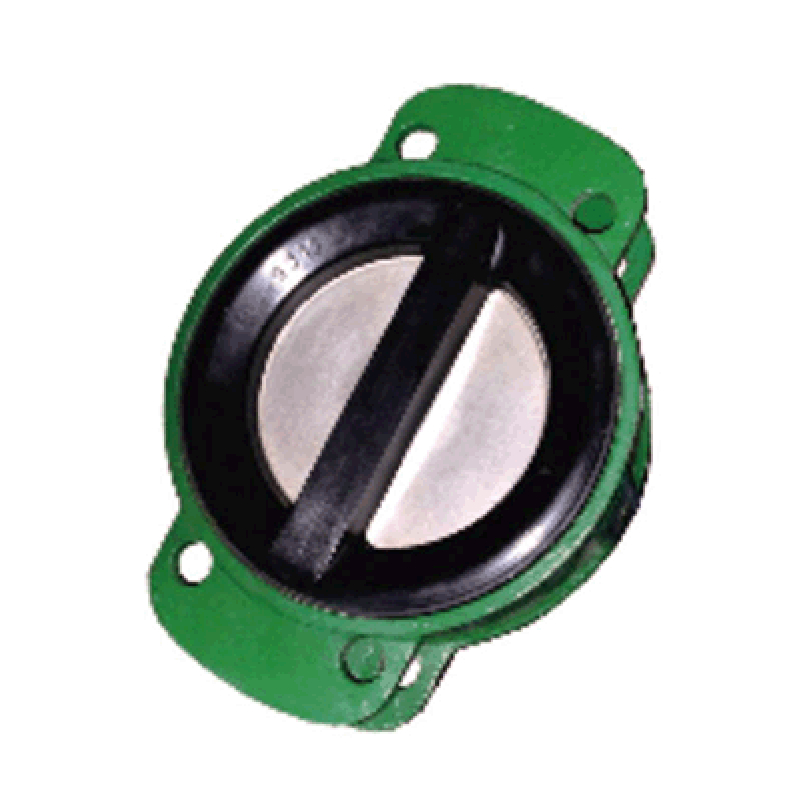
Wafer Type Check Valve (Dual Plate or Single Plate):
A valve wafer type design is characterized by its compact, thin profile, allowing it to be sandwiched between two flanges. Dual-plate versions often use two half-moon shaped discs pivoted on a central hinge, with springs ensuring rapid closure. Single-plate wafer types are essentially compact swing check valves. They are lightweight, space-saving, and suitable for large diameter pipelines where space is a premium, and ease of maintenance is desired.
-
Diaphragm Check Valve:
These utilize a flexible diaphragm that deforms under forward flow and seats against an orifice under backpressure. They are often used in sensitive or ultra-pure applications as they provide excellent sealing and have no moving parts in the flow path that could introduce contamination. Less common for large PVC lines but available for smaller, precise applications.
Product Specification Table: PVC Swing Check Valve (Flanged)
| Parameter | Specification |
|---|---|
| Body Material | uPVC (ASTM D1784 Cell Class 12454-B) |
| Disc Material | uPVC |
| Sealing Material | EPDM (Standard), FKM (Optional) |
| Nominal Size Range | DN50 (2") to DN200 (8") |
| Pressure Rating | PN10 (150 PSI at 20°C / 68°F) |
| Temperature Range | 0°C to 60°C (32°F to 140°F) |
| End Connections | Flanged (DIN PN10, ANSI B16.5 Class 150) |
| Minimum Opening Pressure | <0.05 Bar (0.75 PSI) |
| Installation Orientation | Horizontal or Vertical (upward flow) |
Technical Advantages and Application Scenarios
The selection of pvc non return valve types for industrial processes is driven by their inherent technical advantages, which translate into significant operational benefits across a range of demanding application scenarios.
Key Technical Advantages:
- Superior Corrosion Resistance: PVC materials are highly resistant to a wide array of acids, alkalis, salts, and many industrial chemicals, making them ideal for corrosive fluid applications where metallic valves would corrode, leading to premature failure and costly replacements.
- Lightweight and Easy Installation: Compared to their metallic counterparts, PVC valves are significantly lighter, reducing structural load requirements and simplifying installation, which can lower labor costs and installation time.
- Cost-Effectiveness: Lower material costs and simpler manufacturing processes contribute to a more economical product upfront. Coupled with extended service life in corrosive environments, PVC valves offer a superior total cost of ownership.
- Smooth Internal Bore: The non-porous and smooth interior surface of PVC reduces friction and minimizes pressure drop, contributing to energy efficiency in pumping systems. It also reduces the potential for scale buildup and bacterial growth in potable water applications.
- Chemical Purity: PVC is non-leaching, making it suitable for applications where fluid purity is critical, such as in ultra-pure water systems and food processing.
- Low Maintenance: Due to their corrosion resistance and robust design, PVC check valves generally require less maintenance than metal valves in chemically aggressive environments.
Typical Application Scenarios:
-
Water Treatment Plants (WTP) and Wastewater Treatment Plants (WWTP):
PVC check valves are widely used in chemical dosing lines (e.g., chlorine, coagulants, acids), filter backwash lines, and pump discharge lines to prevent backflow of treated or raw water. Their resistance to harsh treatment chemicals is paramount.
-
Chemical Processing Industry:
For handling corrosive chemicals, such as hydrochloric acid, sulfuric acid (diluted), sodium hydroxide, and various salt solutions, PVC check valves ensure safe and reliable unidirectional flow, protecting sensitive process equipment downstream.
-
Aquaculture and Aquarium Systems:
In fish farms and large-scale aquariums, PVC valves prevent back-siphoning of contaminated water, maintain aeration system integrity, and ensure proper water circulation, resisting corrosion from saltwater.
-
Agricultural Irrigation and Fertigation:
Used in irrigation lines, especially when injecting fertilizers or pesticides, to prevent chemical backflow into water sources. The spring type nrv is common here for quick closure and minimal head loss.
-
Swimming Pool and Spa Systems:
Essential for maintaining pump prime, preventing backflow through filters, and managing chemical dosing (e.g., chlorine) where resistance to pool chemicals is critical.
-
HVAC and Cooling Towers:
In cooling tower bleed-off lines or chemical treatment lines, PVC check valves withstand the corrosive nature of treated water and concentrated chemicals.
Vendor Comparison and Customized Solutions
Choosing the right supplier for pvc non return valve types is crucial for ensuring system reliability and optimal performance. While many manufacturers offer standard PVC check valves, specialized applications often benefit from tailored solutions.
Vendor Comparison Considerations:
| Feature | Standard Manufacturer (e.g., Vendor A) | Specialized/Premium Manufacturer (e.g., Valve-Cable) |
|---|---|---|
| Material Certification | Basic PVC/uPVC, often without explicit compound traceability. | High-grade uPVC/CPVC with full material traceability (e.g., NSF/ANSI 61, ASTM D1784 listed), ensuring purity and mechanical strength. |
| Sealing Options | Standard EPDM seals. | Wide range of chemically compatible elastomers (EPDM, FKM/Viton, NBR) suitable for diverse chemical applications. |
| Pressure/Temp Ratings | PN10/150 PSI, standard uPVC temp limits. | PN16/232 PSI, CPVC options for higher temperatures, pressure ratings validated by extensive testing. |
| Design Variations | Limited to common ball, swing, wafer types. | Broad portfolio including compact wafer type, spring-loaded, dual-plate, and specialized industrial designs. |
| Customization Capability | Minimal; off-the-shelf products. | Extensive, including bespoke sizes, special end connections, specific spring materials, or unique body configurations for OEM integration. |
| Certifications & QA | Basic ISO 9001. | ISO 9001, CE, ASTM, NSF/ANSI certifications, documented factory acceptance tests (FAT) and material test reports (MTRs). |
Customized Solutions:
For highly specific industrial requirements, standard off-the-shelf pvc non return valve types may not suffice. Leading manufacturers offer comprehensive customization services, which can include:
- Tailored Material Blends: Development of PVC compounds with enhanced UV resistance, specific chemical compatibility, or modified mechanical properties.
- Specialized End Connections: Custom flange drilling patterns, metric/imperial threading, or unique weld-on configurations to integrate seamlessly into existing piping systems.
- Optimized Cracking Pressures: Adjustment of spring tension in spring type nrv designs to achieve very low or specific cracking pressures for sensitive processes.
- Unique Design Features: Incorporation of features like visual flow indicators, specialized clean-out ports, or specific mounting brackets for OEM equipment.
- Private Labeling and Packaging: Branding and packaging solutions for distributors or system integrators.
Such customization ensures that the valve performs optimally within the precise parameters of the application, leading to enhanced system efficiency, reduced downtime, and improved safety.
Application Case Studies and Customer Feedback
Real-world applications demonstrate the tangible benefits and reliability of high-quality pvc non return valve types. These case studies highlight the practical advantages and the positive impact on operational efficiency.
Case Study 1: Municipal Water Treatment Plant
A major municipal water treatment plant in the Pacific Northwest faced persistent issues with metallic check valves in their sodium hypochlorite dosing lines. Corrosion led to frequent failures, resulting in unscheduled downtime, increased maintenance costs, and potential for back-contamination.
- Challenge: Corrosive effects of concentrated sodium hypochlorite on stainless steel valves, leading to premature failure (average 18-month lifespan).
- Solution: Replaced all metallic check valves with high-grade CPVC spring type nrvs featuring Viton seals. The compact design allowed for easy integration into existing pipework.
- Result: After 5 years, the CPVC valves showed no signs of degradation, drastically extending valve lifespan and reducing maintenance frequency by over 80%. This translated to significant operational savings and improved system reliability.
- Customer Feedback: "The switch to CPVC check valves was a game-changer for our chemical dosing system. We eliminated the constant corrosion issues and have achieved unprecedented reliability, ensuring consistent water quality for our community." - Operations Manager, City Water Department.
Case Study 2: Industrial Effluent Treatment Facility
An industrial facility handling aggressive chemical effluents required reliable backflow prevention in their neutralization and discharge lines. Space constraints and the highly corrosive nature of the mixed waste streams presented a challenge for traditional large-body check valves.
- Challenge: Corrosive, abrasive effluents and limited installation space for large flanged check valves. Existing lined ductile iron valves were heavy and difficult to service.
- Solution: Implemented uPVC swing check valve wafer type units between existing flanges. The lightweight and compact design allowed for easy installation and removal for periodic inspection.
- Result: The wafer-style PVC valves provided effective backflow prevention with minimal pressure drop. Their reduced weight and compact footprint simplified system design and future maintenance, saving an estimated 30% in installation labor.
- Customer Feedback: "The valve wafer type PVC check valves were perfect for our cramped effluent lines. They're durable against our harsh chemicals and a breeze to install and maintain." - Process Engineer, Industrial Waste Management.
Trustworthiness: FAQ, Lead Time, Warranty & Support
At Valve-Cable, we prioritize transparency and customer satisfaction, ensuring that our clients have all the necessary information for a confident partnership. This commitment to trustworthiness is reflected in our robust support infrastructure.
Frequently Asked Questions (FAQ):
Q1: What are the primary advantages of PVC non-return valves over metallic ones?
A1: PVC pvc non return valve types offer superior corrosion resistance to a wide range of chemicals, are lighter in weight, more cost-effective, and have smoother internal surfaces leading to lower pressure drop. They are ideal for applications where chemical compatibility is critical.
Q2: Can PVC check valves be used in high-temperature applications?
A2: Standard uPVC valves are generally limited to 60°C (140°F). For higher temperatures, up to 95°C (203°F), CPVC (Chlorinated Polyvinyl Chloride) check valves are recommended. It's crucial to consult the pressure-temperature de-rating curves for specific applications.
Q3: How do I choose between a spring type and a swing type PVC check valve?
A3: Spring type nrv valves offer quick closure, making them effective against water hammer and suitable for both horizontal and vertical installations. Swing type check valves typically have lower pressure drop and are often preferred for gravity-fed systems or large diameter pipelines with low flow velocities. For compact spaces, a valve wafer type swing check is ideal.
Q4: Are your products certified to international standards?
A4: Yes, our products adhere to stringent international standards including ISO 9001 for quality management, ASTM for material specifications (e.g., ASTM D1784), and often NSF/ANSI 61 for potable water applications, guaranteeing compliance and reliability.
Lead Time & Fulfillment Details:
Valve-Cable maintains a robust inventory of common pvc non return valve types and sizes to meet urgent demands.
- Standard Products: Typically 1-3 business days for processing and shipment for in-stock items.
- Bulk Orders: 5-10 business days, depending on quantity and specific valve type.
- Customized Solutions: Lead times are project-specific, ranging from 2-4 weeks after final design approval, to account for specialized manufacturing and testing.
We offer various shipping options to accommodate project timelines, from standard ground to expedited air freight. Detailed tracking information is provided for all shipments.
Warranty Commitments:
All Valve-Cable non-return valves are backed by a comprehensive 24-month warranty from the date of purchase against manufacturing defects and material failures under normal operating conditions. Our commitment to quality ensures long-term performance and peace of mind for our customers. Detailed warranty terms are available upon request.
Customer Support Information:
Our dedicated technical support team is available to assist with product selection, installation guidance, troubleshooting, and any post-sales inquiries.
- Technical Assistance: Available Monday-Friday, 8:00 AM - 5:00 PM (GMT+8).
- Contact Methods: Email, phone, and online chat support.
- Global Network: Supported by a network of distributors and service partners for local assistance.
We are committed to providing prompt and effective support to ensure the continuous and reliable operation of your fluid handling systems.
Conclusion
The diverse range of pvc non return valve types offers robust, corrosion-resistant, and economically viable solutions for preventing backflow in numerous industrial and commercial applications. From the swift action of a spring type nrv to the minimal pressure drop of a swing type check valve, and the space-saving advantage of a valve wafer type, PVC check valves continue to be an indispensable component in modern fluid control systems. Their inherent material advantages, combined with rigorous manufacturing standards and comprehensive customer support, ensure long-term performance and significant operational savings for end-users. Selecting the appropriate PVC check valve type, supported by detailed technical specifications and a trusted vendor, is crucial for optimizing system integrity and efficiency.
References
- ASTM D1784 - Standard Specification for Rigid Poly(Vinyl Chloride) (PVC) Compounds and Chlorinated Poly(Vinyl Chloride) (CPVC) Compounds. ASTM International.
- ISO 9001:2015 - Quality management systems — Requirements. International Organization for Standardization.
- NSF/ANSI Standard 61 - Drinking Water System Components – Health Effects. NSF International.
- Valves, Piping, and Fluid Mechanics Handbook. McGraw-Hill Professional.
Share
Latest news
-
Understanding the 6 butterfly valve price Industrial Buying GuideNewsApr.16,2026
-
Analyzing the 50mm Butterfly Valve Price and Buyer GuideNewsApr.09,2026
-
Comprehensive Guide to 40mm Butterfly Valve Price Factors and Quality ConsiderationsNewsApr.07,2026
-
Comprehensive Guide to 4 Inch Sluice Valve Price and Key Selection FactorsNewsApr.04,2026
-
Comprehensive Guide to 4 Butterfly Valve Price Factors and Ranges in 2024NewsMar.31,2026
-
Comprehensive Guide to 300mm Butterfly Valve Price and Industrial ApplicationsNewsMar.28,2026
 English
  Afrikaans
  Albanian
  Amharic
  Arabic
  Armenian
  Azerbaijani
  Basque
  Belarusian
  Bengali
  Bosnian
  Bulgarian
  Catalan
  Cebuano
  China
China  China (Taiwan)
  Corsican
  Croatian
  Czech
Czech  Danish
  Dutch
Dutch  Esperanto
  Estonian
  Finnish
  French
  Frisian
  Galician
  Georgian
  German
  Greek
Greek  Gujarati
  Haitian Creole
  Hausa
Hausa  Hawaiian
  Hebrew
  Hindi
Hindi  Miao
Miao  Hungarian
  Icelandic
  Igbo
Igbo  Indonesian
  Irish
Irish  Italian
  Japanese
  Javanese
  Kannada
  Kazakh
  Khmer
Khmer  Rwandese
  Korean
  Kurdish
  Kyrgyz
  Lao
Lao  Latin
Latin  Latvian
  Lithuanian
  Luxembourgish
  Macedonian
  Malgashi
  Malay
Malay  Malayalam
  Maltese
  Maori
Maori  Marathi
  Mongolian
  Myanmar
  Nepali
  Norwegian
  Norwegian
  Occitan
  Pashto
  Persian
  Polish
  Portuguese
  Punjabi
  Romanian
  Russian
  Samoan
  Scottish Gaelic
  Serbian
  Sesotho
  Shona
Shona  Sindhi
  Sinhala
  Slovak
  Slovenian
  Somali
  Spanish
  Sundanese
  Swahili
  Swedish
  Tajik
Tajik  Tamil
Tamil  Tatar
Tatar  Telugu
  Thai
Thai  Turkish
  Turkmen
  Ukrainian
  Urdu
Urdu  Uighur
  Uzbek
Uzbek  Vietnamese
  Welsh
Welsh  Bantu
Bantu  Yiddish
  Yoruba
  Zulu
Zulu