Oct . 26, 2025 12:20 Back to list
Automotive Electrical Cable Suppliers | ISO, OEM-Grade, Fast
What to Know Before You Shortlist Automotive Electrical Cable Suppliers
If you source wire and cable for vehicles or equipment, you’ve probably noticed the brief is changing—EV rollouts, 48V auxiliaries, tighter bend radii in cramped bays. To be honest, buyers tell me the spec sheets all look the same until you ask how the cable behaves after a winter of cold flexing or a summer of oil spray. That’s where material choices and process control separate real partners from catalog shippers.
Why portable rubber cords matter in automotive environments
Rubber-insulated portable cords—like EPR-insulated, CPE-sheathed builds—show up everywhere: depot chargers, diagnostic rigs, robotics umbilicals in assembly plants, trailer pigtails, even specialty vehicles. They’re not the same as thin-wall primary wire (ISO 19642/ISO 6722) but often live in the same ecosystem and, surprisingly, take more abuse.
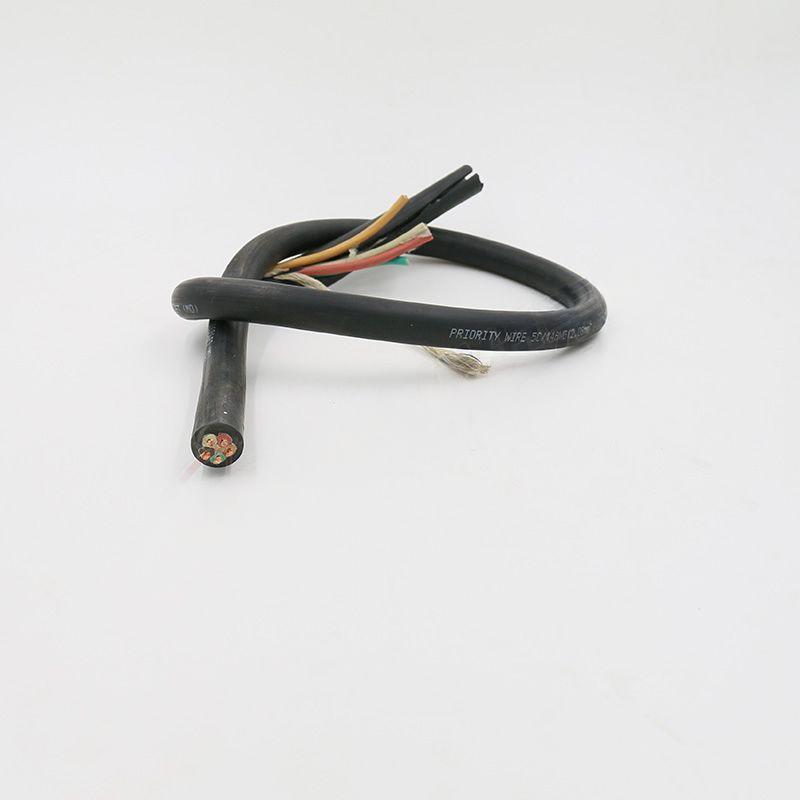
Product snapshot: Portable Cord (EPR/CPE)
Flexible copper conductor insulated with ethylene-propylene rubber (EPR). Two, three, or four insulated conductors are cabled with filler and sheathed in chlorinated polyethylene (CPE). Origin: No.88 Zhengxi Road, Yanbai Development, Ningjin, Hebei, China.
| Parameter | Typical value (≈) | Notes |
|---|---|---|
| Conductor | Bare annealed copper, Class 5/6 | High strand count for flexibility |
| Insulation | EPR | Excellent cold flex and dielectric strength |
| Sheath | CPE | Oil/ozone/abrasion resistant |
| Voltage rating | 300–600 V | Real-world use may vary by code/market |
| Temp range | ≈ -40°C to +90/105°C | Application dependent |
| Conductor count | 2 / 3 / 4 | With fillers for roundness |
How reputable suppliers build it (the short version)
- Materials: high-purity copper; EPR compound; CPE jacket; talc separator; textile fillers.
- Methods: fine stranding → EPR extrusion → cabling with lay control → CPE sheathing → vulcanization.
- Testing: AC spark test (≈3 kV), dielectric withstand (≈3.5 kV/1 min), cold bend -40°C, oil/ozone exposure, abrasion cycles, flame (UL/CSA FT ratings), aging/elongation retention.
- Service life: around 5–10 years in fleet depots; heavy drag/UV cuts that down—honestly depends on duty cycle.
- Standards touchpoints: UL 62/CSA 49/IEC 60245 for flexible cords; interface with automotive wiring norms like ISO 19642/ISO 6722 for mixed systems.
Vendor landscape at a glance
Here’s a quick, field-notes comparison. It’s directional; verify against your RFQ.
| Vendor | Certs/Standards | Lead time (≈) | MOQ | Notes |
|---|---|---|---|---|
| Valve Cable (Hebei, China) – Portable Cord | UL/IEC aligned; ISO-like QA; RoHS | 3–6 weeks | Around 1–3 km | Customization-friendly; factory at Ningjin |
| Global A-brand (US/EU) | UL/CSA/IEC; automotive PPAP options | 6–10 weeks | Higher | Premium pricing; deep lab data |
| Regional Distributor (Re-brand) | Varies by source | Stock-dependent | Low (by reel) | Fast delivery; limited customization |
Customization that tends to pay off
Color coding/striping, tinned copper for corrosion, thicker CPE for drag chains, UV stabilizers for outdoor depots, and jacket print legibility for maintenance teams. Some buyers ask for halogen-free alternatives (e.g., TPE/HFFR) in sensitive facilities—just flag this early.
Case note from the field
A Nordic bus operator swapped depot charger whips to EPR/CPE portable cord. After a season of freeze-thaw and diesel mist (not ideal, I know), maintenance logged ≈40% fewer cable-related service calls in nine months, largely due to better cold flex and abrasion resistance (internal QA notes shared informally). Not a lab trial—real asphalt, real forklifts rolling over the runs.
If you’re shortlisting Automotive Electrical Cable Suppliers, ask for: recent type-test reports, cold bend videos at -40°C, abrasion method description, and an honest minimum bend radius under load. Many customers say those four checks prevent surprises later.
References
- ISO 19642 Road vehicles—Cables for on-board electrical systems.
- ISO 6722-1 Road vehicles—60 V and 600 V single-core cables.
- UL 62 Flexible Cords and Cables; CSA C22.2 No. 49.
- SAE J1128 Low Voltage Primary Cable.
Share
Latest news
-
Understanding the 6 butterfly valve price Industrial Buying GuideNewsApr.16,2026
-
Analyzing the 50mm Butterfly Valve Price and Buyer GuideNewsApr.09,2026
-
Comprehensive Guide to 40mm Butterfly Valve Price Factors and Quality ConsiderationsNewsApr.07,2026
-
Comprehensive Guide to 4 Inch Sluice Valve Price and Key Selection FactorsNewsApr.04,2026
-
Comprehensive Guide to 4 Butterfly Valve Price Factors and Ranges in 2024NewsMar.31,2026
-
Comprehensive Guide to 300mm Butterfly Valve Price and Industrial ApplicationsNewsMar.28,2026
 English
  Afrikaans
  Albanian
  Amharic
  Arabic
  Armenian
  Azerbaijani
  Basque
  Belarusian
  Bengali
  Bosnian
  Bulgarian
  Catalan
  Cebuano
  China
China  China (Taiwan)
  Corsican
  Croatian
  Czech
Czech  Danish
  Dutch
Dutch  Esperanto
  Estonian
  Finnish
  French
  Frisian
  Galician
  Georgian
  German
  Greek
Greek  Gujarati
  Haitian Creole
  Hausa
Hausa  Hawaiian
  Hebrew
  Hindi
Hindi  Miao
Miao  Hungarian
  Icelandic
  Igbo
Igbo  Indonesian
  Irish
Irish  Italian
  Japanese
  Javanese
  Kannada
  Kazakh
  Khmer
Khmer  Rwandese
  Korean
  Kurdish
  Kyrgyz
  Lao
Lao  Latin
Latin  Latvian
  Lithuanian
  Luxembourgish
  Macedonian
  Malgashi
  Malay
Malay  Malayalam
  Maltese
  Maori
Maori  Marathi
  Mongolian
  Myanmar
  Nepali
  Norwegian
  Norwegian
  Occitan
  Pashto
  Persian
  Polish
  Portuguese
  Punjabi
  Romanian
  Russian
  Samoan
  Scottish Gaelic
  Serbian
  Sesotho
  Shona
Shona  Sindhi
  Sinhala
  Slovak
  Slovenian
  Somali
  Spanish
  Sundanese
  Swahili
  Swedish
  Tajik
Tajik  Tamil
Tamil  Tatar
Tatar  Telugu
  Thai
Thai  Turkish
  Turkmen
  Ukrainian
  Urdu
Urdu  Uighur
  Uzbek
Uzbek  Vietnamese
  Welsh
Welsh  Bantu
Bantu  Yiddish
  Yoruba
  Zulu
Zulu