Oct . 24, 2025 13:25 Back to list
Gate Valve Types: Durable, Leak-Tight, Fast Delivery
Gate Valve Types: field notes from the slurry line
If you’ve ever opened a pipeline and wished the media would just behave, you’ll appreciate knife gates. They aren’t glamorous, but in mining, pulp and paper, or wastewater, they quietly save shifts. I’ve been touring makers from Hebei to Houston, and, to be honest, the market for Gate Valve Types is splitting in two: classic wedge gate for clean fluids and the knife gate tribe for anything abrasive, fibrous, or just plain nasty.
Why knife gates keep winning
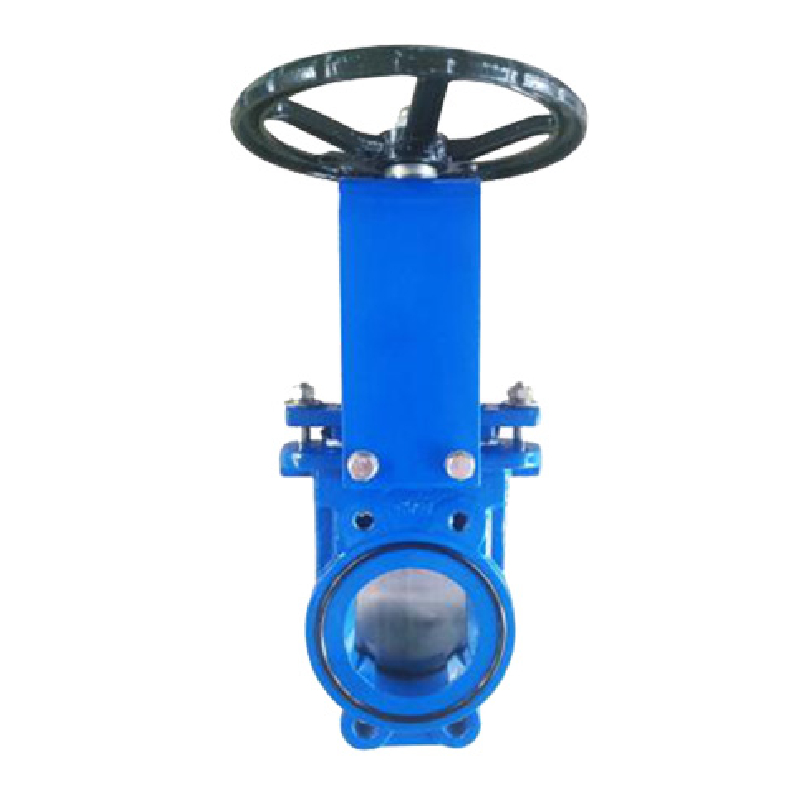
Knife gate valves use a sharp-edged blade to shear through slurry, chips, or thick wastewater. Compared with other Gate Valve Types, they’re lighter, simpler, and usually wafer-style, so installation is quicker. Many customers say the real surprise is the cycle reliability after you spec the right seat and actuator. Add a purge port and, actually, you’ll stretch maintenance windows.
Quick spec snapshot: Knife Gate Valve
| Design & manufacture | Supplier states API 6022; typical industry references include MSS SP-81 (verify during RFQ) |
| Size range | 2" to 42" N.B. |
| Pressure classes | ANSI 150; PN6, PN10, PN16 (supplier literature sometimes notes PN164—confirm spec) |
| End connections | Flanged & Wafer |
| Materials | Body: ductile iron / CF8M; Gate: 304/316; Seat: metal, EPDM, NBR, PTFE (media-dependent) |
| Actuation | Handwheel, gear, pneumatic cylinder, electric actuator |
| Testing | Hydrostatic shell/seat per ISO 5208 / EN 12266-1; visual & dimensional checks |
| Service life | ≈50,000–100,000 cycles in clean service; around 10,000–30,000 in abrasive slurry (real-world use may vary) |
Manufacturing flow (how it really happens)
Materials are cut and cast (ductile iron or stainless), gates are ground to a low Ra finish, and seats are either elastomer-molded or hardfaced. After machining, packing (PTFE/graphite blends) is set, then every valve sees hydrostatic tests—shell at 1.5× rating, seat at 1.1×—plus stroke testing. I guess the underrated step is lapping the gate-seat interface; that’s what kills early leakage. Final QC tags include heat numbers and torque data.
Where they fit: application snapshots
- Mining tails and concentrate lines (abrasive, intermittent)
- Pulp & paper stock handling (fibrous, sometimes sticky)
- Wastewater clarifiers and digesters (solids, biogas zones)
- Chemicals with suspended solids—verify compatibility with PTFE or metal seats
Vendor landscape (what buyers compare)
| Vendor | Lead time | Seats | Certifications | Notes |
|---|---|---|---|---|
| Hebei Valve-Cable (No.88 Zhengxi Rd, Ningjin, Hebei, China) | ≈3–6 weeks | EPDM/NBR/PTFE/metal | ISO 9001; test per ISO 5208/EN 12266-1 | Strong on large sizes; wafer and flanged |
| Vendor B (global brand) | 4–10 weeks | Elastomer/PTFE | ISO 9001; SIL options | Premium actuators, highest price tier |
| Vendor C (regional) | 2–5 weeks | Elastomer | ISO 9001 | Value pricing; check seat test data closely |
Customization that actually matters
- Seat selection: EPDM for wastewater, PTFE for chemicals, metal for high-temp/abrasive
- Gate coatings: hard chrome or Stellite overlays for slurry life
- Purge ports and deflector cones to keep the seat clean
- Actuators with position feedback; IP68 for buried or flooded galleries
Case file: mill downtime cut by 38%
A kraft mill (12" ANSI 150, stock line ≈3% consistency) swapped legacy wedge gates for wafer knife gates with PTFE seats. After factory hydrotest per EN 12266-1, the site ran a 60-day trial—zero visible leakage, and operators reported smoother closure torque. Maintenance tallied a 38% downtime reduction versus prior quarter. Feedback sounded modest—“not exciting, just works”—which, frankly, is what you want from valves.
Trends I’m watching
- Smarter actuators with diagnostics on cycle counts and seat wear. - Duplex and 254 SMO in coastal wastewater. - More flanged bodies for safety culture; wafer still rules on footprint. The broader family of Gate Valve Types keeps evolving, but knife gates feel like the pragmatic pick when solids are in the mix.
Buyer’s quick checklist
- Confirm pressure class and hydrotest standard on the datasheet
- Match seat to media, temperature, and cleanability
- Specify purge ports for slurry; add cycle counters on actuators
- Ask for recent test reports and heat numbers—don’t skip this
References
- MSS SP-81: Stainless-Steel, Bonnetless, Knife Gate Valves
- ISO 5208 / EN 12266-1: Industrial valves—Pressure testing of metallic valves
- ASME B16.34: Valves—Flanged, Threaded, and Welding End
- NACE MR0175 / ISO 15156: Materials for use in H2S-containing environments
- API 600 / API 6D: Steel gate valves and pipeline valves (context for broader gate valve types)
Share
Latest news
-
Understanding the 6 butterfly valve price Industrial Buying GuideNewsApr.16,2026
-
Analyzing the 50mm Butterfly Valve Price and Buyer GuideNewsApr.09,2026
-
Comprehensive Guide to 40mm Butterfly Valve Price Factors and Quality ConsiderationsNewsApr.07,2026
-
Comprehensive Guide to 4 Inch Sluice Valve Price and Key Selection FactorsNewsApr.04,2026
-
Comprehensive Guide to 4 Butterfly Valve Price Factors and Ranges in 2024NewsMar.31,2026
-
Comprehensive Guide to 300mm Butterfly Valve Price and Industrial ApplicationsNewsMar.28,2026
 English
  Afrikaans
  Albanian
  Amharic
  Arabic
  Armenian
  Azerbaijani
  Basque
  Belarusian
  Bengali
  Bosnian
  Bulgarian
  Catalan
  Cebuano
  China
China  China (Taiwan)
  Corsican
  Croatian
  Czech
Czech  Danish
  Dutch
Dutch  Esperanto
  Estonian
  Finnish
  French
  Frisian
  Galician
  Georgian
  German
  Greek
Greek  Gujarati
  Haitian Creole
  Hausa
Hausa  Hawaiian
  Hebrew
  Hindi
Hindi  Miao
Miao  Hungarian
  Icelandic
  Igbo
Igbo  Indonesian
  Irish
Irish  Italian
  Japanese
  Javanese
  Kannada
  Kazakh
  Khmer
Khmer  Rwandese
  Korean
  Kurdish
  Kyrgyz
  Lao
Lao  Latin
Latin  Latvian
  Lithuanian
  Luxembourgish
  Macedonian
  Malgashi
  Malay
Malay  Malayalam
  Maltese
  Maori
Maori  Marathi
  Mongolian
  Myanmar
  Nepali
  Norwegian
  Norwegian
  Occitan
  Pashto
  Persian
  Polish
  Portuguese
  Punjabi
  Romanian
  Russian
  Samoan
  Scottish Gaelic
  Serbian
  Sesotho
  Shona
Shona  Sindhi
  Sinhala
  Slovak
  Slovenian
  Somali
  Spanish
  Sundanese
  Swahili
  Swedish
  Tajik
Tajik  Tamil
Tamil  Tatar
Tatar  Telugu
  Thai
Thai  Turkish
  Turkmen
  Ukrainian
  Urdu
Urdu  Uighur
  Uzbek
Uzbek  Vietnamese
  Welsh
Welsh  Bantu
Bantu  Yiddish
  Yoruba
  Zulu
Zulu