Oct . 16, 2025 11:55 Back to list
Ball Type Check Valve - Leak-Free, Low Head Loss, Durable
A Field Insider’s Take on the Humble Ball Check Valve
Every plant I visit has at least a few check valves working quietly in the background, and the unsung hero—especially where solids are involved—is the ball type check valve. It’s a simple mechanism that, surprisingly, solves messy problems: backflow, clogging, and pump cycling headaches. In wastewater lift stations, it’s the first thing maintenance techs stop complaining about once they switch from swing to ball designs.
How it works (and why operators like it)
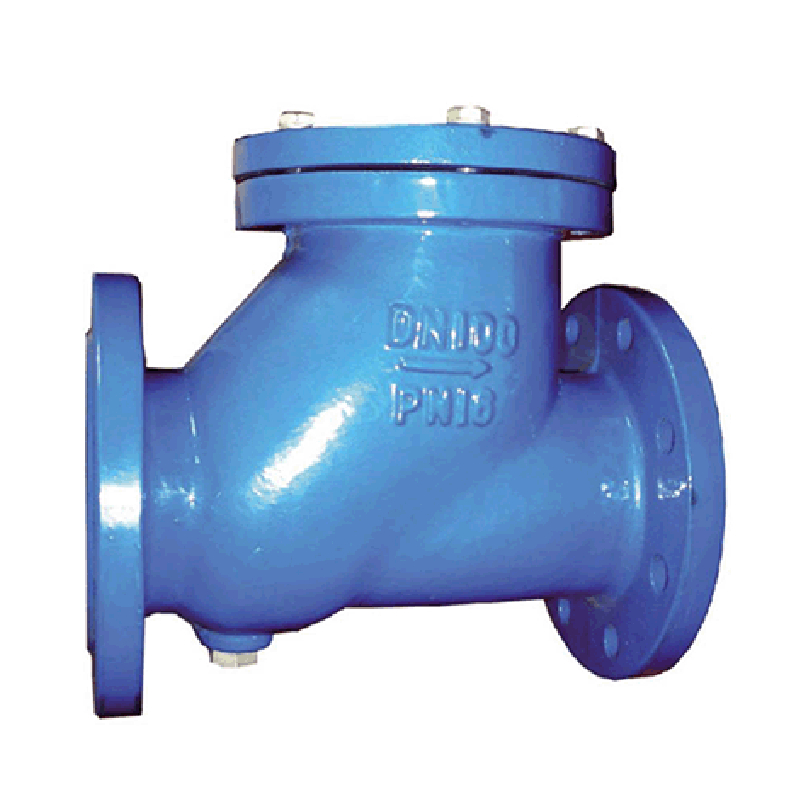
A weighted, rubber-coated ball seats against a machined seat. Forward flow lifts the ball; reverse flow pushes it back—no hinges, no discs, fewer wear points. In fact, the simplicity is the selling point. Many customers say it’s quieter on pump trip and less prone to ragging than swing checks. To be honest, I’ve seen fewer emergency callouts after upgrades to ball type check valve designs in sludge and stormwater lines.
Standards and key specs
- Design and manufacture: MSS SP-71 / BS 5153 / EN 12334
- Flanges: ASME B16.1 (Class 125/150) / EN 1092 (PN10/PN16)
- Face-to-face: EN 558-1 / DIN 3202 F6
- Test & inspection: API 598
- Size range: up to 24"
Product specification (typical)
| Body material | Ductile iron (EN-GJS-400-15) or Cast iron; Stainless 304/316 optional |
| Ball | Hollow/solid, NBR/EPDM/Viton coated; density tuned to media |
| Pressure rating | PN10/PN16; Class 125/150 (real-world use may vary) |
| Temperature | ≈ -10°C to 120°C (seat dependent) |
| End connections | Flanged per ASME B16.1 / EN 1092 |
| Cv (example) | 4" ≈ 140–170; 6" ≈ 300–360 (install conditions matter) |
Process flow, QA, and service life
- Material selection: certified heats; elastomers matched to media (NBR for oils, EPDM for water/WW).
- Casting & machining: controlled wall thickness; seat concentricity checked with gauges.
- Ball coating: shot blast + bonded rubber; hardness ≈ 65±5 Shore A for balanced sealing/lift.
- Assembly: torque-marked fasteners; traceable batch IDs.
- Testing: API 598 hydrostatic shell/seat; no visible leakage within hold time.
- Coating: epoxy to ≈ 250 μm DFT for WW service (common spec).
Service life? In clean water, ≈ 10–20 years. In abrasive slurry, plan inspections every 6–12 months; balls are inexpensive to swap. Origin: No.88 Zhengxi Road, Yanbai Development, Ningjin, Hebei, China.
Applications and current trends
Where does a ball type check valve shine? Sewage lift stations, return-activated sludge, stormwater, mining tailings (moderate solids), food-beverage CIP returns (with stainless bodies), and chemical drains. Trend-wise, I see more rubber-durometer tuning for low NPSHa pumps, quick-access covers for maintenance, and smart position sensors for pump diagnostics—practical, not gimmicky.
Vendor snapshot (indicative)
| Vendor | Lead time | Certs | Customization | Notes |
|---|---|---|---|---|
| Valve-Cable (Hebei) | ≈ 3–6 weeks | API 598 test; ISO 9001 (typical) | Ball density, elastomer, face-to-face | Up to 24", EN/ASME flanges |
| Global Brand A | 4–10 weeks | WRAS/ACS options | Coatings, monitoring ports | Premium pricing |
| Local Fabricator B | 1–4 weeks | Shop test records | Limited sizes | Fast for emergencies |
Customization checklist
- Ball: solid vs. hollow; density tuned for vertical/horizontal run.
- Elastomer: EPDM for water/WW, NBR for oils, Viton for chemicals.
- Coating: potable-grade epoxy; high-build for marine atmosphere.
- Access cover: quick-opening for rag-prone lines.
- Instrumentation: position switch pad or external limit switch kit.
Mini case notes
Wastewater plant, 6" rising main: swapping swing checks for ball type check valve units cut water hammer complaints by ≈ 30% (as logged by a clamp-on pressure sensor). Food processor, caustic return: stainless body + Viton ball coating ran one full CIP season with only one reseat—maintenance called it “boringly reliable,” which is the best compliment.
Citations:
- MSS SP-71: Cast Iron Swing Check Valves.
- BS 5153 / EN 12334: Industrial valves — Check valves.
- ASME B16.1: Cast Iron Pipe Flanges and Flanged Fittings.
- EN 1092: Flanges and their joints.
- EN 558-1 / DIN 3202 F6: Face-to-face and center-to-face dimensions.
- API 598: Valve Inspection and Testing.
- AWWA M44: Distribution Valves—Selection, Installation, Field Testing (context for waterworks best practices).
Share
Latest news
-
Understanding the 6 butterfly valve price Industrial Buying GuideNewsApr.16,2026
-
Analyzing the 50mm Butterfly Valve Price and Buyer GuideNewsApr.09,2026
-
Comprehensive Guide to 40mm Butterfly Valve Price Factors and Quality ConsiderationsNewsApr.07,2026
-
Comprehensive Guide to 4 Inch Sluice Valve Price and Key Selection FactorsNewsApr.04,2026
-
Comprehensive Guide to 4 Butterfly Valve Price Factors and Ranges in 2024NewsMar.31,2026
-
Comprehensive Guide to 300mm Butterfly Valve Price and Industrial ApplicationsNewsMar.28,2026
 English
  Afrikaans
  Albanian
  Amharic
  Arabic
  Armenian
  Azerbaijani
  Basque
  Belarusian
  Bengali
  Bosnian
  Bulgarian
  Catalan
  Cebuano
  China
China  China (Taiwan)
  Corsican
  Croatian
  Czech
Czech  Danish
  Dutch
Dutch  Esperanto
  Estonian
  Finnish
  French
  Frisian
  Galician
  Georgian
  German
  Greek
Greek  Gujarati
  Haitian Creole
  Hausa
Hausa  Hawaiian
  Hebrew
  Hindi
Hindi  Miao
Miao  Hungarian
  Icelandic
  Igbo
Igbo  Indonesian
  Irish
Irish  Italian
  Japanese
  Javanese
  Kannada
  Kazakh
  Khmer
Khmer  Rwandese
  Korean
  Kurdish
  Kyrgyz
  Lao
Lao  Latin
Latin  Latvian
  Lithuanian
  Luxembourgish
  Macedonian
  Malgashi
  Malay
Malay  Malayalam
  Maltese
  Maori
Maori  Marathi
  Mongolian
  Myanmar
  Nepali
  Norwegian
  Norwegian
  Occitan
  Pashto
  Persian
  Polish
  Portuguese
  Punjabi
  Romanian
  Russian
  Samoan
  Scottish Gaelic
  Serbian
  Sesotho
  Shona
Shona  Sindhi
  Sinhala
  Slovak
  Slovenian
  Somali
  Spanish
  Sundanese
  Swahili
  Swedish
  Tajik
Tajik  Tamil
Tamil  Tatar
Tatar  Telugu
  Thai
Thai  Turkish
  Turkmen
  Ukrainian
  Urdu
Urdu  Uighur
  Uzbek
Uzbek  Vietnamese
  Welsh
Welsh  Bantu
Bantu  Yiddish
  Yoruba
  Zulu
Zulu