Oct . 22, 2025 14:50 Back to list
Types of Sluice Valve: Durable, ISO-Certified, Fast Delivery
Types Of Sluice Valve — field notes from the mains, plants, and pump rooms
If you’ve ever shut down a zone on a municipal ring main at 2 a.m., you already know the difference a good gate valve makes. For a quick primer on the Types Of Sluice Valve that show up in real projects (and one I’ve been seeing a lot lately), read on.
What people actually install (trends)
In waterworks, resilient-seated gate valves (RSGV) have largely displaced metal-seated designs. Non-rising stem (NRS) saves vertical space in chambers; OS&Y is still favored for fire protection. Coatings? Fusion-bonded epoxy is the baseline now. And yes, digital actuators and position indicators are trickling down to mid-market. The Types Of Sluice Valve you’ll encounter most:
- Resilient-seated wedge vs. metal-seated wedge
- NRS vs. OS&Y (outside screw & yoke)
- Parallel slide and knife gate (for slurry) — adjacent, but worth noting
- Bonneted bolted body vs. encapsulated/monoblock
- Manual handwheel/gear vs. electric or pneumatic actuation
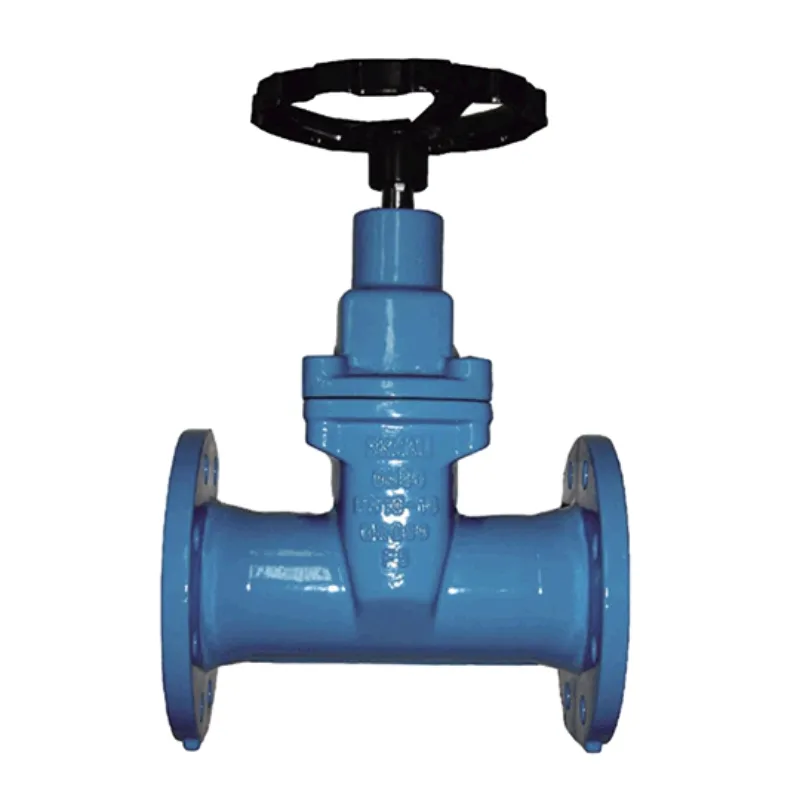
Spotlight: DIN Resilient Seat Gate Valve NRS
A workhorse spec I keep seeing in bids: ductile-iron body, EPDM-encapsulated wedge, DIN 3352 body geometry, and EN 12266/API 598 testing. The model below originates from No.88 Zhengxi Road, Yanbai Development, Ningjin, Hebei, China. Size up to 40” is surprisingly common on raw water lines.
| Parameter | DIN Resilient Seat Gate Valve NRS (≈ real-world) |
|---|---|
| Design & Manufacture | DIN 3352 |
| Flanges | EN 1092-2 / DIN 2533 |
| Face-to-Face | DIN 3202 F4/F5 |
| Coating | Fusion-bonded epoxy inside/outside (≈250 μm; real-world may vary) |
| Testing | API 598 / EN 12266 (Shell ≈1.5×PN, Seat ≈1.1×PN; Leakage Rate A) |
| Size Range | DN50–DN1000 (up to 40”) |
| Materials | Body: Ductile iron GJS-500-7; Wedge: DI + EPDM; Stem: SS 1.4021/420 |
| Working Temp | ≈ -10 to +80 °C (EPDM; check media) |
| Applications | Potable water, wastewater, irrigation, HVAC water |
Where they’re used (and why)
- Municipal mains: NRS resilient-seated for tight shutoff and low torque
- WWTPs: knife gates for sludge; resilient-seated sluice valves on clean side
- Fire protection: OS&Y for visual open indication
- Desal and industrial: coated DI or SS internals where chlorides lurk
Many customers say the “no-drip close” of resilient seats justifies the move from old metal wedges, especially after a few years in the ground.
Process flow from foundry to field
Materials selected (ductile iron, EPDM, stainless stem) → sand casting → shot blasting → precision machining of body/bonnet guides → wedge encapsulation (EPDM vulcanization) → fusion-bonded epoxy coating → assembly with low-friction stem nut → pressure testing to EN 12266/API 598 → marking and serialization. Expected service life: ≈25–30 years in potable networks with proper cathodic protection and chamber drainage.
Vendor snapshot (what specifiers usually compare)
| Vendor | Certs & Standards | Lead Time | Customization | Notes |
|---|---|---|---|---|
| Hebei manufacturer (DIN RSGV NRS) | DIN 3352, EN 1092-2, EN 12266/API 598; drinking-water approvals on request | ≈4–8 weeks | Coating thickness, gearboxes, bypass, position indicator | Value-focused; large sizes up to 40” |
| European brand A | DIN/EN; WRAS/ACS/DVGW options | ≈6–12 weeks | Wide actuator ecosystem | Premium pricing; extensive documentation |
| North American brand B | AWWA C509/C515; NSF/ANSI/CAN 61 | Stock for common sizes | OS&Y fire, PN/ANSI end standards | Great for fire and municipal retrofits |
Customization checklist
- Seat elastomer: EPDM (potable), NBR (hydrocarbons)
- Coating: FBE ≥250 μm; holiday testing recommended
- Stem options: 13% Cr or 304/316 stainless, with anti-friction bushings
- Add-ons: bypass valves, position indicators, ISO 5211 actuator flanges
Mini case studies
MENA utility: swapped aging metal-seat gates for resilient-seat NRS on a DN800 trunk. Result: zero visible leakage on isolation and 20% faster shutdowns (operator feedback).
Coastal desal pre-treatment: specified FBE-coated DI body with 316 stem; after 18 months, chamber inspections showed intact coating, no stem pitting.
Testing, data, and paperwork
Typical factory tests per EN 12266/API 598: shell at ≈1.5×PN, seat at ≈1.1×PN, Leakage Rate A (bubble-tight). Many buyers also ask for EN 1074-1/2 compliance for water supply valves and potable-water elastomer certificates (WRAS/ACS/DVGW) — availability varies by vendor. As always, verify against your project spec. For the Types Of Sluice Valve in wastewater, I’d add stem/seal grit guards and gearboxes for high torque.
Bottom line
For most networks, resilient-seated NRS per DIN/EN is the sweet spot: tight shutoff, manageable torque, and fair lifecycle costs. Metal-seated still earns its keep in high-temperature or abrasive duties, but for potable water, resilient-seat wins nine times out of ten, to be honest.
- DIN 3352 Gate valves — Design and dimensions (publisher: DIN).
- EN 12266-1: Industrial valves — Testing of metallic valves — Part 1: Pressure tests.
- EN 1092-2: Flanges and their joints — Cast iron flanges.
- AWWA C509/C515: Resilient-Seated Gate Valves for Water Service (American Water Works Association).
- EN 1074-1/2: Valves for water supply — General requirements / Gate valves.
Share
Latest news
-
Understanding the 6 butterfly valve price Industrial Buying GuideNewsApr.16,2026
-
Analyzing the 50mm Butterfly Valve Price and Buyer GuideNewsApr.09,2026
-
Comprehensive Guide to 40mm Butterfly Valve Price Factors and Quality ConsiderationsNewsApr.07,2026
-
Comprehensive Guide to 4 Inch Sluice Valve Price and Key Selection FactorsNewsApr.04,2026
-
Comprehensive Guide to 4 Butterfly Valve Price Factors and Ranges in 2024NewsMar.31,2026
-
Comprehensive Guide to 300mm Butterfly Valve Price and Industrial ApplicationsNewsMar.28,2026
 English
  Afrikaans
  Albanian
  Amharic
  Arabic
  Armenian
  Azerbaijani
  Basque
  Belarusian
  Bengali
  Bosnian
  Bulgarian
  Catalan
  Cebuano
  China
China  China (Taiwan)
  Corsican
  Croatian
  Czech
Czech  Danish
  Dutch
Dutch  Esperanto
  Estonian
  Finnish
  French
  Frisian
  Galician
  Georgian
  German
  Greek
Greek  Gujarati
  Haitian Creole
  Hausa
Hausa  Hawaiian
  Hebrew
  Hindi
Hindi  Miao
Miao  Hungarian
  Icelandic
  Igbo
Igbo  Indonesian
  Irish
Irish  Italian
  Japanese
  Javanese
  Kannada
  Kazakh
  Khmer
Khmer  Rwandese
  Korean
  Kurdish
  Kyrgyz
  Lao
Lao  Latin
Latin  Latvian
  Lithuanian
  Luxembourgish
  Macedonian
  Malgashi
  Malay
Malay  Malayalam
  Maltese
  Maori
Maori  Marathi
  Mongolian
  Myanmar
  Nepali
  Norwegian
  Norwegian
  Occitan
  Pashto
  Persian
  Polish
  Portuguese
  Punjabi
  Romanian
  Russian
  Samoan
  Scottish Gaelic
  Serbian
  Sesotho
  Shona
Shona  Sindhi
  Sinhala
  Slovak
  Slovenian
  Somali
  Spanish
  Sundanese
  Swahili
  Swedish
  Tajik
Tajik  Tamil
Tamil  Tatar
Tatar  Telugu
  Thai
Thai  Turkish
  Turkmen
  Ukrainian
  Urdu
Urdu  Uighur
  Uzbek
Uzbek  Vietnamese
  Welsh
Welsh  Bantu
Bantu  Yiddish
  Yoruba
  Zulu
Zulu