Nov . 03, 2025 11:55 Back to list
Gate Valve Types: Which Offers Best Seal & Durability?
A Practical Guide to gate valve types (and why knife gates are having a moment)
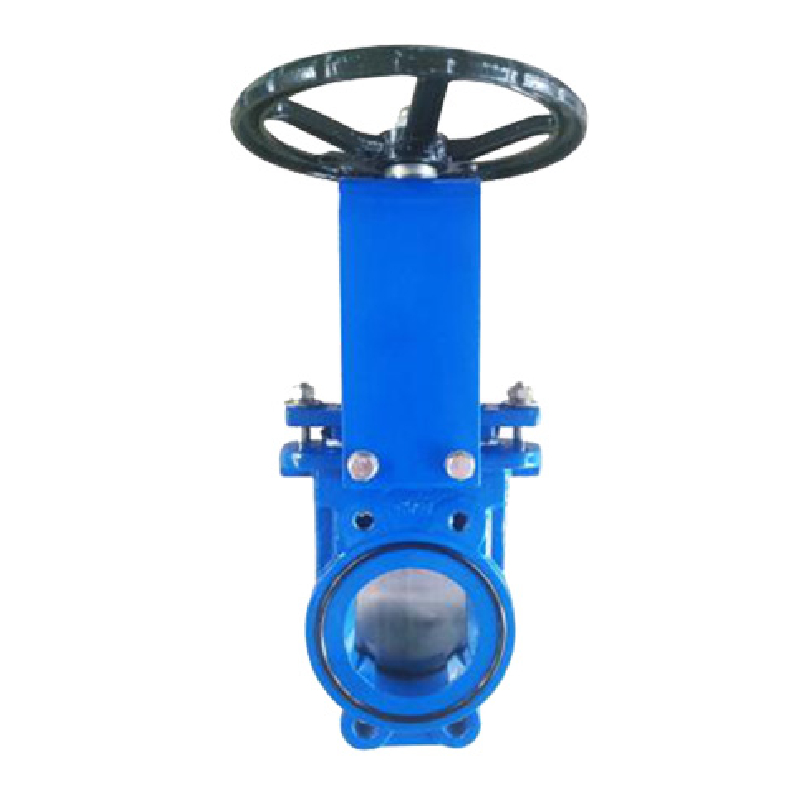
Every plant manager I talk to seems to have the same complaint: “spec sheets are neat, slurries are not.” That’s exactly why the humble Knife Gate Valve is back in the spotlight. In mining, wastewater, and pulp lines choked with fibers or grit, a slim, sharp gate that cuts and seals is—frankly—what keeps shifts running.
Industry snapshot: what’s changing
- Shift from wedge gates to knife gates in slurry and fibrous media (operators want fewer blockages).
- More composite seats and hard-faced gates for abrasion resistance.
- Data-driven maintenance: cycle counting + ISO leakage classes are becoming normal, not optional.
Common gate valve types
- Wedge gate (resilient/metal seated) for clean water and oil service.
- Parallel slide/slab gate for pipelines and high-pressure isolation.
- Knife gate for slurries, pulp, powders—my go-to when media is ugly.
- Through-conduit gate for piggable pipeline systems.
Knife Gate Valve: quick specs (real-world view)
Origin: No.88 Zhengxi Road, Yanbai Development, Ningjin, Hebei, China. I’ve been on similar factory floors—pragmatic setups, surprisingly flexible on customization.
| Parameter | Typical Value (≈, real-world may vary) |
|---|---|
| Size Range | 2"–42" N.B. |
| Pressure Class | ANSI 150; PN6, PN10, PN16 |
| End Connections | Flanged, Wafer |
| Body/Gate Materials | Ductile iron, WCB; 304/316 gate; hard-facing optional |
| Seat Options | EPDM, NBR, PTFE, metal seat |
| Leakage Class | ISO 5208 Rate A–D (per build) |
| Actuation | Handwheel, gear, pneumatic, electric |
| Coating | FBE or epoxy ≈250 μm |
| Standards | API 602/MSS SP-81 (design); API 598/ISO 5208 (test) |
Manufacturing and testing flow
Materials incoming with 3.1 certs → CNC machining → gate lapping → seat insertion/bonding → assembly → hydrostatic shell test at 1.5× rated pressure → seat test at 1.1× (API 598/EN 12266-1) → cycle test (sampled, ≈10k–30k cycles). Service life? In abrasive slurries, many customers say they get 18–36 months before seat refresh; cleaner service runs far longer.
Where they shine (and why)
- Mining tailings and thickener underflow: cuts through solids without wedging.
- Pulp and paper: fibers pass; less ragging than wedge gates.
- Wastewater: grit, rags—still not fun, but manageable.
- Power/ash handling: abrasion-resistant builds pay off.
Mini case study
A copper concentrator (South America) swapped 12 wedge gates on a 10" slurry loop for knife gates with PTFE seats and 316 gates. Surprise: maintenance windows dropped from monthly to quarterly; operators reported “no more stuck stems.” Not glamorous, but it saved two shutdowns a quarter.
Vendor comparison (field-notes style)
| Vendor | Lead Time | Certs | Customization | Notes |
|---|---|---|---|---|
| Hebei Maker (Knife Gate) | ≈3–6 weeks | ISO 9001, API 598 test | High—sizes, seats, actuators | Value-first; good on slurry builds |
| Global Brand A | 6–12 weeks | PED, SIL options | Medium | Premium pricing; deep documentation |
| Local Fabricator | 1–4 weeks (small sizes) | Varies | High but limited test scope | Great for emergencies |
Certifications, data, and what to ask for
Request hydro/seat test charts (API 598), ISO 5208 leakage class, coating DFT logs, and MTRs. For sour service, look for NACE MR0175/ISO 15156. If you’re choosing among gate valve types, confirm differential pressure, solids content, and cleaning strategy first—saves headaches later.
Customer voices (lightly edited)
“On 8-inch lines with 3% solids, the knife gates just… behave,” a wastewater supervisor told me. Another buyer said, “Lead time was realistic; we got better sealing after switching to PTFE seats.”
Bottom line: among gate valve types, knife gates are the pragmatic pick for slurries and fibrous media. Not fancy—just effective.
Authoritative citations
- API 598: Valve Inspection and Testing
- ISO 5208: Industrial valves—Pressure testing of metallic valves
- MSS SP-81: Factory-Made Knife Gate Valves
- NACE MR0175/ISO 15156: Materials for use in H2S-containing environments
- EN 1092-1: Flanges and their joints (metric flanges)
Share
Latest news
-
Understanding the 6 butterfly valve price Industrial Buying GuideNewsApr.16,2026
-
Analyzing the 50mm Butterfly Valve Price and Buyer GuideNewsApr.09,2026
-
Comprehensive Guide to 40mm Butterfly Valve Price Factors and Quality ConsiderationsNewsApr.07,2026
-
Comprehensive Guide to 4 Inch Sluice Valve Price and Key Selection FactorsNewsApr.04,2026
-
Comprehensive Guide to 4 Butterfly Valve Price Factors and Ranges in 2024NewsMar.31,2026
-
Comprehensive Guide to 300mm Butterfly Valve Price and Industrial ApplicationsNewsMar.28,2026
 English
  Afrikaans
  Albanian
  Amharic
  Arabic
  Armenian
  Azerbaijani
  Basque
  Belarusian
  Bengali
  Bosnian
  Bulgarian
  Catalan
  Cebuano
  China
China  China (Taiwan)
  Corsican
  Croatian
  Czech
Czech  Danish
  Dutch
Dutch  Esperanto
  Estonian
  Finnish
  French
  Frisian
  Galician
  Georgian
  German
  Greek
Greek  Gujarati
  Haitian Creole
  Hausa
Hausa  Hawaiian
  Hebrew
  Hindi
Hindi  Miao
Miao  Hungarian
  Icelandic
  Igbo
Igbo  Indonesian
  Irish
Irish  Italian
  Japanese
  Javanese
  Kannada
  Kazakh
  Khmer
Khmer  Rwandese
  Korean
  Kurdish
  Kyrgyz
  Lao
Lao  Latin
Latin  Latvian
  Lithuanian
  Luxembourgish
  Macedonian
  Malgashi
  Malay
Malay  Malayalam
  Maltese
  Maori
Maori  Marathi
  Mongolian
  Myanmar
  Nepali
  Norwegian
  Norwegian
  Occitan
  Pashto
  Persian
  Polish
  Portuguese
  Punjabi
  Romanian
  Russian
  Samoan
  Scottish Gaelic
  Serbian
  Sesotho
  Shona
Shona  Sindhi
  Sinhala
  Slovak
  Slovenian
  Somali
  Spanish
  Sundanese
  Swahili
  Swedish
  Tajik
Tajik  Tamil
Tamil  Tatar
Tatar  Telugu
  Thai
Thai  Turkish
  Turkmen
  Ukrainian
  Urdu
Urdu  Uighur
  Uzbek
Uzbek  Vietnamese
  Welsh
Welsh  Bantu
Bantu  Yiddish
  Yoruba
  Zulu
Zulu