okt . 11, 2025 09:13 Vissza a listához
Introduction to Butterfly-Valve Technology
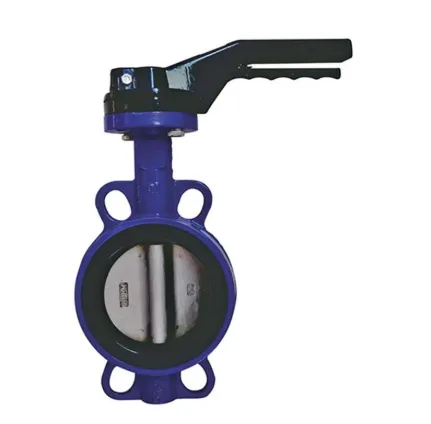
The butterfly valve stands as a cornerstone in fluid control systems across a multitude of industries. Characterized by a disc that rotates on a shaft within the valve body, it offers a remarkably efficient and compact solution for both isolation and throttling of flow. Unlike gate or globe valves, the butterfly valve's operation involves a quarter-turn rotation, moving the disc from a fully open to a fully closed position. This simple yet robust mechanism contributes significantly to its widespread adoption. Available in various designs, including lug, wafer, and flanged types, and with a diverse array of materials for both body and seating, these valves are engineered to handle a broad spectrum of media, from potable water and aggressive chemicals to slurries and gases. Their compact design, relative light weight, and ease of installation make them a preferred choice where space efficiency and swift operation are paramount. The evolution of butterfly valve technology has focused on enhancing sealing integrity, extending service life in demanding environments, and integrating with advanced automation systems, ensuring their continued relevance and critical function in modern industrial infrastructure.
The Critical Impact of Butterfly Valves on Industrial Efficiency
In the intricate tapestry of industrial operations, the efficiency of fluid control components directly translates into operational profitability and environmental stewardship. Butterfly valves play a disproportionately significant role in this regard, offering tangible benefits that resonate across financial and environmental metrics. Consider their impact on energy consumption: a well-designed butterfly valve offers a low pressure drop when fully open, which directly reduces the energy required by pumps to move fluids through a system. Industry data suggests that optimizing valve selections can lead to a 3-7% reduction in pumping energy costs in large-scale fluid transfer systems. Furthermore, their rapid quarter-turn operation minimizes the time required for flow adjustments or complete shut-off, translating into reduced downtime during maintenance or process changes. In critical applications, this swift response time can prevent costly spills or equipment damage, potentially saving millions in remediation and lost production. For instance, in a municipal water treatment plant, the ability to isolate a section for repair in under 60 seconds, as facilitated by a modern butterfly valve, can mean the difference between minor disruption and a widespread service interruption affecting thousands of residents. Their relatively lightweight construction also reduces installation costs and structural support requirements, offering up to a 25% saving in material and labor compared to heavier valve types in certain pipe sizes. Beyond the immediate economic advantages, the precise flow control offered by advanced butterfly valves aids in optimizing chemical dosing in water treatment, ensuring compliance with environmental regulations and minimizing chemical waste – a dual benefit for both operational budget and ecological footprint. The cumulative effect of these efficiencies underscores the butterfly valve's fundamental contribution to lean manufacturing and sustainable industrial practices.
Unpacking the Technical Advantages of Modern Butterfly Valve Designs
Modern butterfly valve designs embody a synergy of material science, fluid dynamics, and mechanical engineering, culminating in a robust and highly efficient fluid control solution. One of their foremost technical advantages lies in their compact design and lighter weight compared to other valve types, such as gate or globe valves of equivalent line size. This characteristic not only simplifies installation but also reduces the overall footprint of piping systems, a critical consideration in space-constrained industrial facilities. The operational principle, a quarter-turn rotation, allows for incredibly rapid open/close cycles, enhancing process responsiveness and reducing actuator wear. This quick action is particularly beneficial in emergency shut-off applications where immediate flow cessation is paramount. Furthermore, the inherent design offers a low pressure drop across the valve when fully open, minimizing energy losses and optimizing system efficiency. This is attributed to the disc's minimal obstruction to flow, especially in concentric designs. Advanced sealing technologies, including resilient seats made from EPDM, NBR, Viton, or PTFE, provide excellent leak-tightness, accommodating a wide range of temperatures and chemical compatibilities. For more demanding applications, high-performance butterfly valves utilize offset designs and metallic seats, achieving bubble-tight shut-off even under high pressures and temperatures. The diversity of materials—from cast iron and ductile iron to stainless steel and specialized alloys—allows for precise customization to resist corrosion, abrasion, and cavitation, ensuring prolonged service life in aggressive media. Actuation versatility is another key strength; butterfly valves can be operated manually (lever or gearbox), pneumatically, electrically, or hydraulically, allowing for seamless integration into sophisticated automated control systems. This adaptability, combined with their inherent design simplicity, makes them a technically superior choice for a vast array of industrial processes.
Navigating the Market: A Comparison of Leading Butterfly Valve Manufacturers
Choosing the right butterfly valve often involves a careful assessment of various manufacturers, each offering distinct advantages in terms of technology, material range, certifications, and after-sales support. The market is populated by global conglomerates and specialized niche players, all vying for market share by differentiating their offerings. To illustrate this, a comparative analysis of three hypothetical categories of manufacturers—a Global Leader, a Specialized High-Performance Provider, and a Cost-Effective Solution Provider—can highlight key decision-making factors. While specific company names are omitted to focus on general characteristics, the distinctions remain pertinent. This comparison underscores that the "best" valve is always application-dependent, balancing initial cost against long-term performance, reliability, and specific operational demands.
|
Feature/Manufacturer Category |
Global Leader (e.g., Large Diversified Industrial) |
Specialized High-Performance Provider (e.g., Niche Expert) |
Cost-Effective Solution Provider (e.g., Regional/Volume Focus) |
|
Product Range & Sizes |
Extensive, DN50 to DN3000+, wide variety of types (wafer, lug, flanged, triple offset) |
Focused on high-performance, critical applications, DN50 to DN1200, often specific materials |
Standard range, common sizes DN50 to DN600, primarily resilient seated wafer/lug |
|
Material Options (Body/Disc/Seat) |
Comprehensive: Cast Iron, Ductile Iron, SS, Duplex, Super Duplex, Hastelloy; EPDM, NBR, Viton, PTFE, Metal-to-Metal |
Specialized Alloys: Monel, Titanium, Zirconium; Advanced PTFE, PEEK, Metal-to-Metal for severe service |
Common materials: Cast Iron, Ductile Iron, SS304/316; EPDM, NBR, Viton |
|
Certifications & Standards |
ISO 9001, API 609, PED, ATEX, SIL, WRAS/NSF (for specific models), Fugitive Emissions (ISO 15848) |
Often exceeds industry standards, API 607/6FA Fire Safe, NACE MR0175/ISO 15156, Cryogenic testing |
ISO 9001, basic CE marking, often meets local or regional standards |
|
Technology & Innovation |
R&D leader, advanced automation integration, smart valve capabilities, predictive maintenance features |
Focus on proprietary sealing mechanisms, advanced disc profiling for flow control, extreme temperature/pressure designs |
Reliable, proven designs, focus on manufacturing efficiency and cost reduction |
|
Typical Lead Time |
Moderate to long for specialized items (8-16 weeks), stock for common configurations (1-4 weeks) |
Often longer due to customization and specialized manufacturing (10-20+ weeks) |
Generally shorter for standard products (2-6 weeks), high stock levels |
|
Price Point (Relative) |
High-End to Premium, reflects R&D, brand, and global support |
Premium, justified by performance in critical applications and specialized materials |
Competitive to Economical, focus on value and standard utility |
|
After-Sales Support & Service |
Extensive global network, spare parts availability, technical support, training, field service |
Highly specialized technical support, engineering consultation, tailored service agreements |
Basic technical support, standard warranty, regional service partners |
This comparative overview highlights that while all categories offer butterfly valves, their suitability varies significantly with the application. A global leader might provide comprehensive solutions for a large-scale project requiring diverse valve types and global support, whereas a specialized provider is indispensable for mission-critical processes demanding extreme reliability or unique material compatibility. Cost-effective solutions, meanwhile, are often ideal for utility services or non-critical applications where budget constraints are paramount.
Tailored Solutions: Customizing Butterfly Valves for Unique Operational Demands
The inherent versatility of the butterfly valve design lends itself exceptionally well to customization, allowing engineers to precisely match valve specifications to the often-unique demands of industrial processes. This adaptability is critical for optimizing performance, extending service life, and ensuring safety in environments that standard off-the-shelf valves simply cannot handle. Customization can manifest in several key areas. Material selection is perhaps the most fundamental: while standard valves may use ductile iron or stainless steel, specialized applications might require bodies, discs, or stems made from exotic alloys like Hastelloy, Monel, or Titanium to resist extreme corrosion from media such as strong acids or highly saline solutions. Similarly, the choice of seat material (e.g., Virgin PTFE for ultra-pure applications, PEEK for high temperatures, or specifically formulated elastomers for aggressive chemicals) ensures bubble-tight shut-off and longevity. Beyond materials, end connections can be specified to integrate seamlessly with existing piping, including specific flange standards (ANSI, DIN, JIS), butt-weld ends for high-pressure or critical no-leakage systems, or hygienic clamps for sanitary applications in food and pharmaceutical industries. Actuation methods are another common area for customization; while a standard pneumatic actuator might suffice, systems requiring precise flow modulation may opt for modulating electric actuators with specific control signals (4-20mA, 0-10V) and feedback mechanisms. For remote or hazardous locations, specific communication protocols (Modbus, Profibus, Foundation Fieldbus) can be integrated. Furthermore, specialized coatings or linings, such as internal PTFE or epoxy linings, are often applied to protect the valve body from highly corrosive or abrasive media without resorting to full exotic alloy construction, offering a cost-effective solution. In high-temperature applications, extended bonnets can be engineered to dissipate heat, protecting the actuator and packing from degradation. Lastly, specific testing and certification requirements, beyond standard industry norms, are frequently requested for nuclear, marine, or medical gas applications, demanding rigorous validation procedures to ensure performance under specific, often extreme, operational profiles. This granular level of customization ensures that butterfly valves are not merely components but highly engineered solutions designed to overcome specific operational challenges.
Real-World Applications: Where Butterfly Valves Make a Difference
The ubiquity of butterfly valves across diverse industrial sectors is a testament to their versatility, efficiency, and reliability. Their ability to handle large volumes of fluid, provide quick shut-off, and offer precise flow control makes them indispensable in numerous critical applications. In Water and Wastewater Treatment, butterfly valves are prevalent in virtually every stage, from raw water intake and filtration to chemical dosing, sludge handling, and effluent discharge. Their lightweight design facilitates installation in extensive pipe networks, and the range of resilient seating materials ensures compatibility with both potable water and abrasive slurries. For example, large-diameter flanged butterfly valves are commonly used as isolation valves for pump stations, allowing for maintenance without significant disruption to flow. The ability to specify WRAS or NSF certified materials is crucial here. In the HVAC (Heating, Ventilation, and Air Conditioning) industry, butterfly valves are a preferred choice for controlling chilled water, hot water, and condenser water flows. Their compact design saves valuable space in mechanical rooms, and their low pressure drop contributes to energy efficiency in large building complexes. Actuated butterfly valves are often integrated into building management systems (BMS) for automated temperature and flow regulation, ensuring optimal climate control and energy conservation. The Oil and Gas sector utilizes high-performance butterfly valves in both upstream and downstream operations, including pipelines, refineries, and offshore platforms. Triple offset butterfly valves, with their metal-to-metal seating, are particularly valued for high-temperature and high-pressure applications, offering zero-leakage shut-off in critical processes involving hydrocarbons, steam, and corrosive chemicals. Their fire-safe design (API 607/6FA certified) is a non-negotiable requirement for safety. In the Food and Beverage industry, sanitary butterfly valves, often with polished internal surfaces and FDA-approved elastomers, are essential for controlling the flow of ingredients, product lines, and cleaning solutions. Their ease of cleaning (CIP/SIP compatibility) and minimal dead spaces prevent bacterial growth, upholding stringent hygiene standards. Lastly, in the Chemical Processing Industry, butterfly valves are customized with exotic alloys and specialized PTFE or PFA linings to withstand highly corrosive acids, alkalis, and solvents, ensuring both process integrity and operator safety. These varied applications demonstrate how tailored design and material selection enable butterfly valves to meet the stringent and unique demands of each industry, proving their indispensable role in modern industrial infrastructure.
Future Outlook and the Enduring Relevance of the Butterfly-Valve
As industries continue to evolve, driven by demands for greater efficiency, sustainability, and digitalization, the butterfly valve is poised to maintain, if not expand, its critical role in fluid control. The future trajectory of butterfly-valve technology will undoubtedly be shaped by several key trends. One significant area of development is the integration of advanced smart technologies. Future butterfly valves will feature more sophisticated sensors for real-time monitoring of position, pressure, temperature, and even vibration, feeding data into predictive maintenance systems and IoT platforms. This will enable proactive fault detection, optimize maintenance schedules, and significantly reduce unscheduled downtime, further enhancing operational efficiency. Material science innovations will continue to push boundaries, yielding new elastomers and alloys capable of withstanding even more extreme temperatures, pressures, and highly aggressive chemical media, expanding the application envelope of these valves into nascent industries or more challenging existing processes. The drive for greater sustainability will also influence design, with a focus on lighter, more durable, and recyclable materials, as well as designs that minimize fugitive emissions. Furthermore, as automation becomes increasingly prevalent, the development of highly precise, intelligent actuators that can self-diagnose and communicate seamlessly within complex control networks will be paramount. Customization will remain a cornerstone, with manufacturers offering even more granular tailoring of valve features through advanced manufacturing techniques like additive manufacturing, allowing for bespoke solutions with shorter lead times. The simplicity, efficiency, and adaptability that have defined the butterfly valve for decades ensure its enduring relevance. Its evolution will continue to mirror industrial progress, solidifying its position as a fundamental and indispensable component in the journey towards smarter, greener, and more efficient global operations.
FAQ: Butterfly Valve
Here are some frequently asked questions about butterfly valves:
Q1: What is a butterfly valve and how does it work?
A butterfly valve is a quarter-turn rotational motion valve used to stop, regulate, or start flow. It operates by rotating a disc, or "butterfly," positioned in the center of the pipe. When the disc is parallel to the flow, the valve is fully open; when perpendicular, it is fully closed.
Q2: What are the main types of butterfly valves?
The primary types include:
- Concentric (Resilient Seated):Disc centers in the bore, soft seat provides sealing.
- Eccentric (High Performance/Double Offset):Stem is offset from the disc center and bore center, reducing seat wear.
- Triple Offset:Has three offsets (two eccentric, one angular) allowing for metal-to-metal seating, ideal for high temperature/pressure and zero leakage.
Q3: What are the advantages of using butterfly valves?
Key advantages include: compact design and light weight, quick quarter-turn operation, low pressure drop when fully open, relatively lower cost compared to other valve types (especially in larger sizes), and a wide range of material options for diverse applications.
Q4: What are the limitations or disadvantages of butterfly valves?
Disadvantages can include: potential for cavitation in throttling applications (especially in concentric designs), the disc always being in the flow path (causing some pressure drop even when fully open), and limited use for very high-pressure applications with resilient seats.
Q5: How do I select the correct butterfly valve for my application?
Selection depends on several factors:
- Media:Fluid type, temperature, pressure, corrosiveness, abrasiveness.
- Application:Isolation, throttling, emergency shut-off.
- End Connections:Wafer, lug, flanged, welded.
- Actuation:Manual, pneumatic, electric, hydraulic.
- Material Compatibility:Body, disc, stem, and seat materials must withstand the media and operating conditions.
- Standards & Certifications:Industry-specific requirements (e.g., API, NACE, WRAS, FDA).
Q6: Can butterfly valves be used for throttling (flow regulation)?
Yes, butterfly valves can be used for throttling, particularly high-performance and triple offset designs with appropriate actuators. However, for precise, continuous throttling, specific design considerations (e.g., disc contouring) might be necessary to avoid cavitation and ensure stable flow control, especially at low flow rates.
Q7: What is the typical lifespan of a butterfly valve and how can it be extended?
The lifespan varies significantly based on application severity, material selection, proper installation, and maintenance. In ideal conditions, a well-chosen and maintained butterfly valve can last 10-20 years or more. To extend lifespan:
- Ensure correct valve selection for the application.
- Follow manufacturer's installation guidelines.
- Implement regular inspection and maintenance schedules.
- Address minor leaks or operational issues promptly.
- Avoid operating the valve near cavitation conditions if not designed for it.
Részesedés
Friss hírek
-
Understanding the 6 butterfly valve price Industrial Buying GuideHírApr.16,2026
-
Analyzing the 50mm Butterfly Valve Price and Buyer GuideHírApr.09,2026
-
Comprehensive Guide to 40mm Butterfly Valve Price Factors and Quality ConsiderationsHírApr.07,2026
-
Comprehensive Guide to 4 Inch Sluice Valve Price and Key Selection FactorsHírApr.04,2026
-
Comprehensive Guide to 4 Butterfly Valve Price Factors and Ranges in 2024HírMar.31,2026
-
Comprehensive Guide to 300mm Butterfly Valve Price and Industrial ApplicationsHírMar.28,2026
 Hungarian
  English
  Afrikaans
  Albanian
  Amharic
  Arabic
  Armenian
  Azerbaijani
  Basque
  Belarusian
  Bengali
  Bosnian
  Bulgarian
  Catalan
  Cebuano
  China
China  China (Taiwan)
  Corsican
  Croatian
  Czech
Czech  Danish
  Dutch
Dutch  Esperanto
  Estonian
  Finnish
  French
  Frisian
  Galician
  Georgian
  German
  Greek
Greek  Gujarati
  Haitian Creole
  Hausa
Hausa  Hawaiian
  Hebrew
  Hindi
Hindi  Miao
Miao  Icelandic
  Igbo
Igbo  Indonesian
  Irish
Irish  Italian
  Japanese
  Javanese
  Kannada
  Kazakh
  Khmer
Khmer  Rwandese
  Korean
  Kurdish
  Kyrgyz
  Lao
Lao  Latin
Latin  Latvian
  Lithuanian
  Luxembourgish
  Macedonian
  Malgashi
  Malay
Malay  Malayalam
  Maltese
  Maori
Maori  Marathi
  Mongolian
  Myanmar
  Nepali
  Norwegian
  Norwegian
  Occitan
  Pashto
  Persian
  Polish
  Portuguese
  Punjabi
  Romanian
  Russian
  Samoan
  Scottish Gaelic
  Serbian
  Sesotho
  Shona
Shona  Sindhi
  Sinhala
  Slovak
  Slovenian
  Somali
  Spanish
  Sundanese
  Swahili
  Swedish
  Tajik
Tajik  Tamil
Tamil  Tatar
Tatar  Telugu
  Thai
Thai  Turkish
  Turkmen
  Ukrainian
  Urdu
Urdu  Uighur
  Uzbek
Uzbek  Vietnamese
  Welsh
Welsh  Bantu
Bantu  Yiddish
  Yoruba
  Zulu
Zulu