Sep . 22, 2025 11:55 Back to list
Automotive Wire Manufacturers: High-Performance & Reliable Cables
The Critical Role of Automotive Wire Manufacturing in Modern Mobility
The automotive industry's relentless drive towards innovation, safety, and efficiency places immense demands on its foundational components. At the heart of every vehicle, from traditional internal combustion engines to advanced electric vehicles (EVs) and autonomous systems, lies an intricate network of electrical wiring. The quality and performance of these wires are paramount, directly impacting vehicle reliability, safety, and overall functionality. As such, the selection of reputable automotive wire manufacturers is a critical decision for OEMs and Tier 1 suppliers alike.
Industry Trends Shaping Automotive Wiring
The automotive wiring sector is currently undergoing significant transformation, driven by several macro trends:
- Electrification (EVs & Hybrids): The surge in electric vehicle production necessitates specialized high-voltage cables, charging infrastructure wiring, and robust battery management system (BMS) harnesses. These cables require superior insulation, electromagnetic compatibility (EMC) shielding, and thermal management capabilities.
- Autonomous Driving Systems: Advanced Driver-Assistance Systems (ADAS) and fully autonomous platforms rely on high-speed data transmission through shielded cables for sensors, cameras, radar, and LiDAR units. Data integrity and minimal latency are non-negotiable.
- Connectivity and Infotainment: Modern vehicles are increasingly integrated with sophisticated infotainment systems, telematics, and V2X (Vehicle-to-Everything) communication. This requires high-bandwidth data cables, similar to those produced by a specialized av cable manufacturer, but optimized for the harsh automotive environment.
- Lightweighting: To improve fuel efficiency and extend EV range, there's a constant push for lighter materials. This translates to smaller gauge wires, aluminum conductors (where appropriate), and innovative insulation materials that reduce overall harness weight without compromising performance or safety.
- Miniaturization and Modularity: As vehicles become more complex, the packaging space for wiring harnesses shrinks. This drives demand for smaller diameter wires, compact connectors, and modular wiring loom designs from sophisticated automotive wiring loom manufacturers.
These trends highlight the need for automotive wire manufacturers to invest in advanced R&D, material science, and precision manufacturing processes to meet evolving industry standards and performance benchmarks.
The Manufacturing Process of Automotive Wires and Cables
The production of high-quality automotive wires and cables involves a meticulously controlled, multi-stage process designed to ensure durability, reliability, and compliance with stringent industry standards like ISO 6722, JASO D611, and SAE J1128. Here's a detailed overview of the typical manufacturing flow:
Process Flow Diagram (Schematic Steps)
- Conductor Material Preparation:
- Raw Material Sourcing: High-purity electrolytic copper or aluminum ingots/rods are procured. Copper is favored for its excellent conductivity and corrosion resistance.
- Wire Drawing: The raw material rods undergo a series of drawing processes, pulling them through progressively smaller dies to achieve the desired gauge (e.g., AWG 24 to AWG 00) and tensile strength. This is a cold working process.
- Annealing: After drawing, the wire is heated to specific temperatures and then cooled to soften it, improving its flexibility and reducing internal stresses, crucial for flexible cables.
- Stranding: Multiple fine wires are twisted together to form a stranded conductor. This significantly enhances flexibility, fatigue resistance, and current carrying capacity compared to solid conductors. Different stranding types (concentric, bunch, rope lay) are used based on application.
- Insulation Extrusion:
- Material Selection: Thermoplastic (PVC, PE, PP, TPE, XLPE) or thermoset (silicone, EPR, neoprene) compounds are selected based on required temperature rating, chemical resistance, abrasion resistance, and dielectric properties. XLPE (Cross-Linked Polyethylene) is common for high-temperature applications.
- Extrusion Process: The chosen insulating material is melted and extruded around the stranded conductor through a die. Precise control of temperature, pressure, and line speed ensures uniform insulation thickness and concentricity.
- Cooling & Curing: The newly insulated wire passes through a cooling trough (water or air) to solidify the insulation. For thermoset materials, a vulcanization or cross-linking process (e.g., steam, dry cure) is used to enhance physical properties.
- Spark Testing: Each insulated wire is passed through a high-voltage spark tester to detect any pinholes or insulation flaws, ensuring dielectric integrity.
- Cabling / Twisting (for multi-core cables):
- Multiple insulated wires are twisted together with a specific lay length (pitch) to form a multi-core cable. This twisting minimizes electromagnetic interference (EMI) and ensures a compact cable structure. Fillers may be added to maintain a circular cross-section.
- Shielding (if required):
- For data transmission cables or applications requiring EMI/RFI protection, shielding layers are applied. Common types include:
- Foil Shield: An aluminum/polyester laminate wrap provides 100% coverage.
- Braided Shield: Tinned copper or aluminum wires woven around the cable provide mechanical strength and excellent EMI protection.
- For data transmission cables or applications requiring EMI/RFI protection, shielding layers are applied. Common types include:
- Jacketing / Sheathing Extrusion:
- Material Selection: The outer jacket (sheath) provides mechanical protection against abrasion, chemicals, oils, and environmental factors. Materials like PVC, TPE, PUR, and polyamide are chosen based on the specific application environment (e.g., engine compartment, cabin).
- Extrusion: Similar to insulation, the jacket material is extruded over the insulated cores or shielded cable, forming the final outer layer.
- Marking: During or after jacketing, the cable is marked with specifications (e.g., manufacturer name, wire gauge, standard compliance) using inkjet or laser printing.
- Final Testing and Quality Control:
- Electrical Tests: Continuity, insulation resistance, conductor resistance, dielectric strength, capacitance, impedance.
- Physical/Mechanical Tests: Tensile strength, elongation, abrasion resistance, cold bend, hot deformation, tear strength, adhesion of insulation/jacket.
- Environmental Tests: Flame resistance (e.g., UL VW-1, CSA FT1), oil resistance, fluid resistance, UV resistance, temperature cycling.
- Dimensional Verification: Outer diameter, insulation thickness, conductor size.
- Compliance: Ensuring all products meet relevant standards such as ISO 6722 (Road vehicles — 60 V and 600 V single-core cables), IATF 16949 (Automotive Quality Management System), and specific OEM standards.
- Packaging: Finished cables are wound onto reels or spools, appropriately packaged, and prepared for shipment.
This rigorous process, combined with continuous quality control at each stage, is what enables automotive wire manufacturers to produce products with exceptional service life and reliability, critical for target industries like automotive, heavy machinery, and defense.
Technical Specifications: Cords and Flexible Cables for Automotive Applications
Our Cords and Flexible Cables, representative of high-quality products from leading automotive wire manufacturers, are engineered to meet the demanding requirements of modern vehicle electrical systems. Below are typical specifications for such products, emphasizing their robust construction and performance capabilities:
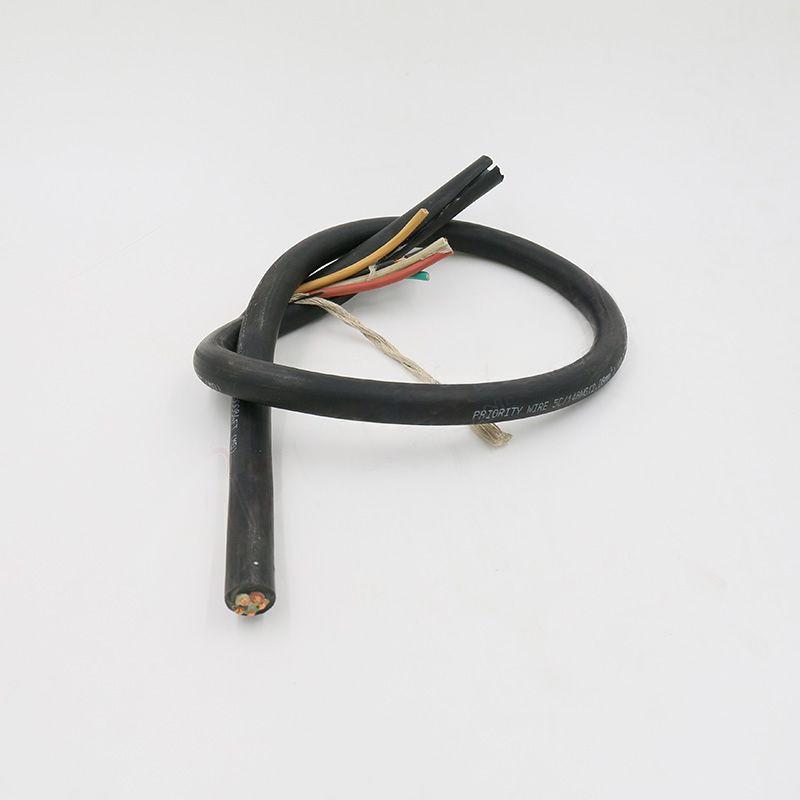
Typical Product Specification Table: Cords & Flexible Cables
| Parameter | Specification / Value Range | Relevant Standard |
|---|---|---|
| Conductor Material | Annealed Stranded Copper (OFC - Oxygen-Free Copper or Tinned Copper) | ASTM B3, ASTM B172 |
| Conductor Size (AWG) | 28 AWG to 00 AWG (0.08 mm² to 70 mm²) | SAE J1128, ISO 6722 |
| Insulation Material | PVC (Polyvinyl Chloride), XLPE (Cross-Linked Polyethylene), TPE (Thermoplastic Elastomer) | ISO 6722 Class B/C/D, SAE J1128 Type GPT/GXL/SXL |
| Rated Voltage | 60 V DC / 25 V AC (Low Voltage), 600 V (High Voltage) | ISO 6722 |
| Temperature Range | -40°C to +125°C (up to +150°C for SXL/XLPE) | ISO 6722, SAE J1128 |
| Abrasion Resistance | Excellent (meeting Class B/C/D for ISO 6722) | ISO 6722, SAE J1128 |
| Chemical/Fluid Resistance | Resistant to Automotive Fluids (Oil, Grease, Fuel, Battery Acid) | ISO 6722, SAE J1128 |
| Flame Retardancy | Self-extinguishing properties | UL VW-1, CSA FT1 |
| Shielding Options | Foil, Braid (Tinned Copper), or combination (for data/sensor cables) | ISO 6722 (specific requirements for shielded cables) |
| Outer Jacket Material (if multi-core) | PVC, TPE, PUR (Polyurethane) for robust applications | ISO 6722 |
These specifications underscore the dedication of professional automotive wire manufacturers to deliver components that perform reliably in the harshest automotive conditions. The focus is always on materials that resist thermal cycling, vibration, chemical exposure, and mechanical stress, ensuring a long service life.
Application Scenarios and Technical Advantages
The versatility and robustness of modern automotive wiring enable its use across a vast array of application scenarios within the vehicle and related industrial sectors. Quality products from leading automotive wire manufacturers offer distinct technical advantages.
Typical Application Scenarios:
- Engine Compartment: Wires for sensors (temperature, pressure, oxygen), injectors, ignition systems, alternators, and starter motors. These require high-temperature resistance, excellent fluid resistance (oil, fuel, coolant), and vibration durability.
- Chassis and Undercarriage: ABS/ESP sensor cables, brake line wiring, fuel pump wiring, chassis ground connections. Demands include abrasion resistance, protection against stone chips, and resistance to road salt/water.
- Cabin and Interior: Wiring for infotainment systems, power windows, seat adjustments, lighting, airbags, and dashboard instrumentation. Emphasis on flexibility, fire retardancy, and electromagnetic compatibility to prevent interference with sensitive electronics.
- Battery Systems (EV/Hybrid): High-voltage battery cable maker products are critical for connecting battery packs, inverters, motors, and charging ports. These require specialized insulation for high voltage, superior thermal stability, and robust shielding for EMC.
- ADAS and Autonomous Systems: Shielded twisted pair (STP) and coaxial cables for cameras, radar, LiDAR, and ultrasonic sensors. High data rates and minimal signal loss are paramount.
- Industrial & Heavy Equipment: Beyond passenger vehicles, these cables find use in off-road vehicles, agricultural machinery, construction equipment, and marine applications, where extreme environmental conditions are common. This often involves similar material and construction principles to those used by high-performance automotive wire manufacturers.
Key Technical Advantages:
- Exceptional Durability and Service Life: Designed to withstand extreme temperatures (-40°C to +150°C), continuous vibration, mechanical stress, and harsh chemical exposure (oils, fuels, battery acids, cleaning agents). This extends the overall operational life of the vehicle's electrical system.
- Corrosion Resistance: Utilizing tinned copper conductors and specialized jacket compounds to prevent corrosion from moisture, road salt, and acidic environments, ensuring long-term electrical conductivity.
- Energy Efficiency: Optimized conductor sizing and low-resistance materials minimize power loss, contributing to overall vehicle energy saving, particularly important for EV range and ICE fuel economy.
- Enhanced Safety: Flame-retardant and low-smoke zero-halogen (LSZH) options are available, improving passenger safety in the event of a fire. Robust insulation prevents short circuits and electrical hazards.
- Signal Integrity (EMC): Advanced shielding and twisting techniques minimize electromagnetic interference (EMI) and radio frequency interference (RFI), crucial for sensitive electronic control units (ECUs), sensor data, and infotainment systems. This expertise is a hallmark of sophisticated automotive wire manufacturers.
- Flexibility & Installability: Highly flexible stranded conductors and advanced insulation materials ensure ease of installation in complex vehicle architectures, reducing assembly time and potential for damage during manufacturing.
- Weight Reduction: Ongoing innovation in conductor and insulation materials, including thin-wall insulation and aluminum options, contributes to reducing overall vehicle weight, directly impacting fuel economy and EV range.
Vendor Comparison and Customized Solutions
Selecting the right partner among automotive wire manufacturers is paramount for vehicle OEMs and Tier 1 suppliers. A thorough vendor comparison goes beyond just price, focusing on long-term value, reliability, and innovation. Furthermore, the ability to provide tailored solutions is a significant differentiator.
Key Criteria for Vendor Comparison:
| Criterion | Description & Importance |
|---|---|
| Certifications & Compliance | IATF 16949 (Automotive Quality Management System), ISO 9001, ISO 14001. Compliance with national and international automotive standards (SAE, ISO, JASO, DIN). These confirm adherence to global best practices. |
| Material Expertise & Innovation | Ability to work with diverse conductors (copper, aluminum), advanced insulation (XLPE, TPE, PTFE), and jacketing materials (PUR, PA). Focus on lightweighting, enhanced thermal performance, and eco-friendly materials. |
| Manufacturing Capabilities | Advanced wire drawing, stranding, extrusion, and braiding capabilities. Capacity for high-volume production, consistent quality control, and robust testing infrastructure. Includes the capacity to produce specialized components like those from basket tray manufacturers for cable routing. |
| R&D and Customization | In-house R&D teams for new material development, prototyping, and custom cable design. Ability to tailor solutions for unique application requirements (e.g., specific gauge, jacket color, environmental resistance, integrated sensor wiring). |
| Global Footprint & Supply Chain | Reliable supply chain management, global logistics capabilities, and contingency planning. Essential for managing risks and ensuring on-time delivery across diverse manufacturing locations. |
| Technical Support & After-Sales | Responsive technical assistance, application engineering support, and clear warranty policies. A partner that supports customers throughout the product lifecycle. |
Customized Solutions: Tailoring Wires for Specific Needs
Modern vehicle designs often require bespoke wiring solutions that off-the-shelf products cannot fulfill. Leading automotive wire manufacturers excel in providing custom-engineered cables and harnesses, optimizing performance and cost for specific applications.
Our expertise in custom solutions encompasses:
- Material Blends: Developing custom insulation or jacket compounds for unique environmental challenges (e.g., enhanced UV resistance, specific chemical exposure, extreme temperature gradients).
- Hybrid Cables: Integrating multiple functions into a single cable – power, data (e.g., CAN, Ethernet), and even fiber optics – to reduce harness complexity and weight.
- Specialized Shielding: Designing multi-layered or optimized shielding solutions for highly sensitive signal integrity requirements in ADAS or infotainment systems.
- Unique Configurations: Producing flat ribbon cables, spiral coiled cables, or custom multi-core arrangements to fit confined spaces or dynamic movement applications.
- Wire & Cable Assemblies: Providing value-added services such as cutting, stripping, crimping, and terminating wires with specific connectors to deliver plug-and-play components. This includes creating full automotive wiring looms, a key offering of advanced automotive wiring loom manufacturers.
This ability to engineer precise solutions ensures optimal performance, reduces design constraints, and ultimately accelerates time-to-market for complex automotive projects.
Application Case Studies & Customer Trust
Real-world application demonstrates the reliability and expertise of reputable automotive wire manufacturers. Our long-standing commitment to quality and innovation has forged strong partnerships and delivered successful outcomes across various automotive and industrial sectors.
Case Study 1: High-Voltage Battery Cable for an EV Manufacturer
Challenge: A leading electric vehicle manufacturer required a robust, lightweight high-voltage cable for their next-generation battery pack, capable of operating at 800V and handling significant current loads, while meeting stringent thermal and vibration requirements over a 15-year service life. Standard options were either too heavy or lacked sufficient thermal resilience.
Solution: Collaborating with the OEM's engineering team, we developed a custom XLPE-insulated, shielded power cable with an aluminum conductor, reducing weight by 30% compared to equivalent copper solutions. The innovative jacket material was specifically engineered for enhanced thermal dissipation and mechanical protection. Prototypes underwent extensive testing, including thermal cycling from -40°C to +150°C, continuous current overload tests, and vibration tests simulating 500,000 km of driving.
Outcome: The custom battery cable maker solution not only met all performance specifications but also contributed to a tangible increase in vehicle range and reduced manufacturing complexity due to its optimized design. The OEM integrated the cable into their production line, citing our technical expertise and rigorous testing as key factors in their decision.
Case Study 2: Integrated Data & Power Harness for Autonomous Shuttle
Challenge: An innovator in autonomous urban transportation needed a highly integrated wiring loom for their self-driving shuttle. This loom had to combine high-speed data (Ethernet), low-voltage power, and sensor signal lines into a single, compact, and highly flexible harness that could withstand continuous movement in door mechanisms and sensor arrays. Signal integrity for ADAS components was critical.
Solution: As experienced automotive wiring loom manufacturers, we designed a multi-core hybrid cable assembly. This included individually shielded twisted pairs for Ethernet, power conductors with robust XLPE insulation, and coaxial elements for camera feeds, all bundled under a highly flexible, abrasion-resistant PUR outer jacket. The entire assembly was optimized for a tight bending radius and underwent extensive flex-life testing (over 10 million cycles).
Outcome: The integrated harness significantly simplified installation for the autonomous shuttle manufacturer, reducing assembly time by 40% and cutting down on potential points of failure. The superior EMC performance ensured reliable data transmission for critical sensor inputs, enhancing the safety and operational reliability of the autonomous vehicle fleet. Our ability to provide a comprehensive, ready-to-install solution cemented our role as a trusted partner.
Authoritativeness and Trustworthiness
Our commitment to excellence is underpinned by:
- Certifications: IATF 16949:2016, ISO 9001:2015, ISO 14001:2015.
- Experience: Over [X, e.g., 20] years of dedicated service to the automotive and industrial sectors.
- Partnerships: Long-standing relationships with leading global automotive OEMs and Tier 1 suppliers.
- Testing: Products rigorously tested to international standards (e.g., ISO, SAE, JASO, DIN) in accredited laboratories.
Customer Support, Logistics & Warranty
Frequently Asked Questions (FAQs)
- Q: What is the typical lead time for custom automotive cables?
A: Lead times vary based on complexity and material availability. For standard products, it can be 2-4 weeks. For highly customized solutions, prototyping and testing may extend this to 8-12 weeks, followed by agreed-upon production schedules. We strive for transparency and provide accurate estimates upfront. - Q: Do you provide samples for testing and qualification?
A: Yes, we provide samples for comprehensive testing and qualification processes. This is an integral part of our collaborative design and validation process with our clients. - Q: What are your minimum order quantities (MOQs)?
A: MOQs are determined by the specific product and customization level. We work with clients to find flexible solutions, particularly for prototyping and initial production runs. Please contact our sales team for specific details. - Q: How do your products contribute to vehicle lightweighting?
A: We utilize advanced insulation materials with reduced wall thickness and explore alternative conductors like aluminum alloys where appropriate, all while maintaining or improving performance characteristics. This strategic material selection directly contributes to overall vehicle weight reduction. - Q: Can you support global projects and logistics?
A: Absolutely. We have established robust supply chain and logistics networks to support global customers, ensuring timely delivery and efficient distribution to manufacturing facilities worldwide.
Lead Time & Fulfillment
We understand the critical importance of timely delivery in the automotive supply chain. Our robust production planning and inventory management systems are designed to ensure efficient order fulfillment. We maintain strong relationships with raw material suppliers and optimize our manufacturing schedules to meet agreed-upon lead times. For critical projects, expedited production options may be available upon request. Our sales and logistics teams work in tandem to provide real-time updates on order status and shipping information, from component sourcing to final delivery.
Warranty Commitments
Our products are engineered and manufactured to the highest standards, and we stand behind their quality. We offer a comprehensive warranty against defects in materials and workmanship, typically for a period of [X, e.g., 5 years or 100,000 miles] from the date of purchase. Specific warranty terms may vary based on product type and application; full details are provided with each quotation and contract. Our commitment to quality ensures that our cables perform reliably throughout their intended service life.
Customer Support Information
Our dedicated customer support and technical sales teams are readily available to assist with all inquiries, from product selection and technical specifications to order placement and after-sales support. We believe in building long-term partnerships through responsive communication and expert guidance.
- Technical Enquiries: Our application engineers provide expert advice on cable design, material compatibility, and performance optimization.
- Sales & Orders: Our sales representatives are equipped to handle quotes, orders, and custom solution requests efficiently.
- After-Sales Service: We provide ongoing support for product integration, troubleshooting, and warranty claims.
Please contact us via our website contact form, email, or direct phone line during business hours. We are committed to ensuring your success with our products.
Conclusion
The role of automotive wire manufacturers is more critical than ever in an era of rapid technological advancement within the mobility sector. As vehicles become increasingly electrified, autonomous, and connected, the demand for high-performance, reliable, and specialized wiring solutions will only intensify. Partnering with a manufacturer that combines material expertise, cutting-edge production capabilities, stringent quality control, and a commitment to customized solutions is essential for ensuring the safety, performance, and longevity of modern automotive electrical systems. Our dedication to these principles positions us as a premier supplier in this dynamic industry, consistently delivering products that meet and exceed the evolving demands of our global partners.
References
- ISO 6722:2006. Road vehicles — 60 V and 600 V single-core cables — Dimensions, test methods and requirements. International Organization for Standardization.
- SAE J1128:2020. Low Voltage Primary Cable. SAE International.
- IATF 16949:2016. Quality management systems — Particular requirements for the application of ISO 9001:2015 for automotive production and relevant service parts organizations. International Automotive Task Force.
- Kulkarni, S. V., & Gupta, P. K. (2018). Electrical and Mechanical Properties of Cross-Linked Polyethylene Insulated Cables for Automotive Applications. Journal of Electrical Engineering, 20(2), 1-8.
- Automotive Wiring Harness Market by Application, Material, Vehicle Type, and Region – Global Forecast to 2027. (2022). MarketsandMarkets.
Share
Latest news
-
Understanding the 6 butterfly valve price Industrial Buying GuideNewsApr.16,2026
-
Analyzing the 50mm Butterfly Valve Price and Buyer GuideNewsApr.09,2026
-
Comprehensive Guide to 40mm Butterfly Valve Price Factors and Quality ConsiderationsNewsApr.07,2026
-
Comprehensive Guide to 4 Inch Sluice Valve Price and Key Selection FactorsNewsApr.04,2026
-
Comprehensive Guide to 4 Butterfly Valve Price Factors and Ranges in 2024NewsMar.31,2026
-
Comprehensive Guide to 300mm Butterfly Valve Price and Industrial ApplicationsNewsMar.28,2026
 English
  Afrikaans
  Albanian
  Amharic
  Arabic
  Armenian
  Azerbaijani
  Basque
  Belarusian
  Bengali
  Bosnian
  Bulgarian
  Catalan
  Cebuano
  China
China  China (Taiwan)
  Corsican
  Croatian
  Czech
Czech  Danish
  Dutch
Dutch  Esperanto
  Estonian
  Finnish
  French
  Frisian
  Galician
  Georgian
  German
  Greek
Greek  Gujarati
  Haitian Creole
  Hausa
Hausa  Hawaiian
  Hebrew
  Hindi
Hindi  Miao
Miao  Hungarian
  Icelandic
  Igbo
Igbo  Indonesian
  Irish
Irish  Italian
  Japanese
  Javanese
  Kannada
  Kazakh
  Khmer
Khmer  Rwandese
  Korean
  Kurdish
  Kyrgyz
  Lao
Lao  Latin
Latin  Latvian
  Lithuanian
  Luxembourgish
  Macedonian
  Malgashi
  Malay
Malay  Malayalam
  Maltese
  Maori
Maori  Marathi
  Mongolian
  Myanmar
  Nepali
  Norwegian
  Norwegian
  Occitan
  Pashto
  Persian
  Polish
  Portuguese
  Punjabi
  Romanian
  Russian
  Samoan
  Scottish Gaelic
  Serbian
  Sesotho
  Shona
Shona  Sindhi
  Sinhala
  Slovak
  Slovenian
  Somali
  Spanish
  Sundanese
  Swahili
  Swedish
  Tajik
Tajik  Tamil
Tamil  Tatar
Tatar  Telugu
  Thai
Thai  Turkish
  Turkmen
  Ukrainian
  Urdu
Urdu  Uighur
  Uzbek
Uzbek  Vietnamese
  Welsh
Welsh  Bantu
Bantu  Yiddish
  Yoruba
  Zulu
Zulu