Apr . 16, 2026 02:05 Back to list
Understanding the 6 butterfly valve price Industrial Buying Guide
Understanding the 6 Butterfly Valve Price: A Comprehensive Buying Guide
When sourcing industrial components, finding a balance between quality and cost is essential for operational efficiency. The 6 butterfly valve price can vary significantly based on material specifications, pressure ratings, and the automation level of the valve. Whether you are managing a water treatment plant or a chemical processing facility, understanding the pricing drivers helps in budgeting and selecting the most durable option for your piping system. In this guide, we will break down the factors that influence the cost and how to identify the best value for your specific industrial application.
Core Factors Influencing the 6 Butterfly Valve Price
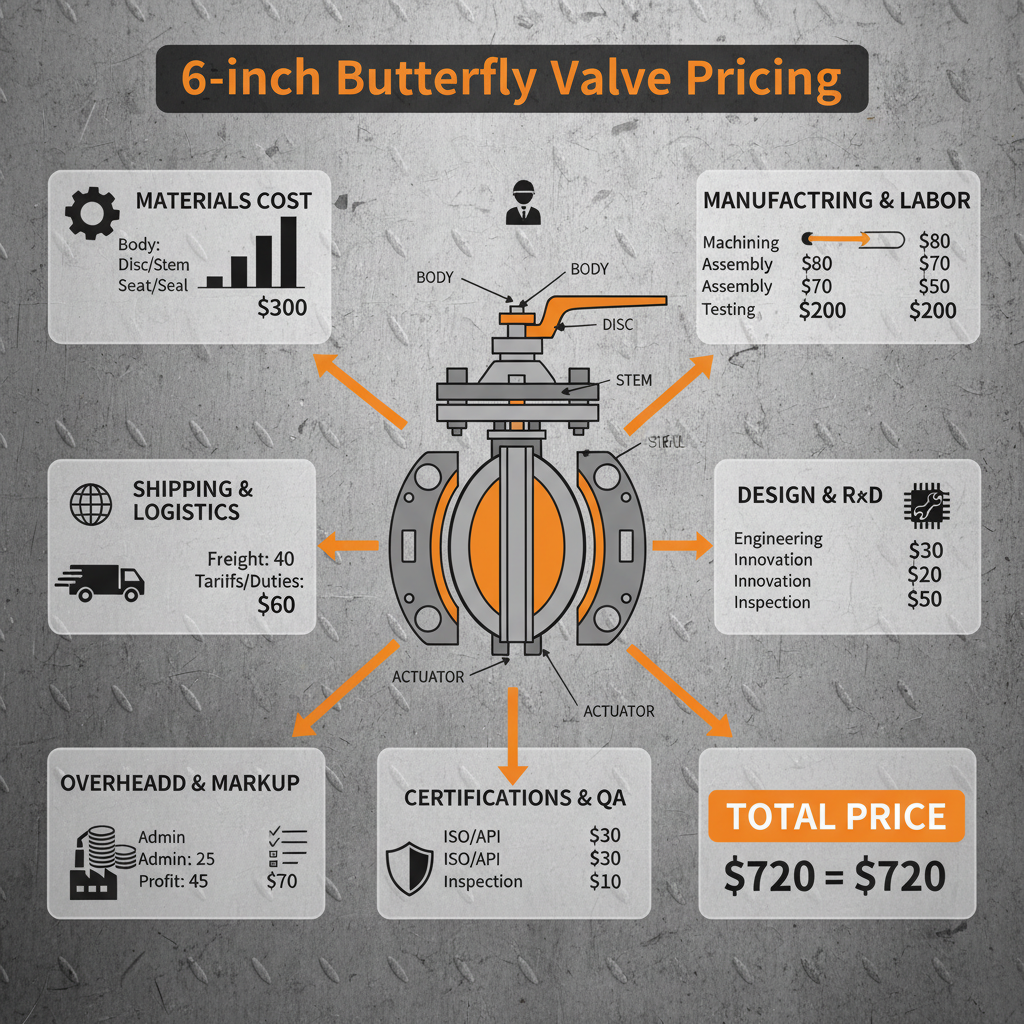
The price of a butterfly valve is rarely static; it is a reflection of the engineering and materials required to handle specific fluids and pressures. Material selection is the primary driver; for instance, a stainless steel valve will always command a higher price than a cast iron version due to its superior corrosion resistance. Additionally, the seal material (such as EPDM, PTFE, or Viton) affects the price based on the chemical compatibility required. The 6 butterfly valve price also fluctuates based on the manufacturing standards (API, ANSI, or DIN) and the precision of the machining involved in the disc and seat assembly.
Cost Breakdown Tip: Focus on the Total Cost of Ownership (TCO) rather than the initial purchase price. A slightly more expensive valve with a higher-grade seal can prevent costly downtime and leaks over five years.
Comparing Material Grades and the 6 Butterfly Valve Price
Choosing the right material is a trade-off between longevity and budget. Cast iron is excellent for low-pressure water applications, while duplex stainless steel is necessary for harsh seawater environments. To help you visualize how material choices impact the 6 butterfly valve price, we have provided a comparison table below. High-performance alloys not only increase the price but also significantly extend the maintenance interval of the valve.
Operation Methods and the 6 Butterfly Valve Price
How a valve is operated significantly changes its cost structure. Manual levers are the most budget-friendly, but for large-scale industrial operations, automation is a necessity. Gear operators provide a middle ground for larger valves that require more torque. Pneumatic and electric actuators, however, increase the 6 butterfly valve price due to the addition of solenoid valves, limit switches, and complex wiring. Automated valves reduce labor costs and improve precision, making them a strategic investment despite the higher upfront price.
Technical Specifications Affecting the 6 Butterfly Valve Price
Beyond materials, technical ratings play a critical role in pricing. High-pressure ratings (such as Class 150 vs Class 300) require thicker walls and stronger bolts, which adds to the production cost. The type of seat—whether it is a "soft seat" for bubble-tight shut-off or a "metal seat" for high-temperature stability—also alters the final cost. For those analyzing the 6 butterfly valve price, referring to a detailed specification sheet is the only way to ensure an apples-to-apples comparison between suppliers.
How to Get the Most Competitive 6 Butterfly Valve Price
Securing a competitive price without sacrificing quality requires a strategic approach to procurement. First, consolidate your orders; buying in bulk typically unlocks wholesale discounts from manufacturers. Second, provide a clear, technical data sheet to avoid "over-specing," which can artificially inflate the 6 butterfly valve price by including features you don't actually need. Finally, partner with a direct manufacturer rather than a multi-layered trading company to eliminate unnecessary markups. By optimizing your specs and order volume, you can achieve a cost-effective solution that meets all safety and performance standards.
Maintenance and its Impact on Long-term Pricing
The initial 6 butterfly valve price is only one part of the financial equation. Maintenance costs—including seal replacements, lubrication, and actuator calibration—can often exceed the original purchase price over the valve's lifetime. Investing in high-quality materials (like 316 Stainless Steel) may increase the initial cost but drastically reduces the frequency of replacements. A well-maintained valve operates with less friction, reducing energy consumption for actuators and preventing catastrophic failures that could lead to expensive system shutdowns.
Conclusion: Balancing Budget and Performance
Navigating the 6 butterfly valve price requires a deep understanding of your operational needs. From material selection and pressure ratings to the choice of automation, every decision impacts the bottom line. By prioritizing the Total Cost of Ownership and sourcing from professional manufacturers, you can ensure that your investment provides long-term reliability and safety. Remember, the cheapest valve is often the most expensive in the long run if it fails prematurely. Invest in quality to ensure peace of mind and operational continuity.
Frequently Asked Questions (FAQs)
Why is there such a wide range in the 6 butterfly valve price?
The price variance is primarily due to the diversity of industrial applications. A valve used for basic irrigation (cast iron, manual lever, EPDM seal) is vastly different from one used in a pharmaceutical plant (stainless steel, pneumatic actuator, PTFE seal). Differences in metallurgy, pressure ratings, certifications (like FDA or API), and the precision of the manufacturing process all contribute to the price gap. Choosing a high-spec valve for a low-spec application leads to wasted budget, while using a low-spec valve in a harsh environment leads to premature failure.
Does the actuator type significantly increase the cost?
Yes, the actuator is often one of the most expensive components of the assembly. While a manual handle is inexpensive, pneumatic actuators require compressed air infrastructure and solenoid valves. Electric actuators are generally the most expensive as they involve motors, gearboxes, and electrical controls. However, these costs are offset by the ability to integrate the valve into a PLC (Programmable Logic Controller) system for remote operation, which increases safety and reduces the need for manual labor in hazardous areas.
How can I tell if a low 6 butterfly valve price indicates poor quality?
A price that is significantly lower than the market average often indicates a compromise in materials or testing. Common red flags include the use of lower-grade alloys (e.g., using 201 stainless steel instead of 316), thinner valve walls, or the absence of certified pressure testing reports. To avoid this, always request a Material Test Report (MTR) and check for industry standard certifications. A reputable supplier will provide transparent documentation of the materials used and the tests performed, ensuring that the price reflects a fair value for the quality delivered.
Which seal material provides the best value for the price?
Value depends entirely on the medium being transported. EPDM is the best value for water and steam at moderate temperatures. However, if you are dealing with oils or chemicals, EPDM will degrade quickly, making PTFE (Teflon) the better value despite its higher cost. For extreme temperatures, Viton is the gold standard. The "best value" is the cheapest material that can withstand the chemical environment and temperature of your system without leaking or degrading, as this minimizes replacement costs.
Share
Latest news
-
Analyzing the 50mm Butterfly Valve Price and Buyer GuideNewsApr.09,2026
-
Comprehensive Guide to 40mm Butterfly Valve Price Factors and Quality ConsiderationsNewsApr.07,2026
-
Comprehensive Guide to 4 Inch Sluice Valve Price and Key Selection FactorsNewsApr.04,2026
-
Comprehensive Guide to 4 Butterfly Valve Price Factors and Ranges in 2024NewsMar.31,2026
-
Comprehensive Guide to 300mm Butterfly Valve Price and Industrial ApplicationsNewsMar.28,2026
 English
  Afrikaans
  Albanian
  Amharic
  Arabic
  Armenian
  Azerbaijani
  Basque
  Belarusian
  Bengali
  Bosnian
  Bulgarian
  Catalan
  Cebuano
  China
China  China (Taiwan)
  Corsican
  Croatian
  Czech
Czech  Danish
  Dutch
Dutch  Esperanto
  Estonian
  Finnish
  French
  Frisian
  Galician
  Georgian
  German
  Greek
Greek  Gujarati
  Haitian Creole
  Hausa
Hausa  Hawaiian
  Hebrew
  Hindi
Hindi  Miao
Miao  Hungarian
  Icelandic
  Igbo
Igbo  Indonesian
  Irish
Irish  Italian
  Japanese
  Javanese
  Kannada
  Kazakh
  Khmer
Khmer  Rwandese
  Korean
  Kurdish
  Kyrgyz
  Lao
Lao  Latin
Latin  Latvian
  Lithuanian
  Luxembourgish
  Macedonian
  Malgashi
  Malay
Malay  Malayalam
  Maltese
  Maori
Maori  Marathi
  Mongolian
  Myanmar
  Nepali
  Norwegian
  Norwegian
  Occitan
  Pashto
  Persian
  Polish
  Portuguese
  Punjabi
  Romanian
  Russian
  Samoan
  Scottish Gaelic
  Serbian
  Sesotho
  Shona
Shona  Sindhi
  Sinhala
  Slovak
  Slovenian
  Somali
  Spanish
  Sundanese
  Swahili
  Swedish
  Tajik
Tajik  Tamil
Tamil  Tatar
Tatar  Telugu
  Thai
Thai  Turkish
  Turkmen
  Ukrainian
  Urdu
Urdu  Uighur
  Uzbek
Uzbek  Vietnamese
  Welsh
Welsh  Bantu
Bantu  Yiddish
  Yoruba
  Zulu
Zulu