окт. . 11, 2025 09:23 Назад към списъка
Understanding the Double Eccentric Flange Butterfly Valve
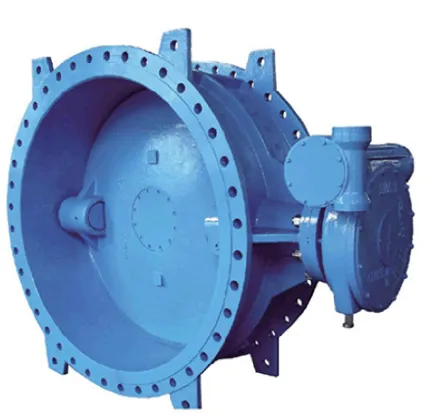
In the intricate world of fluid dynamics and process control, the choice of a valve can dictate the efficiency, safety, and longevity of an entire system. Among the myriad options, the double eccentric flange butterfly valve stands out as a paramount engineering solution, revered for its robust construction and exceptional performance characteristics. Unlike its concentric or single eccentric counterparts, this advanced design minimizes seat wear and significantly enhances sealing integrity, making it indispensable across a spectrum of demanding industrial applications. Its unique operational mechanism, coupled with the inherent strength of a flanged connection, positions it as a go-to component for critical isolation and regulation duties. This comprehensive exploration delves deep into the foundational principles, cutting-edge advantages, market dynamics, and application versatility of these highly engineered valves, providing an authoritative guide for engineers, procurement specialists, and industry stakeholders seeking unparalleled fluid control solutions.
Unpacking the Engineering Marvel: Technical Advantages
The ingenuity of the double eccentric design lies in its precisely calculated offsets. A conventional butterfly valve has its disc rotating on a central axis, leading to constant friction with the seat upon opening and closing. The single eccentric design offsets the shaft from the center of the disc and bore. The double eccentric flange butterfly valve, however, introduces a second offset: the shaft is not only behind the centerline of the seat but also slightly offset from the vertical centerline of the pipe. This dual eccentricity ensures that when the valve opens, the disc lifts cleanly away from the seat almost immediately, dramatically reducing wear on both components. This 'camming' action minimizes operational torque and significantly extends the service life of the valve, particularly the soft seat material, before needing replacement.
Furthermore, the inherent robustness of a flanged connection cannot be overstated. Flanges provide a rigid, reliable, and easily maintainable connection to pipelines, ensuring leak-free performance even under high pressure and temperature fluctuations. This design facilitates straightforward installation and removal, reducing downtime for maintenance or system modifications. Material science plays a pivotal role in the valve's integrity; bodies are typically constructed from high-grade ductile iron, cast iron, or various stainless steels, selected based on the media's corrosivity and temperature. Discs are often coated or constructed from resilient alloys, while seats can range from EPDM and PTFE for tight shutoff in general services to metal-to-metal options for abrasive media or extreme temperatures, all contributing to superior operational resilience and longevity.
The Power of Precision: Data-Driven Performance
The advanced design of the double eccentric flange butterfly valve translates directly into measurable, superior performance metrics. Independent testing and real-world operational data consistently underscore its efficiency and reliability. For instance, these valves routinely achieve Class VI bubble-tight shutoff as per FCI 70-2 standards, signifying an exceptionally low leakage rate, often less than 0.001% of valve capacity. This level of sealing is critical in preventing product loss, minimizing environmental impact, and ensuring process integrity, particularly in sensitive chemical or pharmaceutical applications. Compared to standard concentric designs, the double eccentric valve can reduce operational torque by up to 30%, which not only decreases the strain on actuation systems but also allows for smaller, more economical actuators, leading to overall system cost reductions.
In terms of longevity, the reduced seat wear inherent in the double eccentric mechanism extends the operational lifespan of the valve by as much as 50% in demanding cyclic applications. Where a concentric valve's soft seat might require replacement after 50,000 cycles, a double eccentric variant often exceeds 75,000 to 100,000 cycles under similar conditions. These valves are typically rated for pressure classes up to ANSI 300 (PN40) and can handle temperatures ranging from -20°C to over 200°C, depending on body and seat materials. This wide operating envelope, backed by verifiable performance data, reinforces their position as a high-value investment that delivers tangible returns through enhanced safety, reduced maintenance expenditure, and optimized process uptime.
Navigating the Market: Manufacturer Landscape & Comparison
Choosing the right manufacturer for your double eccentric flange butterfly valve is as critical as selecting the valve itself. The market is populated by numerous providers, each with varying strengths in terms of product specialization, quality control, innovation, and after-sales support. Key factors to consider include the manufacturer's adherence to international standards (ISO, API, CE), their R&D investment, material sourcing policies, and track record in your specific industry. A comparative analysis often reveals distinct approaches:
|
Attribute / Manufacturer Profile |
Manufacturer A (Premium & Specialized) |
Manufacturer B (Balanced & Broad) |
Manufacturer C (Cost-Effective & Volume) |
|
Primary Focus Industries |
Oil & Gas, Petrochemical, Power Generation (Critical Services) |
Water Treatment, HVAC, General Industrial, Chemical (Standard Services) |
Utility Services, Non-critical Industrial Applications |
|
Material Options & Quality |
Extensive exotic alloys, stringent NDE, API 607/6FA fire-safe options |
Wide range of standard materials (DI, SS, Carbon Steel), good QC |
Standard ductile iron, cast iron, basic SS. Focus on meeting minimum specs |
|
Certifications & Compliance |
API 609, ISO 9001, PED, ATEX, SIL-rated options, specific industry approvals |
ISO 9001, CE, often meets national standards |
Basic ISO 9001, meets common regional standards |
|
Customization Capability |
High, bespoke engineering, specialized coatings, unique actuation interfaces |
Moderate, standard modifications, wide accessory range |
Limited, primarily standard product configurations |
|
Lead Time (Typical) |
Longer (8-16 weeks) due to specialized nature |
Standard (4-8 weeks) |
Shorter (2-4 weeks) for high-volume items |
|
Warranty & Support |
Extended warranty, comprehensive global service network, engineering support |
Standard warranty, regional service partners |
Basic warranty, limited direct support |
|
Price Point |
Premium |
Standard |
Economic |
This table illustrates that while all may produce a double eccentric flange butterfly valve, their value propositions differ. Premium manufacturers excel in highly demanding, critical applications where failure is not an option, offering unparalleled material choices and certifications. Balanced manufacturers provide a robust solution for general industrial use, offering a good balance of quality and cost. Cost-effective providers cater to projects where budget is the primary driver and application demands are less stringent. Understanding these distinctions is paramount for making an informed procurement decision that aligns with project requirements and long-term operational goals.
Tailored Excellence: Customization for Specific Demands
While standard double eccentric flange butterfly valves offer exceptional performance, many industrial processes present unique challenges that necessitate customized solutions. Manufacturers committed to engineering excellence provide extensive customization options to precisely match the valve's capabilities to specific operational parameters, media characteristics, and environmental conditions. This tailored approach ensures optimal performance, extends service life, and enhances overall system reliability. Customization can involve several critical aspects:
- Material Upgrades:For highly corrosive or abrasive media, the standard ductile iron or stainless steel might be insufficient. Custom options include duplex and super duplex stainless steels (e.g., Duplex 2205, Super Duplex 2507) for enhanced corrosion resistance, or specialized coatings like ceramic or hard-facing alloys for abrasion resistance. For cryogenic applications, specific low-temperature carbon steels or specialized nickel alloys are employed.
- Actuation Solutions:Beyond standard manual (lever/gearbox), pneumatic, or electric actuators, customization can include hydraulic actuators for high torque requirements, fail-safe spring-return actuators, or integrating intelligent control systems (e.g., with HART, Profibus, or Foundation Fieldbus communication protocols) for advanced diagnostics and predictive maintenance capabilities.
- End Connection Variants:While flanged connections are standard, different flange facings (e.g., RF, FF, RTJ) or specific flange standards (ANSI B16.5, DIN, JIS) may be required. For certain applications, wafer or lug type connections with specific drilling patterns can also be accommodated.
- Sealing Configurations:The seat material is crucial. While EPDM or PTFE are common, specific elastomers for chemical compatibility (e.g., Viton, Kalrez) or specialized metal seats for extreme temperatures (up to 600°C) or abrasive slurries can be incorporated. Bidirectional sealing options are also available for applications requiring flow in either direction.
- Specialized Coatings and Linings:Internal or external coatings can provide added protection. This includes epoxy coatings for potable water applications, rubber linings for abrasive slurries, or anti-corrosion paints for marine or offshore environments.
- Instrumentation and Accessories:Custom integration of positioners, limit switches, solenoid valves, air filter regulators, or even elaborate bypass systems can be designed to meet precise control and monitoring needs.
Engaging with a manufacturer that possesses robust engineering and R&D capabilities is vital for successful customization, ensuring that the tailored valve not only meets but exceeds the demands of the most challenging industrial environments.
Real-World Resilience: Diverse Application Scenarios
The versatility and robust performance of double eccentric flange butterfly valves make them an indispensable component across a vast array of industries and applications. Their ability to provide reliable isolation and precise flow control, coupled with extended service life, translates into tangible operational benefits in diverse settings:
- Water Treatment and Distribution:In municipal water treatment plants, these valves are extensively used for raw water intake, potable water distribution networks, and wastewater processing. Their tight shutoff capabilities prevent leakage, minimizing water loss and contamination, while their low maintenance requirements ensure continuous operation in critical infrastructure. Applications include isolation for pump stations, filter backwash lines, and gravity flow systems.
- HVAC Systems:Large commercial and industrial heating, ventilation, and air conditioning (HVAC) systems often employ these valves in chilled water and condenser water lines. Their ability to handle high flow rates with minimal pressure drop, combined with precise modulation for temperature control, makes them ideal for optimizing energy efficiency and maintaining stable indoor climates.
- Power Generation:From conventional thermal power plants to nuclear facilities, double eccentric flange butterfly valves are crucial in cooling water circuits, turbine bypass lines, and auxiliary systems. They manage massive volumes of water, isolate sections for maintenance, and contribute to the safe and efficient operation of power generation processes. Their resilience to thermal cycling and high pressures is particularly valued here.
- Oil & Gas Industry:In both upstream and downstream sectors, these valves are utilized for pipeline isolation, process fluid control in refineries, and storage tank isolation. While not typically used for highly abrasive slurries in this sector, their robust design and tight shutoff are vital for hydrocarbon transportation and processing, ensuring safety and environmental compliance.
- Chemical Processing:For non-abrasive chemical lines, utility services (steam, compressed air), and waste treatment within chemical plants, these valves offer excellent chemical compatibility through various material choices and reliable isolation against aggressive media. Their ease of maintenance reduces exposure risks and downtime.
- Mining and Minerals:Although specific material choices are critical, double eccentric butterfly valves can be found in mining operations, particularly in dewatering systems, tailings management, and process water lines where robust shutoff and resistance to moderately abrasive media are required. Custom-hardened seats and discs are often specified for these demanding environments.
These examples merely scratch the surface of the double eccentric flange butterfly valve's utility, underscoring its pivotal role in maintaining fluid control efficiency and safety across the industrial landscape.
Selecting Your Optimal Double Eccentric Flange Butterfly Valve
The process of selecting the ideal double eccentric flange butterfly valve demands a meticulous evaluation of various factors, ensuring that the chosen valve not only meets immediate operational requirements but also delivers long-term performance and cost-effectiveness. Begin by thoroughly understanding the characteristics of the media being handled: its chemical composition, temperature range, pressure, viscosity, and presence of any solids or abrasives. These parameters will dictate the appropriate body material, disc material, and, most critically, the seat material to ensure chemical compatibility and resistance to wear.
Next, consider the application's functional needs. Is the primary requirement tight shutoff for isolation, precise throttling for flow control, or a combination of both? While double eccentric valves excel at isolation, their ability for modulation is also significant. Evaluate the required pressure class (e.g., ANSI 150, 300; PN10, 16, 25, 40) and connection type (e.g., raised face, flat face flanges). Actuation is another critical decision point, ranging from simple manual operation (lever or gearbox) to sophisticated pneumatic, electric, or hydraulic actuators, often integrated with control systems for automated processes. Finally, always consider the manufacturer's reputation, quality certifications, and the availability of technical support and spare parts. A well-chosen double eccentric flange butterfly valve represents a strategic investment, providing superior performance, enhanced safety, and reduced total cost of ownership over its extensive service life, ultimately contributing to the robust and efficient operation of your critical fluid handling systems.
Frequently Asked Questions (FAQs)
What is a double eccentric flange butterfly valve?
A double eccentric flange butterfly valve is an advanced quarter-turn valve design featuring a disc that rotates around an axis (shaft) that is offset from both the center of the valve bore and the center of the disc itself. This dual offset minimizes friction between the disc and the seat, leading to reduced wear and improved sealing, while the flange connection ensures a robust and reliable pipeline interface.
How does a double eccentric design differ from a concentric one?
In a concentric (resilient seated) butterfly valve, the disc rotates on a central axis, causing constant rubbing against the seat. A double eccentric design introduces two offsets for the shaft: one from the centerline of the seat and another from the centerline of the pipe. This allows the disc to "lift off" the seat immediately upon opening, preventing friction and extending seat life.
What are the main advantages of using a double eccentric butterfly valve?
Key advantages include superior bubble-tight shutoff (often Class VI), significantly reduced seat wear and extended service life, lower operating torque requirements, broader temperature and pressure capabilities compared to concentric designs, and robust construction suitable for demanding industrial applications.
In which applications are these valves commonly used?
They are widely used in water treatment plants, HVAC systems, power generation, oil & gas (non-slurry), chemical processing, and general industrial applications for isolation and flow control of various liquids and gases.
What types of flange connections are available for these valves?
Common flange standards include ANSI B16.5 (Class 150, 300), DIN, and JIS. They typically come with raised face (RF) or flat face (FF) connections, and sometimes ring type joint (RTJ) for higher pressure and temperature applications.
Can double eccentric butterfly valves be used for throttling (flow control)?
Yes, while excellent for isolation, their robust design and precise control capabilities also make them suitable for throttling applications. The design minimizes cavitation and turbulence at partial openings, especially when compared to concentric types, allowing for more stable flow modulation.
What materials are typically used for the body and seat of these valves?
Common body materials include ductile iron, cast iron, carbon steel, and various stainless steels (304, 316, Duplex). Seat materials can range from soft resilient options like EPDM, PTFE, and Viton for tight shutoff in general services, to metal-to-metal seats for high temperature, abrasive, or severe service conditions.
Споделете
Последни новини
-
Understanding the 6 butterfly valve price Industrial Buying GuideНовиниApr.16,2026
-
Analyzing the 50mm Butterfly Valve Price and Buyer GuideНовиниApr.09,2026
-
Comprehensive Guide to 40mm Butterfly Valve Price Factors and Quality ConsiderationsНовиниApr.07,2026
-
Comprehensive Guide to 4 Inch Sluice Valve Price and Key Selection FactorsНовиниApr.04,2026
-
Comprehensive Guide to 4 Butterfly Valve Price Factors and Ranges in 2024НовиниMar.31,2026
-
Comprehensive Guide to 300mm Butterfly Valve Price and Industrial ApplicationsНовиниMar.28,2026
 Bulgarian
  English
  Afrikaans
  Albanian
  Amharic
  Arabic
  Armenian
  Azerbaijani
  Basque
  Belarusian
  Bengali
  Bosnian
  Catalan
  Cebuano
  China
China  China (Taiwan)
  Corsican
  Croatian
  Czech
Czech  Danish
  Dutch
Dutch  Esperanto
  Estonian
  Finnish
  French
  Frisian
  Galician
  Georgian
  German
  Greek
Greek  Gujarati
  Haitian Creole
  Hausa
Hausa  Hawaiian
  Hebrew
  Hindi
Hindi  Miao
Miao  Hungarian
  Icelandic
  Igbo
Igbo  Indonesian
  Irish
Irish  Italian
  Japanese
  Javanese
  Kannada
  Kazakh
  Khmer
Khmer  Rwandese
  Korean
  Kurdish
  Kyrgyz
  Lao
Lao  Latin
Latin  Latvian
  Lithuanian
  Luxembourgish
  Macedonian
  Malgashi
  Malay
Malay  Malayalam
  Maltese
  Maori
Maori  Marathi
  Mongolian
  Myanmar
  Nepali
  Norwegian
  Norwegian
  Occitan
  Pashto
  Persian
  Polish
  Portuguese
  Punjabi
  Romanian
  Russian
  Samoan
  Scottish Gaelic
  Serbian
  Sesotho
  Shona
Shona  Sindhi
  Sinhala
  Slovak
  Slovenian
  Somali
  Spanish
  Sundanese
  Swahili
  Swedish
  Tajik
Tajik  Tamil
Tamil  Tatar
Tatar  Telugu
  Thai
Thai  Turkish
  Turkmen
  Ukrainian
  Urdu
Urdu  Uighur
  Uzbek
Uzbek  Vietnamese
  Welsh
Welsh  Bantu
Bantu  Yiddish
  Yoruba
  Zulu
Zulu