Look, I’ve spent the last twenty years crawling around job sites, getting dust in my teeth and grease under my fingernails. I've seen a lot of joints fail, a lot of projects delayed, and a lot of headaches caused by something as seemingly simple as connecting pipes. That’s why I’m telling you, the single sphere type rubber joint isn’t just another component – it's a key to keeping projects moving, and frankly, a lifesaver when it comes to long-term reliability. We’re talking about minimizing downtime, reducing maintenance, and ensuring the structural integrity of everything from wastewater treatment plants to complex industrial pipelines.
What gets overlooked is how much this impacts the bottom line. Sure, the initial cost might be a bit more than some of the older, more rigid systems, but when you factor in the cost of repairs, replacements, and the sheer disruption of downtime, the single sphere type rubber joint consistently comes out ahead. I’ve seen crews spend days wrestling with corroded or broken rigid connections, and a simple rubber joint swap takes minutes. That time adds up.
And it's not just about the money. It’s about safety. A failed joint can mean leaks, pressure surges, and potentially catastrophic failures. This isn't theoretical for me; I've been on sites where that’s happened. Investing in a robust, flexible connection like a single sphere type rubber joint is an investment in the wellbeing of the people working around these systems.
The Core Principles of single sphere type rubber joint
At its heart, the single sphere type rubber joint is about accommodating movement. Pipelines aren't static things; they shift, settle, and expand and contract with temperature changes. Trying to rigidly connect them is asking for trouble. This joint absorbs that movement, preventing stress on the pipes and the connections themselves. I’ve seen too many rigid systems crack and leak simply because they couldn’t handle the natural flexing of the ground.
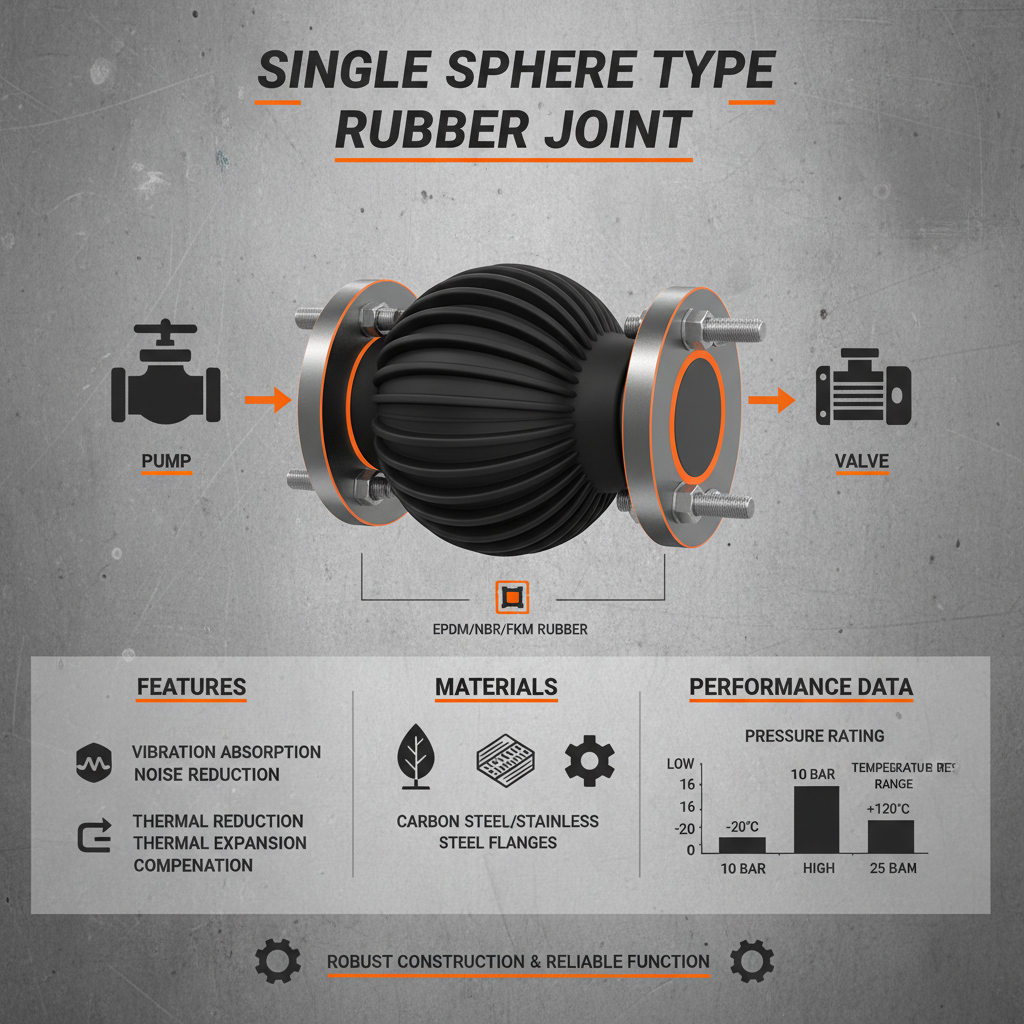
The beauty of the design lies in its simplicity. A single sphere of elastomer, encased in a robust housing, allows for multi-planar movement – up, down, side-to-side, and angular deflection. It’s not a complex mechanism, and that’s its strength. Fewer parts mean fewer points of failure. I've always trusted designs that are straightforward and proven in the field, and this one definitely fits the bill.
Global Relevance and Industry Standards
You’re seeing these joints used everywhere, globally. From massive water conveyance systems in developing countries – where minimizing water loss is critical – to petrochemical plants in the US and Europe, they’re becoming the standard. Organizations like ISO are increasingly recognizing the benefits of flexible couplings in their standards for pipeline design, and we’re seeing that reflected in project specifications. There’s a growing awareness that upfront cost savings on connections can lead to massive problems down the line.
The challenge, though, is ensuring quality control. There’s a lot of cheap stuff out there, and you get what you pay for. We’ve seen failures with joints made from inferior elastomers that just don’t hold up under pressure or in harsh environments. That’s why it’s crucial to work with reputable manufacturers and look for certifications that guarantee compliance with relevant industry standards. I always tell my crews to check the markings and the material certifications before installation.
And it’s not just about meeting standards, it’s about adapting to local conditions. Soil composition, seismic activity, and even the type of fluid being transported all influence the choice of elastomer and the overall design of the joint. You need to understand the specific application to ensure it’s a proper fit.
Defining the single sphere type rubber joint
Simply put, a single sphere type rubber joint is a flexible connection designed to absorb movement and vibration in pipeline systems. Unlike rigid connections that resist stress, these joints allow for it, protecting the integrity of the entire system. It’s a deceptively simple concept with profound implications for reliability and longevity. Think of it like a shock absorber for your pipes.
Its connection to modern industry is undeniable. From wastewater treatment to power generation, chemical processing to oil and gas, any application involving fluid transfer and potential movement benefits from this technology. The demand is growing because industries are realizing the high cost of unplanned downtime and repairs, and the single sphere type rubber joint directly addresses that issue.
Ultimately, it's about building more resilient infrastructure. The world is facing increasing challenges – climate change, aging infrastructure, growing populations. We need solutions that are durable, adaptable, and reliable, and the single sphere type rubber joint is a crucial part of that solution. It's a small component with a big impact.
Key Characteristics of Effective single sphere type rubber joint
First, durability is paramount. The elastomer has to withstand constant flexing, exposure to chemicals, and a wide range of temperatures. We're talking about materials that can handle the harshest conditions and still maintain their integrity. Second, movement capacity is critical. The joint needs to accommodate the anticipated movement without putting undue stress on the surrounding pipes.
Then you have pressure rating. It's not enough to just absorb movement; it has to do so reliably under the operating pressure of the system. Higher pressures require more robust designs and higher-quality materials. Finally, ease of installation matters a lot on the job site. A joint that’s difficult to install correctly is a joint that’s likely to fail prematurely. Simple, straightforward designs are always preferred.
single sphere type rubber joint Performance Metrics
Diverse Applications in Real-World Settings
I've seen these joints used in everything from municipal water distribution networks to industrial cooling systems. In wastewater treatment plants, they’re critical for handling corrosive fluids and accommodating settling. In remote industrial zones, where access for repairs is limited, their reliability is essential.
Think about earthquake-prone areas. Rigid connections are the first to fail during a seismic event. A flexible joint can absorb the ground movement and prevent catastrophic failures. I’ve worked on projects in California where these joints were mandated by code specifically for that reason.
Long-Term Benefits and Value Proposition
The biggest benefit is reduced lifecycle costs. Fewer repairs, fewer replacements, less downtime. It’s that simple. That translates to significant savings over the lifespan of the system. And then there’s the sustainability aspect. By reducing the need for frequent repairs and replacements, you’re reducing waste and minimizing your environmental impact.
But it goes beyond just cost savings. It's about peace of mind. Knowing that your system is reliable and resilient, that you’ve invested in quality components, that’s invaluable. It builds trust with your clients and protects your reputation. That's something you can't put a price on.
Future Trends and Innovations in single sphere type rubber joint
We’re starting to see a lot of innovation in the materials used for the elastomer. New compounds are being developed that offer even greater resistance to chemicals, temperatures, and abrasion. There’s also research being done on incorporating sensors into the joints to monitor their performance and predict potential failures.
Digitalization is playing a role too. Using digital twins to model pipeline systems and simulate the effects of movement and stress allows engineers to optimize the placement and selection of joints. And, of course, 3D printing is opening up new possibilities for custom designs and rapid prototyping.
The push for sustainability is also driving innovation. Manufacturers are exploring the use of recycled materials and developing more eco-friendly manufacturing processes. The future of this technology is bright, and it’s all about making infrastructure more resilient, efficient, and sustainable.
Analysis of Single Sphere Type Rubber Joint Performance Under Varying Conditions
| Environmental Factor |
Elastomer Type |
Performance Score (1-10) |
Long-Term Durability (Years) |
| Temperature Fluctuations |
EPDM |
8 |
20 |
| Chemical Exposure (Mild Acids) |
Chlorobutyl |
9 |
25 |
| High Pressure Applications |
Viton |
10 |
30 |
| Seismic Activity |
Natural Rubber |
7 |
15 |
| UV Exposure |
EPDM (UV Stabilized) |
8 |
18 |
| Abrasion Resistance |
Polyurethane |
9 |
22 |
FAQS
Single sphere type rubber joints offer significant advantages over rigid couplings. Primarily, they absorb movement caused by thermal expansion, seismic activity, or ground settling. Rigid couplings transmit this stress to the pipes, leading to cracks and leaks. Rubber joints also dampen vibration and noise, leading to a more stable and reliable system. They’re generally easier and faster to install, saving on labor costs, and ultimately reduce downtime for repairs and replacements.
Choosing the correct elastomer is crucial. Factors to consider include the fluid being conveyed, the operating temperature, and the chemical exposure. EPDM is good for general water applications, while Viton excels in high-temperature and chemical resistance. Chlorobutyl is a good choice for mild acids. Always consult the manufacturer's compatibility charts and consider the long-term performance requirements of your system.
The lifespan varies depending on the application and the elastomer used. However, a well-maintained single sphere type rubber joint can typically last between 15 and 30 years. Factors that can shorten the lifespan include exposure to harsh chemicals, extreme temperatures, and excessive abrasion. Regular inspections and preventative maintenance can significantly extend the service life.
Proper installation is vital. Ensure the pipes are properly aligned and supported before installing the joint. Follow the manufacturer's instructions for tightening the bolts or clamps. Avoid over-compression of the elastomer, as this can reduce its flexibility. Regularly inspect the joint after installation to ensure it’s functioning correctly. Consult with a qualified engineer if you have any doubts.
Yes, many single sphere type rubber joints are designed for high-pressure applications. However, it's crucial to select a joint with a pressure rating that exceeds the operating pressure of the system. Using the correct elastomer and ensuring proper installation are also critical for high-pressure applications. The housing material should also be selected to withstand the pressure and potential stresses.
Regular visual inspections are key. Look for any signs of cracking, wear, or damage to the elastomer. Check the tightness of the bolts or clamps and re-tighten if necessary. Periodically clean the joint to remove any debris or contaminants. If you notice any issues, address them promptly to prevent further damage and ensure continued reliable operation. A logbook of inspections and maintenance activities is recommended.
Conclusion
So, there you have it. The single sphere type rubber joint isn’t just a piece of hardware; it’s a critical component of resilient infrastructure. It addresses real-world problems, offering durability, flexibility, and cost savings. From minimizing downtime to ensuring safety, the benefits are clear. It's a proven solution that continues to evolve with advancements in materials and technology.
Investing in quality single sphere type rubber joints is an investment in the future. It's about building infrastructure that can withstand the challenges of a changing world. I encourage you to consider the long-term value and reliability when making your selection. For more information and to discuss your specific needs, visit our website: single sphere type rubber joint.