The global industrial fluid control market is currently undergoing a significant transition toward higher precision and lower maintenance overhead, placing immense pressure on the selection of a reliable butterfly valve supplier. In complex piping systems—ranging from municipal water treatment to petrochemical refineries—the efficiency of flow regulation depends not just on the valve itself, but on the integration of materials that can withstand caustic environments without compromising seal integrity.
For engineering managers, the challenge lies in balancing the trade-off between rapid actuation speeds and long-term durability. As industrial standards evolve toward more stringent leak-proof requirements, the industry is seeing a shift away from generic components toward specialized configurations that offer verifiable performance data under extreme pressure gradients.
This analysis explores the technical criteria for evaluating modern flow control hardware and the engineering logic behind selecting a butterfly valve supplier capable of meeting global certification standards. We will examine the relationship between seat material selection, torque requirements, and the overall operational lifecycle of industrial valve systems.

Flow Control Mechanism and Architecture

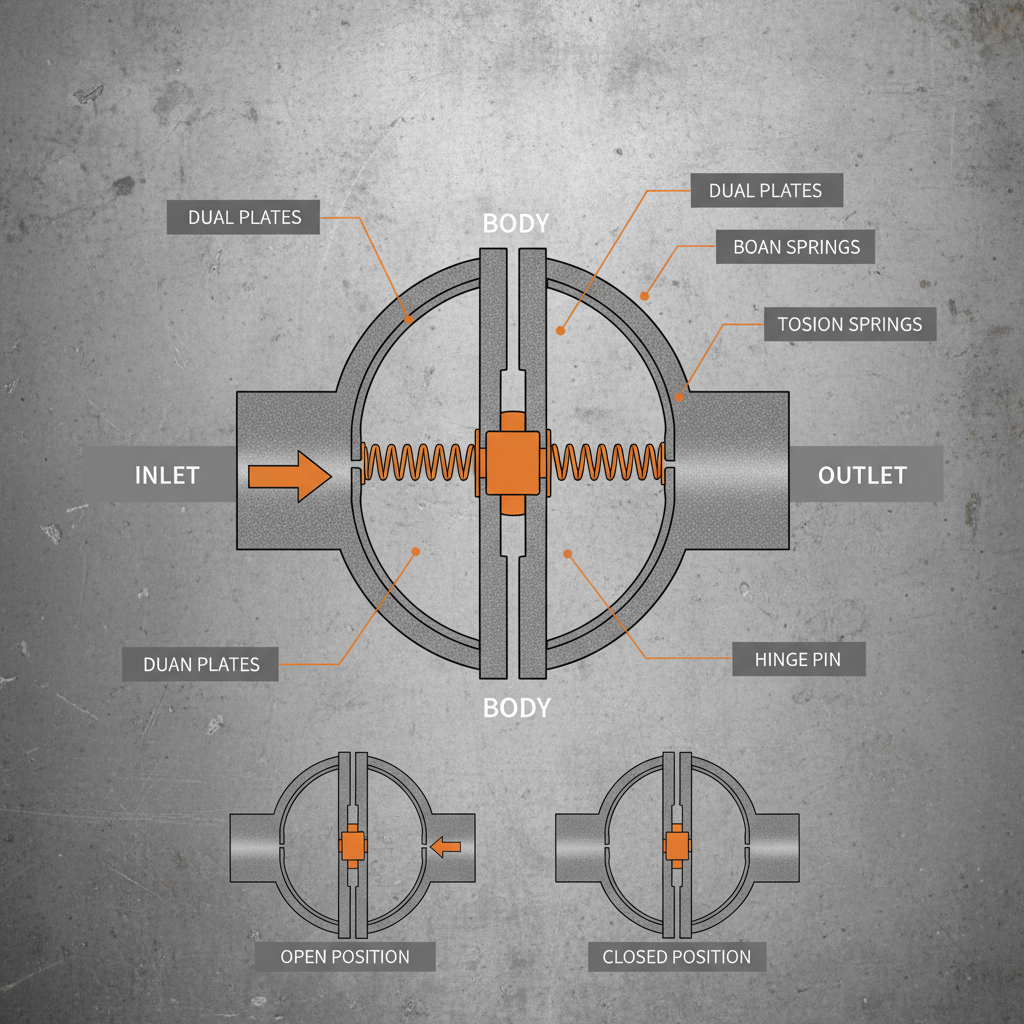
The core architecture of a butterfly valve revolves around a rotating disc that pivots on a central axis to regulate or stop the flow of fluid. Unlike gate valves, which require significant vertical travel, the quarter-turn mechanism of the butterfly design allows for rapid operation and a compact footprint, reducing the overall weight of the piping assembly.
From an engineering perspective, the efficiency of this mechanism is determined by the relationship between the disc's surface area and the pressure of the medium. A high-quality butterfly valve supplier focuses on the precision of the disc-to-seat interface to minimize turbulence and prevent cavitation during partial-open states.
Critical Engineering Specifications
The selection of a valve is governed by technical parameters such as the nominal diameter (DN) and the pressure rating (PN). For large-scale infrastructure, specifications ranging from DN25 to DN2600 are common, meaning the hardware must maintain structural integrity across a vast scale of flow volumes and pipe dimensions.
Torque requirements are another vital specification; the force needed to move the disc against the fluid pressure determines whether the valve can be operated manually or requires an actuator. Inaccurate torque calculations often lead to premature stem failure or incomplete sealing, which can cause catastrophic leaks in high-pressure environments.
Compliance with international standards—such as German, American, British, Japanese, and Australian norms—ensures that the components are interchangeable and meet safety benchmarks. This standardization is what allows a professional manufacturer to serve diverse markets including water treatment and energy production.
Material Compatibility and Seal Dynamics
Material science is the primary differentiator in valve longevity. The interaction between the disc material and the seat liner determines the valve's resistance to erosion, corrosion, and temperature fluctuations.
Furthermore, the choice of alloys for the valve body and stem must align with the chemical composition of the transported medium. Using an incorrect alloy in a saline environment, for instance, can lead to pitting corrosion, which degrades the structural integrity of the valve body and leads to leakage.
Performance Evaluation Framework
Evaluating the performance of a flow control system requires a multi-dimensional approach. Engineers typically look at the relationship between the flow coefficient (Cv) and the pressure drop across the valve. A higher Cv value indicates less resistance to flow, which is critical for energy-efficient pumping systems.
To quantify the reliability of different valve configurations, we utilize a normalized engineering assessment. This rating system compares variables such as seal tightness, ease of maintenance, and operational stability across various industry-standard configurations.
Normalized Engineering Performance Assessment
Industrial Deployment Scenarios
In municipal water plants, the primary requirement is the ability to handle high flow volumes with minimal pressure loss. Here, large-diameter butterfly valves are deployed as isolation valves, where the priority is a bubble-tight shut-off to facilitate system maintenance without draining entire sections of the network.
Conversely, in petrochemical energy production, the focus shifts toward chemical resistance and temperature stability. Representative engineering scenarios involve the use of specialized coatings and high-grade alloys to prevent the valve internals from degrading when exposed to volatile organic compounds or high-temperature steam.
Evolution of Valve Automation
The industry is moving toward "smart" flow control, where valves are integrated with digital sensors to provide real-time data on flow rates and seal health. This shift allows for predictive maintenance, where a system can alert operators to a potential seal failure before it occurs, drastically reducing the risk of unplanned shutdowns.
Research and development are currently focused on reducing the "breakaway torque"—the initial force required to move the disc from a seated position. By utilizing new low-friction composite materials and advanced stem geometries, manufacturers are reducing the energy consumption of electric actuators.
Furthermore, the integration of IoT-enabled monitoring cores is becoming common in critical infrastructure. This allows remote control centers to synchronize thousands of valves across a regional network, optimizing water distribution or energy flow based on real-time demand analytics.
Procurement and Selection Matrix
Selecting the right equipment requires a systematic comparison of configuration profiles. Procurement teams must evaluate the total cost of ownership, which includes not only the initial purchase price but also the expected maintenance frequency and the cost of potential leaks.
A professional butterfly valve supplier will provide a detailed selection matrix that aligns the product's technical capabilities with the specific constraints of the application, such as the pH level of the fluid and the maximum operating pressure.
The following matrix provides an evaluation framework for different configuration profiles commonly used in industrial fluid management.
| Configuration Profile | Seal Material | Pressure Rating | Recommended Use Case |
|---|---|---|---|
| Basic Configuration | EPDM / NBR | PN10 / PN16 | General Water Supply |
| Standard Configuration | PTFE / Viton | PN25 | Light Chemical Processing |
| High-Duty Configuration | Metal-to-Metal | PN40+ | High-Temp Steam / Oil |
| Precision Configuration | Reinforced PTFE | PN16 / PN25 | Pharmaceutical Grade |
| Automated Configuration | Custom Elastomer | Variable | Smart City Water Grids |
| Industry Baseline | Standard Rubber | PN10 | HVAC / Cooling Towers |
Technical FAQ for Valve Procurement
The Nominal Diameter (DN) should be matched to the internal diameter of the pipe to avoid excessive pressure drops. However, for specific flow control applications, engineers may choose to "size up" the valve to reduce fluid velocity and minimize turbulence. You should consult the manufacturer's flow coefficient (Cv) charts to ensure that the chosen size handles the required volume without causing cavitation.
In concentric valves, the disc is centered in the pipe, which is ideal for general water services. Eccentric valves shift the disc slightly to one side, reducing the contact pressure between the disc and seat during the closing phase. This reduces wear and tear on the seal and is generally preferred in higher-pressure or more abrasive industrial environments.
Temperature dictates the elastomer's flexibility and chemical stability. EPDM is suitable for steam and hot water, while PTFE is used for extreme temperatures and high chemical aggressiveness. If the operating temperature exceeds the thermal limit of the elastomer, the seat will harden or melt, leading to a total loss of seal integrity. Always verify the temperature range in the technical data sheet.
While butterfly valves can be used for throttling, they are not as precise as globe valves. Because the flow characteristics are non-linear, small changes in the disc angle can cause large changes in flow when the valve is nearly closed. For precise control, it is recommended to use an automated actuator with a digital positioner to maintain a consistent flow rate.
Stem leakage is typically prevented by the installation of high-quality packing materials or O-rings. Regular inspection of the stem for corrosion and the periodic tightening of the packing gland are essential. In automated systems, ensuring that the actuator is properly aligned with the valve stem prevents lateral stress, which is a primary cause of premature seal failure.
Depending on the application, you should look for ISO 9001 for quality management, CE for European safety standards, and WRAS for water-contact materials. For high-pressure oil and gas applications, API certifications are critical. A reliable butterfly valve supplier will provide these certifications along with material mill test reports to prove the chemical composition of the alloys used.
Engineering Implications for Fluid Management
The transition toward more efficient industrial piping requires a move away from generic hardware toward a data-driven selection process. By focusing on the intersection of material science, torque dynamics, and international certification, operators can significantly reduce the lifecycle cost of their infrastructure.
Ultimately, the success of a flow control system depends on the ability of the butterfly valve supplier to provide equipment that balances immediate performance with long-term structural reliability. Investing in precision-engineered components is not merely a technical preference, but a critical risk management strategy for modern industrial enterprises.