Oct . 18, 2025 13:00 Back to list
3008 Cable Selection: Safe, Efficient Standards-Ready Guide
If you’re wrestling with 3008 cable selection for a real jobsite, you’re not alone. Spec sheets are tidy; ceilings and risers are not. Over the last year I’ve watched designers swing harder toward armored solutions—driven by labor shortages, tighter schedules, and a push for tidy, code-compliant installs without miles of conduit. Type AC90 sits right in that pocket: pragmatic, tough, and, frankly, easier to pull than many expect.
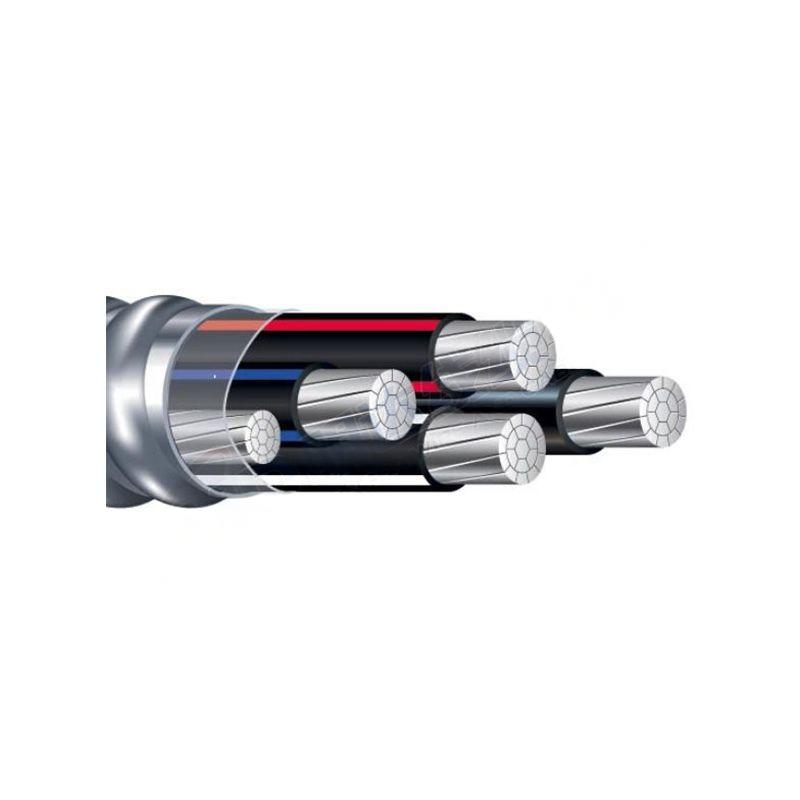
Quick refresher: AC90 is an armoured power cable for branch, feeder, and service distribution in commercial, industrial, and multi-residential buildings—yes, theaters and assembly spaces too. In fact, many customers say the aluminum interlocked armor gives them a nice blend of mechanical protection and speed without sacrificing compliance. To be honest, that’s why it keeps turning up on my site walks.
Trends I’m seeing: more prefabrication, more BIM-driven clash checks, and a steady drift from conduit-in-place to cable-in-tray where codes allow. Copper prices yo-yo; aluminum armor helps blunt the pain. And yes, sustainability talks are no longer just talks—specifiers ask about low-smoke, halogen-free options and real flame data, not marketing fluff.
3008 cable selection usually boils down to: voltage class, ampacity, jacket/armor expectations, and local code language (NEC/CSA differences matter). Here’s a compact spec snapshot for Type AC90 from Valve Cable (origin: No.88 Zhengxi Road, Yanbai Development, Ningjin, Hebei, China).
| Product | Type AC90 Armoured Cable |
| Voltage Rating | 600 V |
| Conductors | Copper or AA-8000 series aluminum, compact stranded (sizes ≈ 14 AWG to 500 kcmil, real-world availability may vary) |
| Insulation | XLPE, 90°C dry rating |
| Armor | Aluminum interlocked armor (AIA), integral equipment bonding path |
| Flame Test | FT4/IEEE 1202 pass (typical for AC90 class) |
| Typical Tests | Insulation resistance ≥ 1–10 GΩ·km @ 20°C; Dielectric withstand ≈ 2.0 kV AC/5 min (no breakdown) |
| Service Life | ≈ 25–30 years in dry locations, proper installation |
Process and QA, in brief (because people ask):
- Materials: oxygen-free copper or AA-8000 aluminum; XLPE insulation; AIA armor.
- Methods: conductor stranding → XLPE extrusion → lay-up → armor forming → print/mark.
- Testing: continuity, DC resistance, insulation resistance, AC hipot, flame FT4, cold bend, pull strength.
- Certs sought: UL/CSA listings as applicable; compliance with NEC Art. 320 or CSA C22.2 No. 51 terminology regionally.
Applications I see weekly: hotels, hospitals (non-patient-care areas unless specifically rated), data halls peripheral loads, theaters, high-rise MURBs, assembly spaces—anywhere branch/feeders benefit from armored routing without full conduit. Advantages: faster install, good crush resistance, predictable ampacity tables, and straightforward termination with listed fittings.
Vendor lineup, roughly compared—yes, pricing moves, so treat this as directional:
| Vendor | Certifications | Lead Time | Customization | Indicative Cost |
|---|---|---|---|---|
| Valve Cable (Hebei, China; No.88 Zhengxi Road) | Aims for UL/CSA per project; FT4/IEEE 1202 test data | ≈ 2–4 weeks ex-works, project size dependent | Cut lengths, colored ID, special print, pull lube pre-pack | $ (cost-effective, MOQ applies) |
| North America Brand A | UL Listed Type AC; CSA for AC90 lines | Stock on common sizes; customs for odd gauges | Moderate—color code and prints | $$ |
| EU Brand B | IEC 60502-1; national fire tests | 4–6 weeks typical | High—bespoke armor/jacket options | $$$ |
Two quick case notes: (1) A 20-story mixed-use tower cut riser install time by ≈18% switching to AC90 feeders in tray plus stub-outs—surprisingly clean closets. (2) A cinema build opted AC90 for auditorium lighting and dimmer racks; flame data and bendability won the spec battle.
How to finalize 3008 cable selection without headaches:
- Confirm code basis: NEC Article 320 vs. CSA AC90 language in your jurisdiction.
- Match ampacity to ambient and bundling; check tray fill if applicable.
- Ask for flame test reports (FT4/IEEE 1202) and hipot certificates tied to your lot.
- Request cut lengths and labeled pulls to reduce waste on site.
Last word: specs are specs, but jobsite realities matter. If you need a practical, armored 600 V workhorse, AC90 is a smart candidate—and a solid answer to the evergreen question of 3008 cable selection.
- NFPA 70, National Electrical Code (NEC) 2023, Article 320: Armored Cable: Type AC.
- UL 4, Standard for Armored Cable, Underwriters Laboratories.
- CSA C22.2 No. 51, Armoured Cable (AC90), Canadian Standards Association.
- IEEE 1202 (CSA FT4), Vertical Tray Flame Test for Wires and Cables.
- IEC 60502-1, Power cables with extruded insulation up to 1 kV, International Electrotechnical Commission.
Share
Latest news
-
Understanding the 6 butterfly valve price Industrial Buying GuideNewsApr.16,2026
-
Analyzing the 50mm Butterfly Valve Price and Buyer GuideNewsApr.09,2026
-
Comprehensive Guide to 40mm Butterfly Valve Price Factors and Quality ConsiderationsNewsApr.07,2026
-
Comprehensive Guide to 4 Inch Sluice Valve Price and Key Selection FactorsNewsApr.04,2026
-
Comprehensive Guide to 4 Butterfly Valve Price Factors and Ranges in 2024NewsMar.31,2026
-
Comprehensive Guide to 300mm Butterfly Valve Price and Industrial ApplicationsNewsMar.28,2026
 English
  Afrikaans
  Albanian
  Amharic
  Arabic
  Armenian
  Azerbaijani
  Basque
  Belarusian
  Bengali
  Bosnian
  Bulgarian
  Catalan
  Cebuano
  China
China  China (Taiwan)
  Corsican
  Croatian
  Czech
Czech  Danish
  Dutch
Dutch  Esperanto
  Estonian
  Finnish
  French
  Frisian
  Galician
  Georgian
  German
  Greek
Greek  Gujarati
  Haitian Creole
  Hausa
Hausa  Hawaiian
  Hebrew
  Hindi
Hindi  Miao
Miao  Hungarian
  Icelandic
  Igbo
Igbo  Indonesian
  Irish
Irish  Italian
  Japanese
  Javanese
  Kannada
  Kazakh
  Khmer
Khmer  Rwandese
  Korean
  Kurdish
  Kyrgyz
  Lao
Lao  Latin
Latin  Latvian
  Lithuanian
  Luxembourgish
  Macedonian
  Malgashi
  Malay
Malay  Malayalam
  Maltese
  Maori
Maori  Marathi
  Mongolian
  Myanmar
  Nepali
  Norwegian
  Norwegian
  Occitan
  Pashto
  Persian
  Polish
  Portuguese
  Punjabi
  Romanian
  Russian
  Samoan
  Scottish Gaelic
  Serbian
  Sesotho
  Shona
Shona  Sindhi
  Sinhala
  Slovak
  Slovenian
  Somali
  Spanish
  Sundanese
  Swahili
  Swedish
  Tajik
Tajik  Tamil
Tamil  Tatar
Tatar  Telugu
  Thai
Thai  Turkish
  Turkmen
  Ukrainian
  Urdu
Urdu  Uighur
  Uzbek
Uzbek  Vietnamese
  Welsh
Welsh  Bantu
Bantu  Yiddish
  Yoruba
  Zulu
Zulu